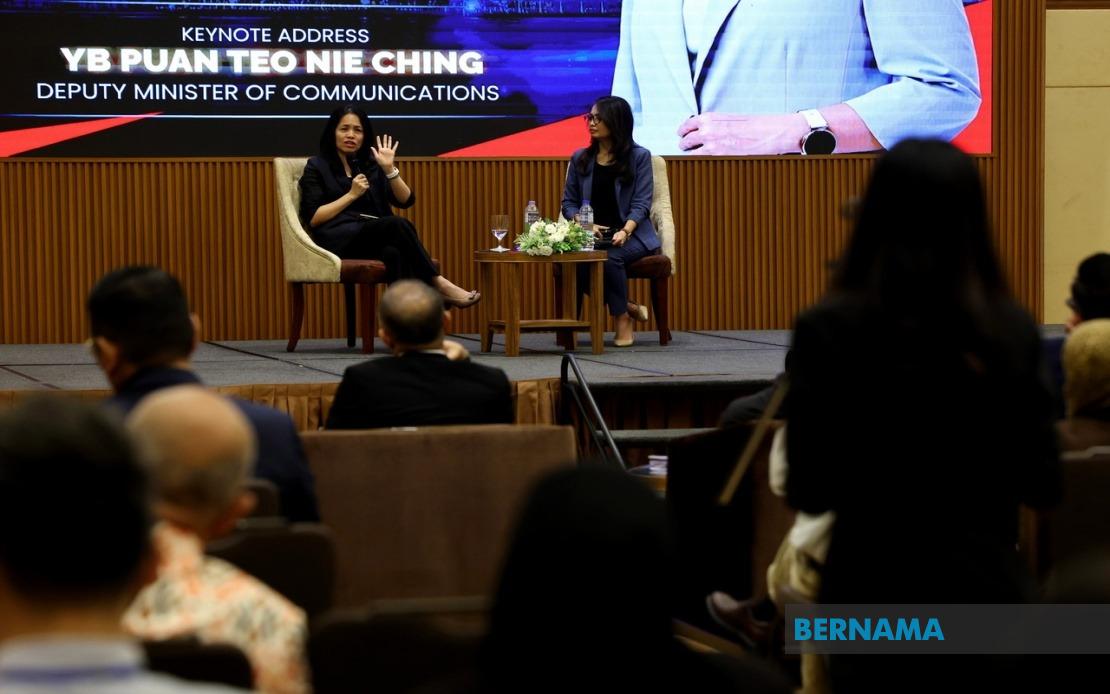
Deputy Communications Minister Teo Nie Ching has called on all parties, particularly those in the civil service, to exercise greater care and decorum when making public statements, emphasising the need to steer clear of language that could be perceived as disrespectful or divisive. Speaking in Putrajaya on June 15, Teo underscored the importance of avoiding remarks that touch on Malaysia's three traditional sensitivities: matters of race, religion, and royalty, collectively known as 3R issues.
The minister's guidance extends beyond election periods, reflecting a broader concern about standards of discourse within government institutions. She stressed that officials should maintain appropriate language and respectful tone not merely during campaigning but as a consistent practice throughout their tenure. This stance signals the government's intention to uphold professional communication standards across the civil service regardless of political season or circumstance.
Teo's remarks came during a media briefing following her inauguration of an industry dialogue course titled "Balancing Virality & Responsibility: Journalism Amid Speed, Trust & Impact", an initiative aimed at strengthening media literacy and responsible reporting practices. The timing of her intervention suggests growing concern within the communications ministry about the quality and appropriateness of official government communications.
Her comments were directed specifically at the recent controversy surrounding Mohd Hisyamuddin Ghazali, who assumed the position of director-general of the Department of Community Communications (J-KOM) on June 9, replacing Datuk Ismail Yusop. Since taking office, Mohd Hisyamuddin has faced criticism from various quarters alleging that he has employed inappropriate and discourteous language in his public pronouncements.
The appointment of Mohd Hisyamuddin to head J-KOM places him at the helm of a strategically important institution responsible for coordinating government communications and managing public messaging across federal agencies. The department's director-general wields considerable influence over how the government communicates with citizens, making the conduct and professionalism of the officeholder particularly significant for public discourse standards.
Teo acknowledged that she had not yet arranged a personal meeting with the newly appointed director-general to convey her guidance directly. This statement suggests that while concerns about his public conduct have reached ministerial level, formal corrective discussions have not yet transpired. The minister's public pronouncement appears designed to set clear expectations for professional behaviour while allowing space for private engagement on the matter.
The emphasis on avoiding 3R-related commentary reflects Malaysia's constitutional and social framework, where sensitivity around these issues is deeply embedded. Article 153 of the Federal Constitution guarantees special rights and privileges to the Malay and indigenous populations, while Article 3 establishes Islam as the federation's official religion and provides constitutional protection for the institution of monarchy. Public officials making insensitive remarks on these topics risk not only professional consequences but also potential legal ramifications under various laws protecting these constitutional provisions.
For Malaysian civil servants and regional government officials, Teo's directive carries practical implications. It reinforces that professionalism in public service extends beyond administrative competence to encompass communication conduct and cultural sensitivity. In an era of rapid social media dissemination, where individual statements can quickly reach wide audiences and be amplified across platforms, the responsibility of senior officials to demonstrate exemplary standards becomes even more pronounced.
The incident also highlights broader questions about institutional accountability and the mechanisms through which government standards are monitored and enforced. While Teo's public guidance serves as a general reminder, the specific concerns about Mohd Hisyamuddin's conduct raise questions about how newly appointed officials are briefed on expectations and how performance in roles involving public communication is monitored and evaluated.
From a regional perspective, Malaysia's approach to managing civil service communication standards reflects patterns seen across Southeast Asia, where governments grapple with balancing official messaging effectiveness with maintaining respect for constitutional sensitivities and social cohesion. The incident underscores the importance of professional development and induction programmes for officials entering high-profile communications roles.
The minister's intervention also carries implications for media literacy and public discourse quality in Malaysia. By advocating for restraint and professionalism in official communications, Teo is attempting to set a tone that discourages inflammatory rhetoric and models responsible public engagement. This is particularly relevant given Malaysia's diverse, multi-religious and multi-ethnic society, where responsible communication practices contribute to social stability and mutual respect.
Looking forward, the effectiveness of Teo's guidance will likely depend on whether concrete follow-up mechanisms are implemented within J-KOM and across the broader civil service. Clear standards, regular training, and consistent accountability for breaches would strengthen the message beyond a ministerial statement. The coming weeks will be instructive in determining whether this represents a one-time admonition or the beginning of more systematic efforts to strengthen communication standards throughout government.