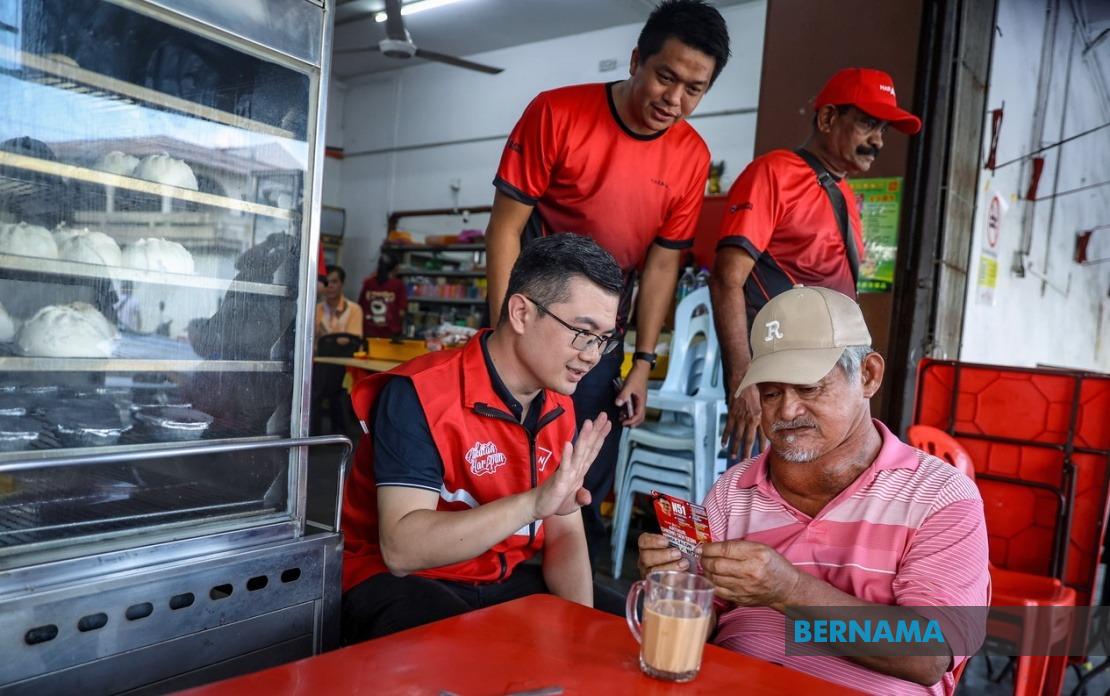
Arthur Chiong Sen Sern, the Pakatan Harapan representative holding the Bukit Batu state seat, is mounting a determined campaign to retain his position with a decisive margin in the forthcoming 16th Johor State Election on July 11. The 36-year-old incumbent is staking his electoral prospects on demonstrating tangible progress across his constituency over nearly two years in office, a sharp contrast to his paper-thin 137-vote victory in 2022 when he squeaked through in a four-way contest.
Chiong's initial election in the 15th Johor State Election saw him triumph with 9,439 votes over rivals Datuk S. Suppayah from Barisan Nasional, Tan Heng Choon representing Perikatan Nasional, and independent Lee Ming Wen. That narrow margin has become his motivation to embed himself more deeply within the Bukit Batu electorate, where 49,963 voters are registered. His team points to consistently positive community feedback as evidence that ground-level work has translated into stronger public support.
Since taking office, Chiong has adopted a visible presence strategy across his 49,963-voter constituency. He maintains regular engagement in the field, addressing issues that transcend political and communal lines. This approach has included directing attention toward infrastructure deficits and chronic flooding problems that have long plagued several residential areas. His philosophy centres on treating all constituents equally regardless of their ethnic or religious background, recognising that service delivery remains the primary currency of political legitimacy at the state level.
One concrete initiative cited by Chiong involved channelling RM20,000 towards installing lighting infrastructure at a futsal court serving the local youth community. The facility remains actively utilised, demonstrating how targeted spending on grassroots amenities can generate visible, sustained community benefit. Beyond sporting facilities, Chiong has prioritised engagement with Felda settlements scattered across Bukit Batu, extending funding to various non-governmental organisations operating at community level.
Flood management has emerged as a signature achievement in Chiong's tenure. Working collaboratively with the Department of Irrigation and Drainage, his office has implemented remedial measures targeting identified flood hotspots including Kampung Rahmat and Kampung Seri Paya. Rather than responding passively to inundation incidents, Chiong has established a pattern of arriving early during crisis situations, positioning himself visibly alongside residents during flash-flood emergencies. This responsive approach has cultivated familiarity and embedded his presence in the collective memory of affected communities.
Chiong's re-nomination carries endorsement from Prime Minister Datuk Seri Anwar Ibrahim, who also chairs the Pakatan Harapan coalition. This backing signals confidence within PH's upper echelons regarding his electoral viability and performance as a state representative. The party's decision to field him again in a potentially competitive contest suggests internal assessment that his ground consolidation has strengthened his position sufficiently to warrant retaining the seat.
The Bukit Batu contest is shaping into a genuinely multi-cornered affair reflecting Johor's fragmented political landscape. Arrayed against Chiong are R. Kumaran, the Kulai PKR chief standing as the Barisan Nasional nominee; M. Premanand representing Ikatan Demokratik Malaysia-MUDA; G. Tamili fielded by Bersama; and independent candidate Kamaruzaman Ali. This four-way challenge mirrors the competitive environment Chiong navigated in 2022, though his organisational incumbency and demonstrated service delivery represent significant tactical advantages unavailable to challengers.
The trajectory from 2022 to 2024 reveals broader patterns in Malaysian state politics. Slim victories frequently catalyse intense consolidation efforts by nervous incumbents seeking to transform fragile mandates into commanding majorities. Chiong's emphasis on documenting development outputs and maintaining field presence reflects this strategic calculation. For voters evaluating whether to enlarge his majority or switch allegiance, the visible question becomes whether two years of developmental activity and responsive governance justify expanded confidence.
Bukit Batu itself reflects Johor's demographic complexity, encompassing urban Kulai residents, rural Felda communities, and vulnerable populations susceptible to flooding during monsoon seasons. This heterogeneity demands political figures capable of navigating competing priorities—development ambitions against infrastructure maintenance, urban modernisation against rural preservation, and economic growth against environmental protection. Chiong's service record suggests an attempt to address these tensions through targeted allocation rather than grand ideological pronouncements.
The election campaign occurs against Johor's broader political realignment. The state has witnessed shifting coalitions and electoral volatility across the past three electoral cycles. Johor voters have demonstrated willingness to punish incumbents perceived as neglecting local concerns or merely occupying positions without substantive delivery. In this context, Chiong's documentation of specific achievements—lighting at futsal courts, flood mitigation measures, NGO funding—represents a deliberate effort to position himself as a working representative rather than a distant political functionary.
For Southeast Asian observers and Malaysian political analysts, Bukit Batu encapsulates contemporary democratic practice in Malaysia's component states. Electoral contests no longer turn solely on party machinery or personality cults but increasingly on demonstrable constituency service and visible development outputs. Voters have become more demanding, insisting on evidence of representative responsiveness. Chiong's campaign strategy implicitly acknowledges this shift, prioritising documentation of achievements over rhetorical appeals.
The early voting window opens July 7, providing an indication of momentum before polling day on July 11. Chiong's campaign apparatus will likely concentrate on mobilising satisfied constituents while attempting to expand his coalition beyond his 2022 base. The question animating the contest remains whether narrowly-won seats, when their holders commit seriously to constituency work, can be transformed into commanding mandates reflecting deepened public trust—or whether Johor voters retain an inherent volatility that punishes even industrious representatives.

