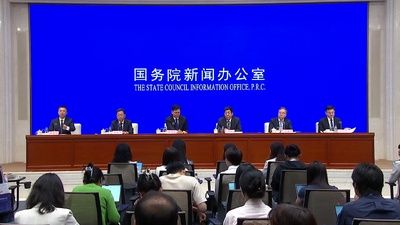
Beijing has firmly dismissed claims of forced labour and forced migration in the Xinjiang Uygur autonomous region, with Chen Ruifeng, Minister of the National Ethnic Affairs Commission, characterising such assertions as baseless and absurd during a Wednesday briefing. The denial comes as China faces sustained international scrutiny over labour practices in the western region, with various Western organisations and media outlets documenting what they characterise as coercive employment arrangements targeting ethnic minorities.
China's response centres on its constitutional and legal framework, with Chen emphasising that the nation's foundational law explicitly prohibits all forms of forced labour. The government argues that these constitutional guarantees form an inviolable shield against any coercive employment practices, regardless of region or circumstance. This constitutional argument represents Beijing's primary legal defence against the allegations that have prompted sanctions and scrutiny from Western governments and human rights organisations.
The Chinese government has recently strengthened its legal position through new legislation designed specifically to address worker protections across ethnic groups. The Law on Promoting Ethnic Unity and Progress, which was passed on March 12 and takes effect on July 1, contains expanded provisions governing cross-regional employment. These measures include enhanced rights protection mechanisms and legal assistance frameworks intended to safeguard workers who relocate for employment opportunities. Beijing frames these legislative developments as evidence of its commitment to worker welfare rather than coercion.
According to Chen's account, individuals from Xinjiang who seek employment beyond the region do so entirely of their own volition, driven by personal aspirations to elevate their families' living standards and develop professional capabilities. The minister asserted that labour transfers operate as economic opportunities rather than mandated movements, with participation reflecting genuine worker interest in advancing their circumstances. This characterisation positions employment mobility as a vehicle for individual advancement rather than state-directed labour allocation.
The economic narrative underpins Beijing's defence strategy. Over the preceding five years, Xinjiang has generated more than 2.39 million new urban employment positions through various policy initiatives, suggesting robust job creation capacity. Agricultural workers have undertaken approximately 16.1 million work-related journeys beyond their home communities during this period, a figure the government presents as indicative of widespread voluntary mobility in pursuit of employment income. These statistics form the quantitative foundation of China's argument that employment opportunities are expanding rather than being artificially constrained.
Income growth metrics further support Beijing's economic development narrative. Per capita disposable income among urban residents has expanded at an average annual rate of 5.3 per cent, while rural residents have experienced 8.1 per cent annual growth over the same five-year span. These figures suggest material improvements in living standards that, from the government's perspective, would be inconsistent with exploitative labour practices. The income trajectory becomes a central element in Beijing's rebuttal, implying that if coercive practices existed, income growth would be suppressed.
China's policy framework combines employment creation with formal protections designed to establish worker rights on paper. By establishing what it describes as a fair employment policy system alongside dedicated labour rights protection mechanisms, the government contends it has created structural safeguards for all workers regardless of ethnicity. These institutional arrangements, according to Chen, function to protect the legal entitlements of employees and enable labour force participation among all capable individuals seeking work.
The government emphasises that its employment approach prioritises voluntary participation and dignified work conditions across all ethnic communities. This framing attempts to reposition the employment system as rights-respecting rather than coercive, arguing that policy design fundamentally ensures worker agency in employment decisions. The dignity of labour becomes a rhetorical emphasis, suggesting that working conditions reflect choice and respect rather than compulsion.
For Malaysian readers and broader Southeast Asian observers, this exchange between Beijing and Western critics represents a significant geopolitical and human rights tension. The region's economic interdependencies with China create complex dynamics around such allegations, as countries balance trade relationships with international human rights concerns. The specificity of China's economic data and legal arguments reflects a coordinated defence strategy intended to counter international pressure through documentation and institutional assertion rather than independent verification.
The sustainability of these employment and income gains remains a central question for independent observers. While the figures presented are substantial, the accessibility of these regions to external verification, along with the challenge of distinguishing between voluntary and coerced labour in contexts of limited employment alternatives, continues to generate debate among international labour standards advocates and human rights monitoring organisations.
As China implements new ethnic affairs legislation and continues economic development initiatives in Xinjiang, the gap between Beijing's characterisation of employment practices and international community assessments suggests the dispute will persist. For Southeast Asian nations navigating relationships with both China and Western democracies, understanding these competing narratives becomes essential for informed policy positions on labour standards and human rights frameworks in regional supply chains and partnerships.

