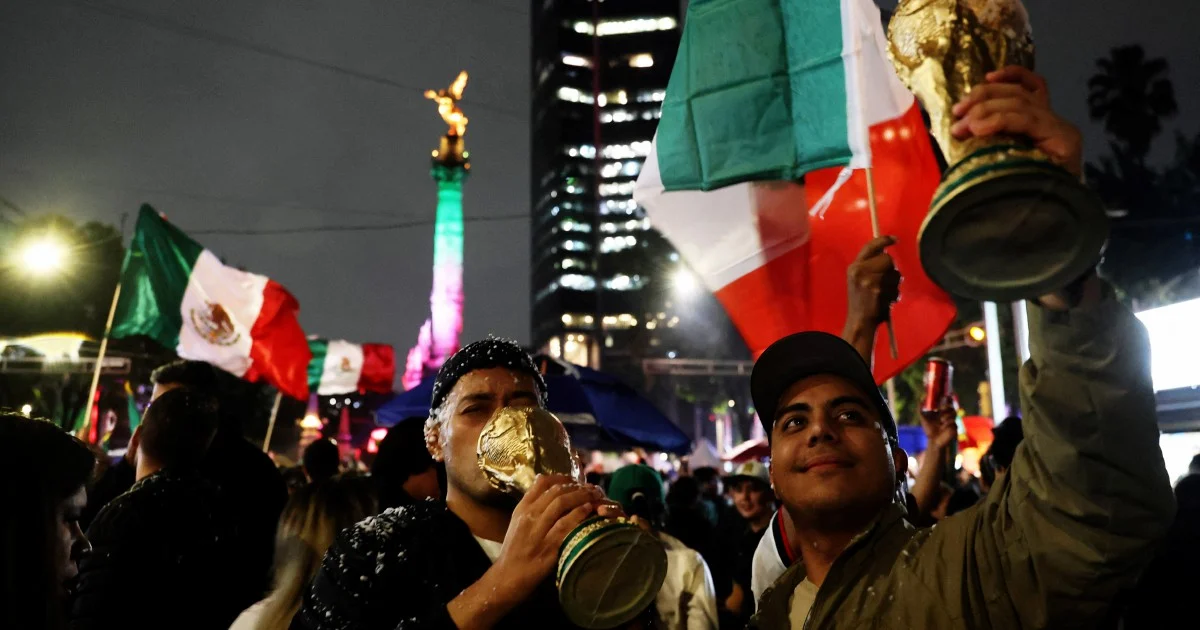
A moment of sporting celebration turned into chaos and violence in the Mexican tourist destination of Cabo San Lucas on Wednesday night when a car accelerated directly into a crowd of fans commemorating Mexico's World Cup match success. The incident resulted in injuries to 17 individuals, according to official confirmation from Los Cabos' municipal administration. Among the injured was the vehicle's driver, who was apprehended by authorities following the incident.
Footage circulating across social media platforms and independently verified by international news agencies captured the alarming sequence of events leading up to and following the collision. Multiple clips showed a black-coloured vehicle initially surrounded by jubilant supporters wearing Mexico's national football team colours and apparel. The situation escalated when the driver suddenly accelerated the car forward, propelling spectators into the air upon impact before the vehicle struck protective bollard structures positioned along the street.
The immediate aftermath proved equally disturbing, with additional verified video evidence depicting onlookers pulling an individual from inside the vehicle and subjecting that person to physical retaliation. Concurrent footage from the same incident zone revealed numerous wounded individuals scattered across the ground, their conditions at that moment uncertain and undetermined based on available documentation. The severity of injuries and the exact circumstances surrounding the driver's decision to accelerate into the assembled crowd remain unclear pending further investigation.
Cabo San Lucas, situated at the southernmost tip of the Baja California Peninsula where the Pacific Ocean meets the Sea of Cortez, ranks among Mexico's premier international vacation destinations. The resort community attracts substantial numbers of overseas visitors alongside domestic tourists, particularly during major sporting events and festive occasions. The concentration of celebrations around significant football matches means such public gathering spaces frequently experience large assemblies of fans engaging in spontaneous street festivities.
The incident raises serious questions about crowd management and public safety protocols during mass celebrations in tourist-heavy municipalities. Large-scale gatherings organised to commemorate national sporting achievements often occur in central plazas and street locations where minimal physical barriers separate pedestrians from vehicular traffic. Municipal authorities across Latin America have grappled with balancing the spontaneity and accessibility of public celebrations against the practical security challenges inherent in managing crowds in open spaces.
Mexico's football team participation in World Cup tournaments generates extraordinary enthusiasm throughout the nation, with fans from all socioeconomic backgrounds converging on public spaces to commemorate victories. These celebrations create genuine communal bonding experiences but simultaneously present logistical obstacles for security personnel responsible for participant welfare. The integration of vehicle access routes with pedestrian celebration zones remains a persistent challenge for urban planners and local governments organizing impromptu festivities.
The apprehension of the driver initiates a formal investigation into the circumstances and motivations underlying the incident. Mexican authorities must determine whether the collision resulted from mechanical malfunction, operator error, deliberate intent, or other contributing factors. The investigation will prove consequential not only for establishing criminal liability but also for understanding whether such incidents represent isolated aberrations or symptoms of broader systemic vulnerabilities.
For Malaysian and Southeast Asian observers, this incident underscores the universal challenge of securing public spaces during spontaneous celebrations whilst preserving the openness that makes such events meaningful for participants. Regional cities hosting major sporting events or national commemorations face comparable pressures to accommodate large crowds enthusiastically while implementing reasonable protective measures. The incident in Cabo San Lucas provides instructive lessons regarding the necessity of preventative infrastructure, crowd flow management, and rapid emergency response capabilities.
The medical response and subsequent investigation protocols employed by Mexican authorities will establish precedents influencing how other tourist destinations approach similar situations. Effective crowd management demands coordination between municipal administration, security forces, health services, and traffic management agencies operating under unified planning frameworks rather than isolated responses to emergencies. The fortuitous availability of comprehensive video documentation from multiple angles facilitated investigation and accountability mechanisms.
Los Cabos' municipal government faces operational and reputational considerations following this incident, as the international tourism sector responds to reports of violence affecting foreign visitors and residents during celebrations. The resort destination's economic vitality depends substantially on visitor confidence in personal safety, making comprehensive communication regarding investigation findings and preventative measures implemented crucial for maintaining tourism flows. Clear transparency regarding circumstances and outcomes will help distinguish isolated incidents from systemic safety failures.
As investigations proceed and medical teams assess and treat the injured individuals, the incident serves as a sobering reminder of how quickly circumstances can transform from joyful commemoration into tragedy. The incident occurred during celebrations surrounding Mexico's participation in global football competition, a context where emotional intensity and large public gatherings converge. Understanding what precipitated the driver's actions and implementing enhanced protective measures will occupy officials' attention throughout the coming days and weeks.

