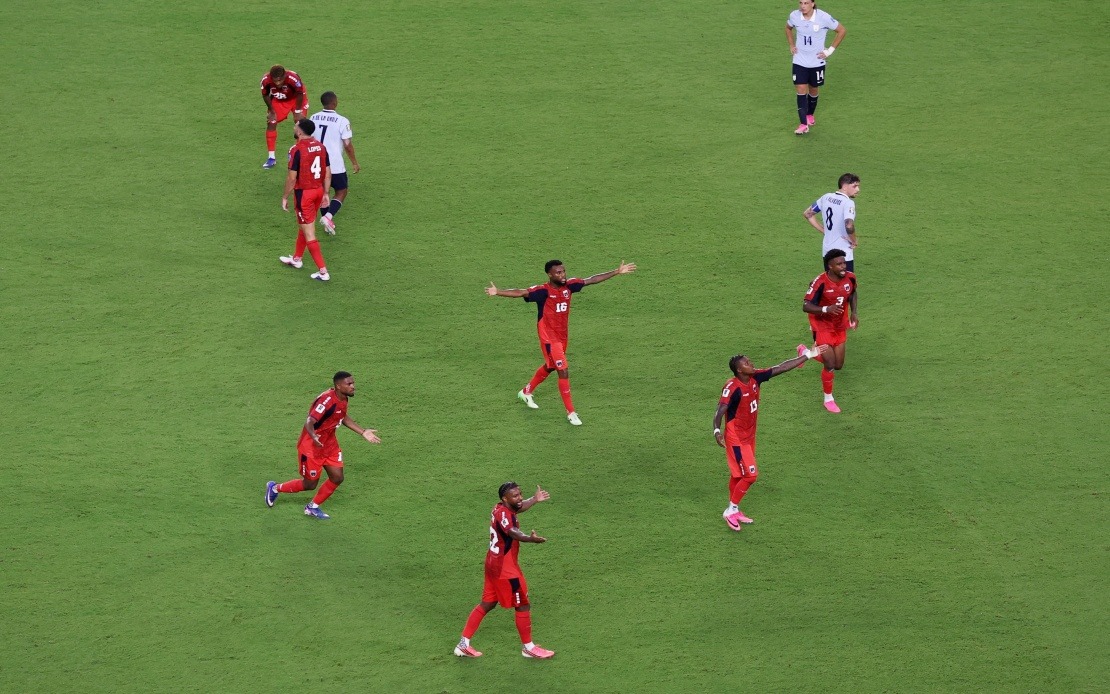
In a remarkable display of competitive spirit, Cape Verde etched their name deeper into World Cup folklore on Sunday with their debut campaign producing an unexpected 2-2 stalemate against Uruguay, one of international football's most decorated nations. The Caribbean islanders' achievement represents a milestone moment for a country making their World Cup bow, adding substance to an already impressive tournament run that has captured imaginations across the footballing world and demonstrated that inexperience need not translate into weakness on the grandest stage.
The significance of Cape Verde's performance extends beyond the scoreline itself. Just days earlier, the debutants had announced themselves with a goalless draw against Spain, the reigning European champions and tournament heavyweights, signalling that this Group H newcomer possessed the defensive discipline and tactical acumen to compete with established powerhouses. Yet the encounter with Uruguay provided something more tangible—tangible goals scored, tangible evidence that Cape Verde could not merely defend but attack with precision and conviction when opportunities arose.
Kevin Pina delivered the breakthrough moment that Cape Verde's supporters will remember indefinitely, launching a sumptuous free-kick from distance into the back of the net in the 21st minute. The strike's technical quality and audacious execution suggested a team playing without the psychological burden of expectation, unshackled by the pressure that frequently constrains emerging footballing nations on the world's biggest platform. This opening goal positioned Cape Verde ahead against a side that has twice claimed world championship honours, a scenario few would have predicted before the tournament commenced.
Uruguay responded with the clinical efficiency expected of a team with their pedigree. Maxi Araújo restored parity in the 44th minute, drawing the sides level before the interval. The two-time champions pressed their advantage immediately after the break, and Augustin Canobbio completed a swift turnaround by putting Uruguay ahead shortly before half-time ended. The momentum appeared to have shifted decisively in favour of the South Americans, who looked poised to exploit their tournament experience and superior technical resources against Cape Verde's youthful exuberance.
What transpired next, however, underscored Cape Verde's refusal to accept a position of inferiority. Substitute Helio Varela required only three minutes after his introduction to level the match in the 61st minute, demonstrating the effectiveness of Cape Verde's tactical flexibility and squad depth. The goal itself illustrated both opportunistic awareness and Uruguay's momentary defensive lapse—Fernando Muslera, the Uruguayan goalkeeper, had ventured far from his line, and Varela exploited this miscalculation with composure and precision, slotting the ball into the unguarded net.
The result leaves Group H in a fascinating state of flux as the tournament progresses toward its decisive phases. Spain maintains their position atop the standings following their commanding 4-0 demolition of Saudi Arabia earlier, yet the group now contains genuine intrigue. Uruguay and Cape Verde sit tied on two points apiece, separated only by goal difference, with both still harboring realistic aspirations of advancing beyond the group stage. Saudi Arabia, meanwhile, occupies the basement position with a single point, their prospects diminishing with each match played.
For Malaysian and Southeast Asian football observers, Cape Verde's emergence carries particular resonance. The island nation's success mirrors the hopes and ambitions of smaller footballing nations throughout the Asian region, many of which have similarly toiled for decades to achieve World Cup qualification only to face the daunting prospect of competing against established powerhouses. Cape Verde's willingness to attack, combined with their defensive discipline, offers a template for how emerging nations might approach such competitions—neither overawed nor reckless, but pragmatically pursuing opportunities when they materialise.
The broader implications of Cape Verde's performance extend beyond their individual tournament trajectory. Their ability to challenge and match a two-time world champion provides ammunition for those advocating for expanded World Cup participation, suggesting that smaller nations, when given the opportunity, can deliver compelling football and merit their place on the global stage. The narrative of the underdog succeeding through organisation, commitment, and tactical astuteness resonates powerfully in a sport often dominated by wealth and historical prestige.
As the tournament unfolds, observers across Southeast Asia and the wider football world will likely continue monitoring Cape Verde's progress with interest. Whether they ultimately qualify from their group remains uncertain, but their contribution to World Cup discourse has already proven substantial. They have demonstrated that tournament debuts need not be characterized by capitulation, and that maiden World Cup goals can be scored with the same quality and significance as those achieved by nations with centuries of footballing tradition behind them.
The 2-2 draw thus represents far more than a single match result. It constitutes a statement of intent from a footballing nation determined to prove that history need not dictate destiny, and that on the World Cup stage, emerging nations possess both the capability and the right to compete against the planet's finest. For Cape Verde, every point gained, every goal scored, and every moment of defensive solidity achieved adds another layer to their remarkable inaugural campaign.

