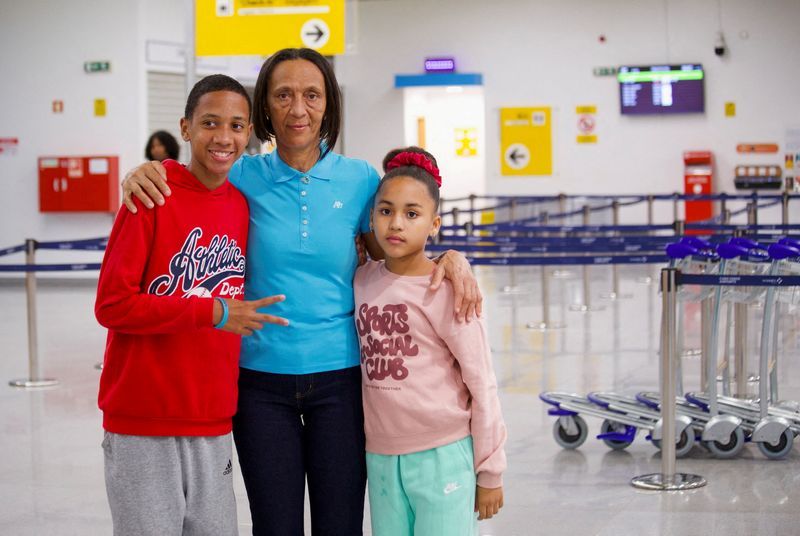
Cape Verde goalkeeper Vozinha's mother, Ana Candida Evora, has finally secured the necessary travel documentation to watch her son compete in the World Cup after diplomatic intervention from the U.S. State Department. The development came in response to Vozinha's tearful disclosure that his mother had been unable to attend his standout performance in Cape Verde's tournament opener, sparking widespread attention to the visa challenges facing families of competing athletes.
Vozinha demonstrated exceptional skill in his team's first group-stage match, delivering a player-of-the-match performance against Spain that saw him make seven crucial saves to deliver a remarkable 0-0 draw against the European champions in Atlanta. The goalkeeper's heroics represented one of the tournament's most impressive defensive displays, yet his accomplishment was overshadowed by the absence of his mother, who had hoped to witness the moment from the stands.
The 40-year-old keeper's emotional revelation about his mother's inability to travel resonated with audiences and gained significant traction online, drawing attention to the practical difficulties that relatives of athletes face when attempting to enter the United States during major sporting events. When Vozinha publicly shared his disappointment about his mother missing this pivotal career moment, the narrative shifted from a simple sporting triumph to a human-interest story about family separation and bureaucratic obstacles.
Following the viral spread of Vozinha's story, the U.S. State Department moved swiftly to resolve the matter. Officials indicated that their visa processing team stationed in Praia, Cape Verde's capital, had been in direct contact with Evora and had expedited the necessary procedures. The diplomatic corps confirmed her approval for travel, emphasizing that the decision aligned with standard policies and established protocols governing visa issuance.
State Department representatives conveyed optimism about the resolution in their statement to journalists, noting that all requirements had been satisfied and that Evora was now cleared to proceed with her journey to the United States. The statement reflected a pragmatic approach to a situation that had garnered unwanted international attention and potentially embarrassed the administration's handling of World Cup-related visa matters.
Evora will now be present when Cape Verde competes in their second group-stage fixture against Uruguay, scheduled for Miami on Sunday, providing her with the opportunity to see her son in action and support the team in a crucial match. This second opportunity carries particular significance given that missing the Spain encounter might have proved an irreplaceable loss had Vozinha's path in the tournament been cut short.
The broader context surrounding Evora's initial visa denial reflects the complexities that have emerged during this World Cup cycle. The Trump administration had implemented stringent immigration policies requiring citizens of numerous countries to post bonds reaching up to 15,000 United States dollars as a precondition for entry into American territory. This measure was part of a comprehensive immigration enforcement strategy that created substantial financial barriers for prospective travellers from developing nations.
Cape Verde residents were among the populations affected by this bonding requirement, which effectively prevented many from attempting to secure visas regardless of their legitimate purposes for travel. The substantial bond threshold represented an insurmountable obstacle for families with limited financial resources, forcing individuals like Evora to abandon their plans to attend the World Cup despite their deep personal reasons for wanting to be present.
The bonding requirement remained in effect until the administration made an adjustment specifically for World Cup ticket holders, recognizing that the policy threatened to diminish attendance at matches and potentially complicate the tournament's success. Even after this carve-out was implemented, the damage had been done for those who had already concluded that travel was financially impossible given the initial terms.
Vozinha's case illuminated a gap between the stated intentions of immigration policy and its practical consequences for ordinary individuals with legitimate reasons to travel. The goalkeeper's emotional appeal served as a powerful counterpoint to abstract policy discussions, transforming visa regulations into a personal narrative that resonated across cultural and national boundaries.
The resolution of Evora's situation demonstrates how public attention and diplomatic pressure can sometimes cut through bureaucratic inertia, though it raises questions about how many other families of athletes faced similar obstacles without the benefit of media scrutiny or public advocacy. For Cape Verde, the incident has added an extra dimension of motivation to their World Cup campaign, with their goalkeeper now able to share his journey with the family member whose presence means the most to him.