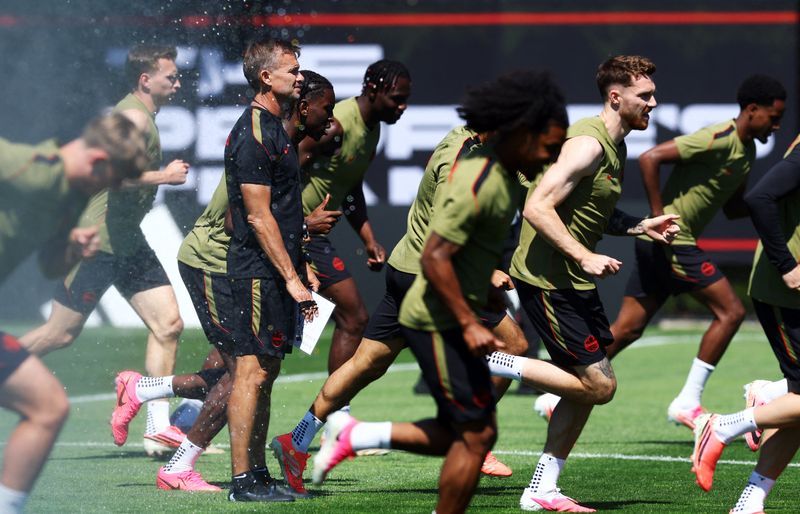
The football world will witness something unprecedented on Sunday when co-hosts Canada take on South Africa in the World Cup's first round of 16 tie at the Inglewood venue in California. Neither team has ever progressed beyond the group stage in their respective World Cup histories, making this encounter genuinely historic for both nations and a landmark moment in their footballing development. For Canada, this represents a significant breakthrough after featuring in the tournament three times previously without advancing, while South Africa finally broke through their own glass ceiling at the fourth attempt, rendering this match far more than just another knockout fixture.
The journey to this point has been markedly different for each side, reflecting contrasting narratives of struggle and redemption. Canada's path included a stunning 6-0 demolition of Qatar in Vancouver that showcased their attacking capabilities, sandwiched between a stalemate against Bosnia and Herzegovina and a defeat to Switzerland. Despite finishing as runners-up in Group B, the Canadians will harbour mild regrets about not topping the standings, which would have allowed them to remain in their home country for the knockout stage. The prospect of playing in Los Angeles rather than their preferred Vancouver venue prompted an emotional plea to supporters, with the team asking fans to make the cross-border journey and maintain their support through the campaign.
South Africa's qualification tells a more turbulent story of redemption after an abysmal opening to the tournament. Their Group A campaign began with profound difficulties against Mexico, where defensive frailty and lack of offensive penetration left supporters and analysts questioning both their tactical approach and their coach's judgment. The criticism directed at 74-year-old Hugo Broos was particularly intense during this period, with many suggesting fundamental changes were necessary to salvage their World Cup ambitions. However, the team demonstrated remarkable resilience and adaptation, switching their tactical approach considerably.
The turning point came in successive matches that showcased growing confidence and improved execution. Against the Czech Republic, while a fortunate penalty provided the equaliser in what remained a competitive encounter, the team's second-half adjustments suggested they were finding their rhythm. This trajectory culminated in a commanding display against South Korea, where South Africa not only secured victory but did so with verve and attacking intent. Thapelo Maseko's 63rd-minute strike proved decisive, propelling the South Africans into second place behind Mexico and validating both Broos's tactical adjustments and the team's competitive spirit.
Broos took particular satisfaction in the manner of qualification, viewing it as vindication against detractors. His post-match comments reflected the coach's defiance and pride, suggesting that performances speak louder than pre-match doubts. The transformation from the lifeless display against Mexico to the vibrant showing against Korea demonstrates the psychological and tactical evolution the South African side achieved within a compressed timeframe, an adaptation that could prove crucial in knockout football where consistency and momentum often determine outcomes.
Canada's primary concern centres on the fitness of captain Alphonso Davies, their standout performer who sat out all group stage matches due to injury complications. Coach Jesse Marsch expressed cautious optimism regarding Davies's availability for Sunday, emphasising the multifaceted impact his return would generate. Beyond the obvious footballing contributions that a world-class fullback brings, Marsch highlighted the psychological boost of having their talismanic captain and most gifted individual return to the line-up, particularly at such a pivotal juncture. The defensive and attacking dimensions Davies provides could fundamentally alter Canada's tactical setup and their capacity to compete against a resurgent South African outfit.
Injury challenges extend beyond Davies, creating considerable uncertainty around Canada's team selection. Ismael Kone suffered a broken leg during the Qatar encounter, ruling him out of the contest entirely and depriving Canada of a key midfield presence. Additional questions linger around the availability and fitness levels of Stephen Eustaquio and central defender Moise Bombito, both of whom carry injury concerns heading into Sunday's match. These accumulating fitness issues mean Canada may lack optimal personnel and tactical flexibility precisely when they most need full squad depth and options.
South Africa meanwhile will regain midfielder Teboho Mokoena from suspension, providing a timely boost to their engine room as they enter knockout competition. However, they will remain without experienced playmaker Themba Zwane, who serves the final match of a three-game suspension stemming from his red card incident against Mexico. Zwane's absence removes a player capable of controlling tempo and creating decisive moments, though South Africa's recent improved form suggests they have capable alternatives who can manage proceedings in midfield.
The contrast in recent form trajectories suggests this could be a genuinely competitive encounter with plenty at stake for both nations. South Africa's resurgence, demonstrated through tactical flexibility and improved performances, represents genuine competitive threat rather than lucky qualification. Canada's experience of defeating Qatar comprehensively indicates they possess the attacking capability to trouble most opponents, yet defensive solidity remains questionable. Both teams enter uncharted waters without previous knockout experience, meaning neither possesses institutional knowledge or historical patterns to draw upon. This levelling factor could ultimately prove decisive, with the team better able to manage the psychological pressures and tactical demands of sudden-death football potentially emerging victorious.

