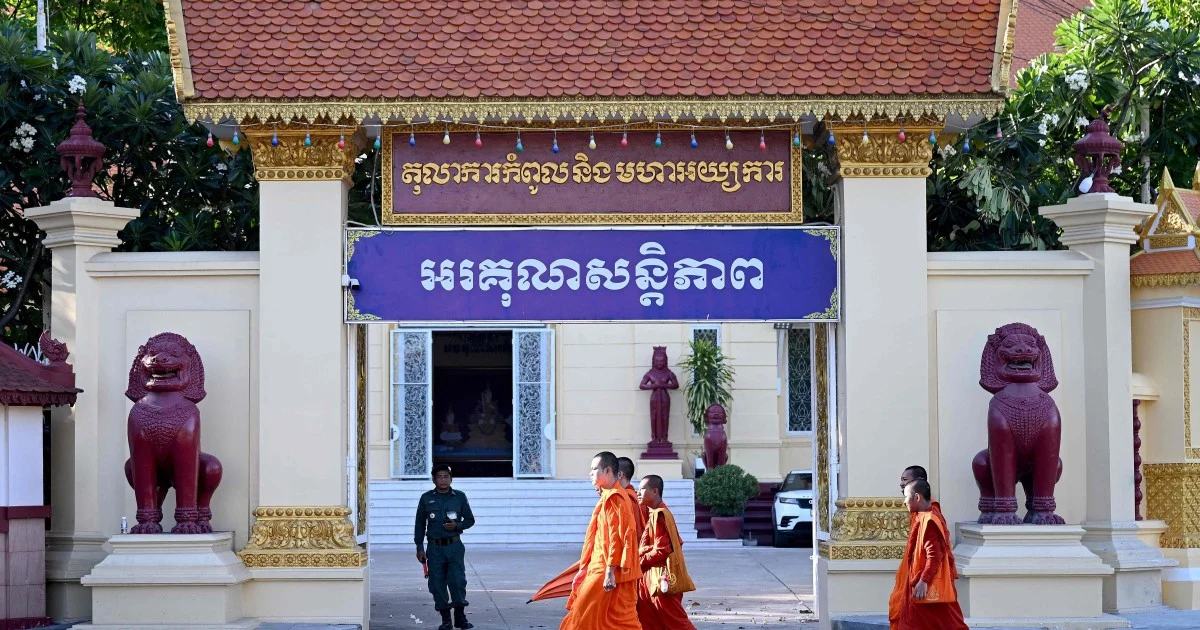
Cambodia's highest court has delivered a significant setback to press freedom in the kingdom by rejecting an appeal against the 14-year prison sentences handed down to two journalists convicted of treason. The Supreme Court ruling, announced Thursday through court officials speaking to news agencies, brings an end to the legal proceedings challenging the convictions and leaves the reporters facing lengthy imprisonment for their coverage of a militarily sensitive area along Cambodia's border with Thailand.
The two journalists were prosecuted under Cambodia's treason laws after they published a photograph documenting conditions in a military-restricted zone in the aftermath of border tensions with Thailand. The image, taken during a period of heightened security concerns between the two nations, became the basis for state prosecutors to pursue charges that carried severe criminal penalties. The case has drawn international attention given its implications for journalistic work and the ability of news organizations to report on matters of public interest, particularly events related to national security and border management.
The Supreme Court's decision to uphold the original sentences represents a confirmation of the lower court's determination that the journalists' actions constituted treason rather than legitimate reporting. By maintaining the lengthy prison terms without modification or leniency, Cambodia's highest judicial authority has signalled a firm stance on how the government intends to treat media coverage of military operations and border security matters. The ruling effectively closes the avenue for appeal that had offered the reporters their best remaining hope for sentence reduction or case reversal.
The conviction itself reflects broader concerns among international media freedom organizations about the operating environment for journalists in Cambodia. The application of treason statutes to reporting activities—rather than to cases involving espionage, collaboration with hostile forces, or genuine threats to national security—has raised questions about whether Cambodia is using criminal law as a tool to restrict press scrutiny of government and military operations. Other Southeast Asian nations have similarly faced criticism from press freedom advocates for expansive interpretations of national security laws that chill investigative journalism.
The border dispute between Cambodia and Thailand has long been a sensitive geopolitical matter, with the two neighbours maintaining a complex relationship marked by occasional tensions and territorial disagreements. Military incidents along the shared frontier periodically attract intense media attention and public concern in both countries. By prosecuting journalists for documentation of a military-restricted area, the Cambodian authorities have effectively placed significant constraints on how newsrooms can cover such incidents, potentially limiting public access to information about events that occur in border regions.
The charges of treason—typically reserved for acts involving betrayal of one's country to foreign powers—represent an unusually severe characterization of journalistic work. International press freedom bodies have argued that applying such grave charges to reporting activities sets a troubling precedent and suggests that Cambodia's legal framework may not adequately distinguish between legitimate national security concerns and attempts to restrict unwanted media coverage. The fact that the Supreme Court upheld these charges indicates that Cambodia's judiciary has endorsed this expansive interpretation of treason law.
For the two journalists involved, the Supreme Court decision means the end of appeals at the domestic level. Their remaining options would likely involve seeking intervention through international human rights bodies or clemency from the executive branch, though neither avenue typically provides certain paths to release. The immediate practical consequence is that both reporters now face the prospect of serving their full 14-year sentences, barring commutation or pardon by the appropriate authorities.
The ruling also carries implications for Cambodia's media industry more broadly. News organizations operating within the country must now assess the legal risks associated with covering military operations, border security, and other national security matters. The Supreme Court's decision effectively signals that journalists cannot rely on appellate courts to overturn treason convictions in such cases, which may encourage self-censorship in reporting on sensitive government activities. This chilling effect extends beyond the two convicted journalists to influence editorial decisions across Cambodia's news sector.
Regionally, Cambodia's handling of the case contributes to a broader pattern of press freedom challenges across Southeast Asia. Several countries in the region have employed national security provisions, official secrets acts, and other criminal statutes to prosecute journalists and restrict reporting on government activities. The Cambodian Supreme Court's validation of treason charges for journalistic work adds another data point to this concerning trend, suggesting that courts in some Southeast Asian nations are willing to accommodate government efforts to restrict media scrutiny under the rubric of national security protection.
International media rights organizations have criticized the convictions and the Supreme Court's refusal to overturn them, arguing that Cambodia has violated both international press freedom standards and its own constitutional guarantees of expression. These organizations typically argue that democratic societies require robust independent media capable of holding governments accountable, and that criminalization of journalism fundamentally undermines this essential function. Their statements regarding the case have emphasized the distinction between legitimate national security prosecution and the use of law as a tool for suppressing unwanted reporting.
The Supreme Court decision closes one chapter of this legal battle while opening questions about potential international advocacy on behalf of the imprisoned journalists. Various human rights organizations have indicated an interest in pursuing the case through United Nations mechanisms and regional human rights bodies, though such proceedings typically involve lengthy processes with uncertain outcomes.
For Cambodia's government, the Supreme Court ruling represents a victory in its efforts to maintain strict control over media coverage of sensitive matters. However, the case has also drawn sustained international criticism and negative media attention that may complicate Cambodia's broader diplomatic relationships and international reputation. The tension between national security concerns and press freedom remains unresolved, with the Supreme Court judgment reflecting the current dominance of security considerations in Cambodian judicial thinking.

