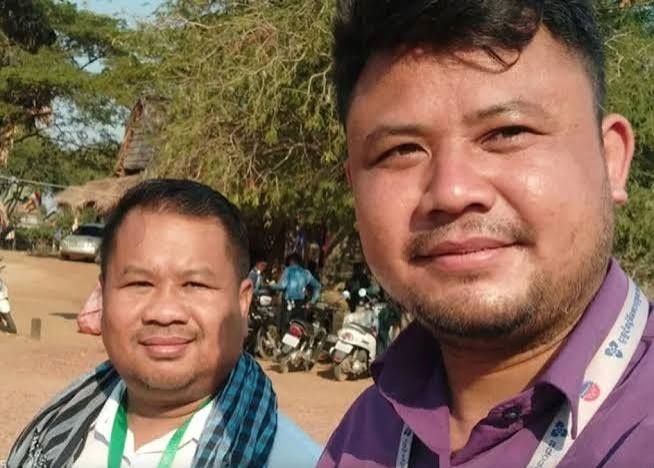
Cambodia's top court was poised to deliver a significant ruling on the appeal of two journalists whose 14-year treason convictions have become a focal point in debates over judicial independence and press freedom in the kingdom. Phorn Sopheap, reporting for Battambang Post TV Online, and Pheap Pheara of TSP 68 TV Online, were arrested in July after returning from assignments covering military operations near the Thai border. They stand accused of uploading photographs taken in a restricted military zone to Facebook, allegations both men have consistently disputed, maintaining they possessed authorisation to operate in the area where they conducted their reporting work.
The case originated during a volatile period of cross-border hostilities that erupted in July and December, displacing hundreds of thousands of civilians across both kingdoms and claiming approximately one hundred military and civilian lives. The journalists' particular photographs gained international prominence, particularly one image depicting land mines that Thai news organisations widely circulated to support Thailand's position that Cambodia had deployed newly laid anti-personnel ordnance along the demarcation line, devices that subsequently wounded Thai military personnel. Cambodia's government formally rejected these assertions, asserting compliance with international conventions prohibiting land mine deployment and suggesting instead that any ordnance discovered likely originated from Cambodia's decades of internal conflict that concluded in the late 1990s.
The conviction handed down by Siem Reap Provincial Court in December charged the men with supplying foreign states with information damaging to national security, a characterisation the journalists categorically deny. Their legal team seeks a complete reversal of both the guilty verdict and the fourteen-year prison terms imposed. The gravity of the case extends beyond the individual sentences, however, as it represents what international advocacy organisations identify as an emerging pattern of using expansive national security legislation to constrain legitimate journalistic activity.
The Supreme Court's forthcoming decision arrives at a particularly sensitive moment for Cambodia's political landscape. Just days earlier, the same court upheld the incitement conviction of Rong Chhun, a prominent opposition figure and 56-year-old political activist, who was found guilty of inciting social unrest following his engagement with communities displaced by state-sponsored infrastructure initiatives. Legal observers and international monitors characterise such prosecutions as representative of broader governmental efforts to neutralise political opponents and silence dissenting voices, a pattern that international human rights organisations have documented extensively.
These judicial proceedings underscore the trajectory of Cambodia's governance structure since Hun Manet assumed the premiership in August 2023, succeeding his father Hun Sen, who maintained nearly four decades of autocratic rule characterised by widespread allegations of human rights violations, systematic suppression of speech and civic freedoms, and restrictions on political association. Despite Hun Manet's education in the United States and initial international hopes for reform, Cambodia's political-legal environment has demonstrated minimal evidence of liberalisation. Instead, governmental authorities continue deploying state institutions, particularly courts, as mechanisms for constraining opposition activity and managing information flows.
International scrutiny of Cambodia's judicial independence has intensified following these cases. Human Rights Watch has characterised Cambodia's court system as lacking genuine autonomy from the ruling Cambodian People's Party, a criticism the government disputes, asserting that the Supreme Court maintains full operational independence. However, the pattern of high-profile convictions affecting journalists, opposition politicians, and civil society activists suggests systemic obstacles to equitable judicial processes. The Committee to Protect Journalists, based in New York, has specifically characterised Cambodia's approach as deliberately weaponising ambiguous national security frameworks to criminalise standard journalistic practice, particularly investigative reporting addressing sensitive state matters.
Cambodia's position within global press freedom rankings reflects these systemic concerns. The 2025 Reporters Without Borders World Press Freedom Index positioned Cambodia at 161st among 180 nations and territories, locating the kingdom within the category of states experiencing conditions deemed "very serious" regarding press freedom, according to the Paris-based monitoring organisation. This ranking deterioration mirrors the observable tightening of constraints on media operations and journalistic reporting within the country.
The journalists' case additionally illustrates the particular vulnerability of provincial and independent media outlets in Cambodia. Both men worked for small, regional television organisations rather than established national news institutions, a positioning that may have rendered them more susceptible to legal action and less capable of accessing institutional resources for legal defence. The arrests and subsequent prosecutions of journalists operating outside Phnom Penh's established media framework suggest governmental efforts to discourage border reporting and restrict information flows regarding sensitive security matters.
Regionally, Cambodia's judicial proceedings carry significance for Southeast Asian press freedom more broadly. The kingdom's application of national security statutes to prosecute journalists reflects methodologies increasingly adopted across the region, where governments employ ostensibly legitimate security concerns to restrict information access and media operations. Thailand, Vietnam, and Myanmar have similarly weaponised security legislation against journalists and opposition voices, creating a regional environment where press freedom faces coordinated pressure from state institutions claiming national defence imperatives.
The Supreme Court's decision will likely establish precedent regarding how Cambodia interprets and applies treason charges to journalistic activity, potentially influencing future prosecutions of media practitioners covering defence and security matters. Should the conviction stand, the message to Cambodia's journalistic community regarding the acceptable bounds of reporting on military operations and border security will become substantially narrower, potentially chilling reporting on significant public interest matters affecting both national and regional security.
International media freedom organisations have mobilised substantial advocacy pressure around the case. More than a dozen national and international journalism associations submitted coordinated correspondence to Cambodia's government following the lower court of appeal's March decision upholding the convictions, requesting the government withdraw its prosecution entirely. Such coordinated international advocacy represents an attempt to apply external pressure where domestic legal mechanisms and institutional checks on governmental power appear insufficient to protect press freedom.
The ruling carries implications extending beyond Cambodia's borders into regional discussions about governance, transparency, and civil liberties standards within Southeast Asia. International investors, diplomatic partners, and development organisations monitor Cambodia's judicial independence as an indicator of broader institutional health and rule-of-law commitments. Outcomes that reinforce perceptions of politicised justice systems may consequently influence Cambodia's standing within regional and international governance frameworks.

