Cambodia is making a calculated push to reorient its manufacturing economy toward higher-value industries, with South Korea emerging as a critical partner in this transformation. Deputy Prime Minister Sun Chanthol's investment promotion mission to Incheon in June represented the clearest signal yet that Phnom Penh is serious about moving away from the labour-intensive garment factories that have sustained the nation's economic growth for three decades. The focus on automotive components, electric vehicle systems, healthcare technology and advanced manufacturing reflects a recognition that Southeast Asia's competitive landscape is shifting, and that Cambodia must capture investment in sectors offering greater productivity gains and stronger regional supply-chain integration.
The roadshow and accompanying company visits represented a carefully choreographed effort to bring Cambodian officials directly into dialogue with established South Korean manufacturers already operating successfully within Cambodia's borders. This strategy—what officials termed a "door-knock mission"—aims to demonstrate that the kingdom has both the institutional framework and the practical experience to support more sophisticated production. By showcasing existing operations and hosting Korean companies at the 2026 Incheon-Cambodia Investment Roadshow, organised jointly by Cambodia's Council for the Development of Cambodia and the Incheon Chamber of Commerce and Industry, the government sends a dual message: that Cambodia is not merely a potential location, but a proven destination with existing supply chains and skilled workforces.
Daejoo KC Group, one of South Korea's largest conglomerates, exemplifies the kind of anchor investment Cambodia is building upon. The company's Cambodian subsidiaries already generate substantial economic value, with Camko Motor assembling Hyundai vehicles domestically while manufacturing automotive wire harnesses for regional export. The operation employs nearly 500 workers and provides a template for how Korean manufacturing expertise can take root in Cambodia. During his visit, Sun Chanthol explicitly encouraged Daejoo to deepen its commitment, suggesting expansion into sectors where the group already operates in South Korea. This approach recognises that companies comfortable with a particular regulatory environment and labour market are more likely to increase investment than entirely new entrants seeking to build operations from scratch.
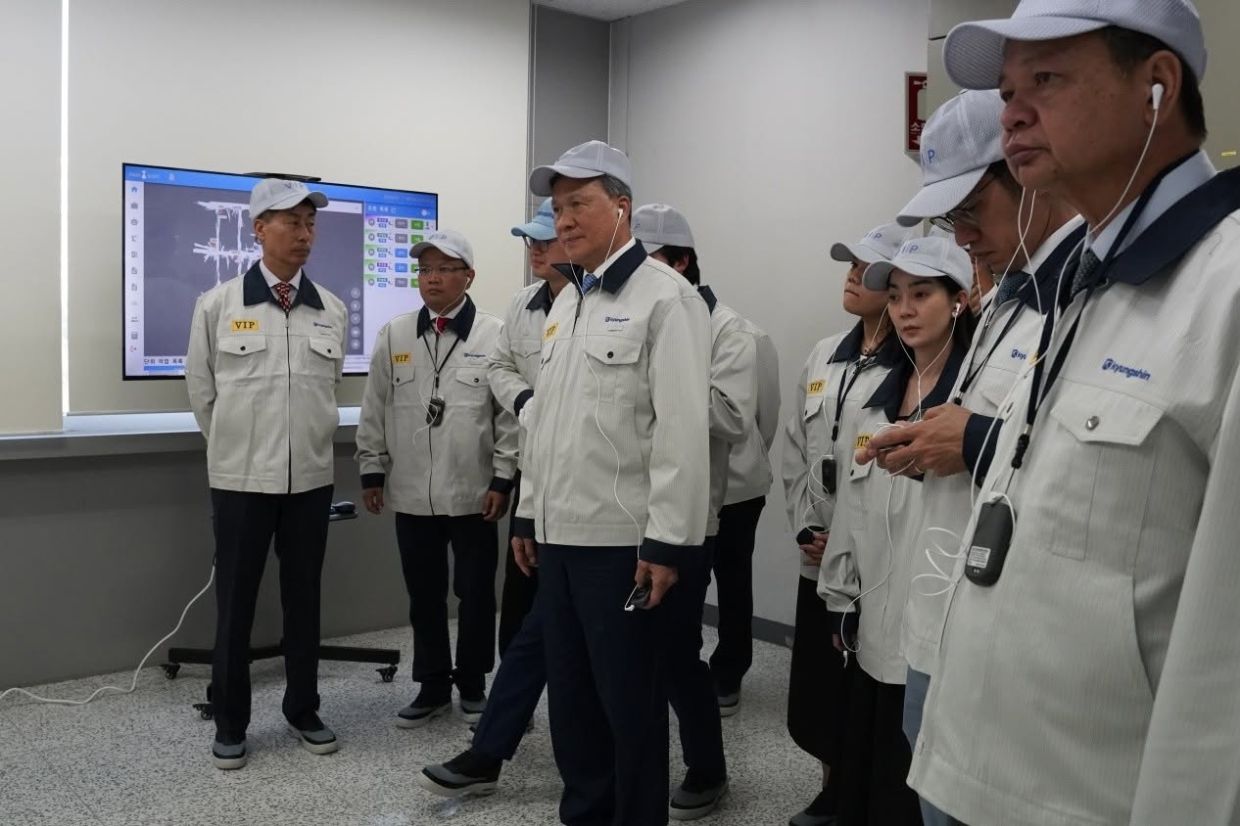
The automotive electronics sector holds particular strategic importance in Cambodia's diversification plans. Kyungshin Co., Ltd., a specialist in wiring harnesses, connectors and electrical systems for electric vehicles, has maintained operations in Kandal province since 2012 with investment valued at approximately US$20 million and a workforce of 1,467. The company's decade-long presence demonstrates that Cambodia can host sophisticated manufacturing that demands precision, technical skill and integration into global supply chains. As major automotive manufacturers shift decisively toward electric vehicles and advanced mobility solutions, Cambodia's capacity to host companies like Kyungshin positions it as a potential hub for EV component manufacturing in Southeast Asia. This is particularly significant given that regional automotive production is increasingly concentrated in Vietnam and Thailand; Cambodia could capture a portion of this growth by offering competitive labour costs coupled with improving infrastructure.
Sun Chanthol's visit to Incheon Baek Hospital on the second day of his mission broadened the pitch beyond manufacturing alone. The emphasis on healthcare technology, digital systems and international-standard medical facilities reveals that Cambodia is seeking not only production capacity but also service-sector investment and knowledge transfer. The government explicitly requested assistance with advanced medical technologies and specialist training programmes, framing healthcare as a key priority for royal policy. This signals recognition that Cambodia's development cannot rest solely on factory-based employment, and that attracting companies specialising in digital healthcare, medical training and high-end services would strengthen both public welfare and private-sector capability. Healthcare is an underdeveloped sector in Cambodia, and importing South Korean expertise in hospital management and digital systems could yield significant social benefits while creating professional-class employment.
The legal and policy framework underpinning these investment pitches has been substantially reformed. Cambodia's new Law on Investment provides incentive packages, fiscal benefits and investment protection mechanisms designed to compete with other Southeast Asian jurisdictions. Sun Chanthol emphasised macroeconomic stability and reliable legal protections during the roadshow, suggesting that the government recognises that modern manufacturers require predictable operating conditions, not merely low wages. The participation of the Cambodian ambassador to South Korea, officials from the Council for the Development of Cambodia and the Ministry of Commerce, alongside private-sector organisations such as the Cambodian Oknha Association, demonstrated an effort to align diplomatic, governmental and business interests behind the investment promotion campaign. This institutional coherence is itself a signal to foreign investors that Cambodia's policy environment has matured beyond ad hoc decision-making.
Cambodia's garment sector, which has generated employment for hundreds of thousands of workers and sustained the kingdom's integration into global trade, remains economically vital but increasingly vulnerable to automation and rising labour competition from Bangladesh and Vietnam. Policymakers have grown increasingly insistent that diversification is imperative for long-term prosperity. The apparel industry contributed roughly 18 per cent of Cambodia's gross domestic product and accounted for the majority of merchandise exports for years, but wage pressures, shipping costs and technological change have squeezed margins. Automotive components and EV systems offer different dynamics: higher unit values, stronger reliance on technical expertise rather than sheer labour volume, and integration into supply chains that will expand as electric vehicle adoption accelerates across Asia. Healthcare and digital services similarly offer productivity gains that garment manufacturing cannot match.
The timing of this mission reflects broader shifts in regional manufacturing. South Korea, with its advanced automotive and electronics sectors, faces rising labour costs at home and increasing competition from Chinese manufacturers. Cambodia, with a young workforce, geographic proximity to Vietnam and Thailand, and improving logistics infrastructure, represents an attractive location for Korean companies seeking to diversify production away from South Korea whilst maintaining regional supply-chain coherence. Companies already operating in Cambodia have developed relationships with local authorities, understand the regulatory environment and can expand operations with lower risk than entering new markets. This creates a virtuous circle wherein successful early investors attract follow-on investment as confidence builds.
For Malaysia and the broader Southeast Asian region, Cambodia's strategy carries important implications. The kingdom's attempt to climb the manufacturing value chain will intensify competition for foreign direct investment in automotive components and EV systems, sectors where Malaysia, Thailand and Vietnam are already established. However, Cambodia's lower wage structure and developing infrastructure also create opportunities for complementary investment. If Cambodia becomes a hub for lower-cost EV component manufacturing whilst Malaysia focuses on higher-value engineering and vehicle assembly, regional supply chains could deepen and strengthen. The healthcare and digital services emphasis may also create opportunities for Malaysian companies to export professional services and technical expertise into Cambodia as the sector develops.
The government's push for technology transfer and knowledge exchange, evident in both the automotive and healthcare components of the mission, suggests recognition that attracting factories alone is insufficient for sustainable development. Cambodia is explicitly seeking partnerships that will build local capacity, train workers and develop management expertise. This represents a more sophisticated approach to foreign investment than simply offering low wages and tax breaks. Companies that invest in training and knowledge transfer create more durable foundations for economic development than those seeking merely to exploit labour cost advantages. If successful, this approach could position Cambodia not as a perpetual low-cost assembly location but as a centre for more complex manufacturing and service delivery.
The South Korean mission signals that Cambodia's leadership understands the economic pressures facing the garment sector and is determined to build alternative sources of growth and employment. By targeting established Korean manufacturers with operations already in Cambodia, the government is pursuing a realistic strategy of deepening existing relationships rather than seeking entirely new investment. The breadth of the mission—spanning automotive components, EV systems, healthcare and digital technology—reflects ambition to diversify across multiple sectors rather than betting heavily on a single industry. The emphasis on facilitation, legal protection and technology transfer suggests that policymakers have absorbed lessons about what attracts and retains quality foreign investment in an increasingly competitive regional environment.