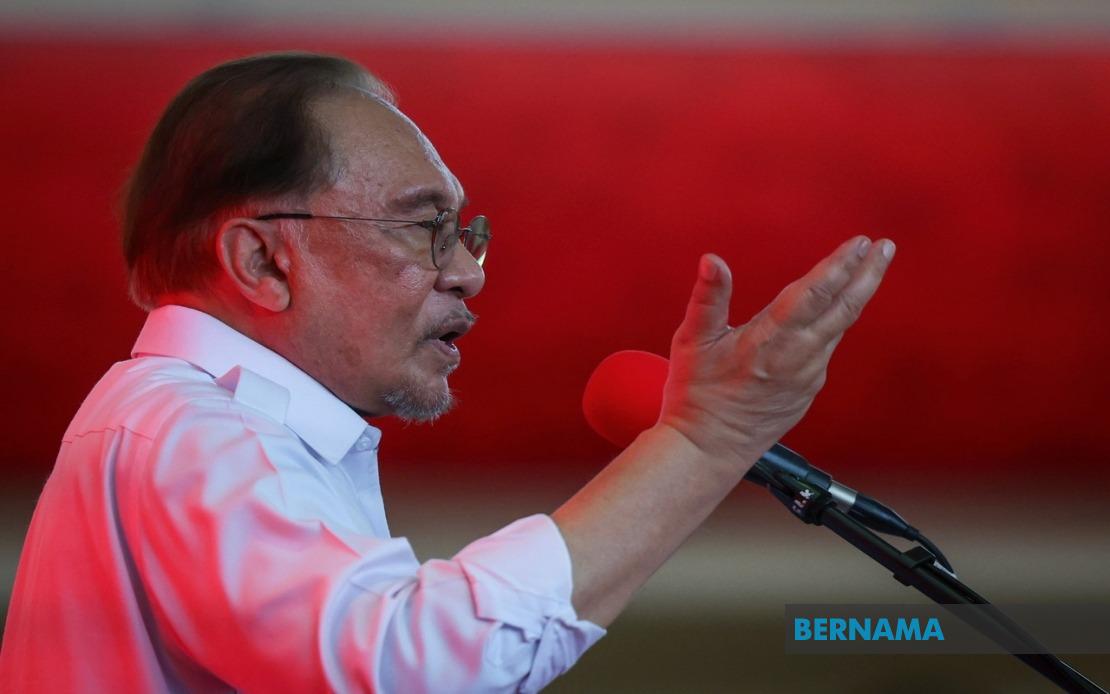
Prime Minister Datuk Seri Anwar Ibrahim signalled that a pivotal moment in the Lembaga Tabung Haji (TH) saga is approaching, with the Cabinet poised to determine the public release of the Royal Commission of Inquiry report during Wednesday's weekly meeting. His remarks, made at an event in Tampin, reflect mounting pressure to bring transparency to an inquiry that has become one of the government's most closely watched investigations.
The RCI was established to examine serious allegations regarding Tabung Haji's disposal of valuable assets, a matter that has captured public attention and sparked considerable debate about governance and accountability within one of Malaysia's most significant Islamic financial institutions. The timing of the Cabinet's decision carries symbolic weight, as it comes amid broader government efforts to demonstrate commitment to institutional reform and transparency following a turbulent period marked by multiple leadership transitions.
Anwar's statements reveal a pragmatic approach to the controversy, emphasizing the separation of powers and institutional roles that undergird Malaysia's legal and political framework. By positioning the matter outside his personal purview, the Prime Minister sought to reassure stakeholders that decisions would follow constitutional processes rather than political considerations. He articulated a clear hierarchy of responsibility: investigations fall to designated authorities, prosecution to the Attorney General, and adjudication to the courts, with the Prime Minister's office remaining distinct from these functions.
The distinction Anwar drew between the executive's role and the judiciary's independence reflects broader constitutional principles essential to democratic governance. His statement that "if nothing is wrong, stand up for it; if something is wrong, prosecute" appeared designed to address concerns that political considerations might influence how findings are handled. For Malaysian readers attuned to governance issues, this framing represents an attempt to depoliticize a matter that inevitably carries political dimensions given public interest and institutional stakes involved.
The context surrounding this announcement is significant. Just days earlier, Anwar had already indicated the government's readiness to publish the report, contingent on consultations with the Chief Secretary to the Government regarding proper procedural channels. This progression suggests internal discussions have advanced substantially, with Wednesday's Cabinet meeting now positioned as the formal decision point rather than the beginning of deliberations.
Tabung Haji's operational challenges and the circumstances prompting the RCI have remained sources of concern for millions of Malaysian Muslims whose savings are entrusted to the institution. The inquiry into asset sales touches on fiduciary responsibilities and governance standards that extend beyond individual institutional performance to reflect broader questions about safeguarding public assets and religious endowments. The eventual public release of findings could shape future policy regarding Islamic financial institutions throughout Malaysia and the region.
The presence of senior government figures at the event where Anwar made his statements, including Chief Secretary Tan Sri Shamsul Azri Abu Bakar and defence and military officials, underscored the government's institutional apparatus being mobilized around this matter. Such gatherings typically signal coordinated messaging and alignment among top officials, suggesting Cabinet-level consensus may already be forming around transparency.
From a governance perspective, the Cabinet's imminent decision represents a test of the administration's transparency commitments. Public release of the RCI report would provide citizens access to official findings, enabling informed assessment of what occurred and whether systemic vulnerabilities require remedial action. Conversely, continued confidentiality would likely generate speculation and undermine confidence in institutional accountability. The political calculus appears to favor transparency, with Anwar's remarks suggesting receptiveness to public disclosure.
For Malaysian and Southeast Asian observers, this situation illuminates tensions between institutional confidentiality and democratic accountability that many regional governments navigate. The handling of sensitive inquiries into public institutions carries implications extending beyond immediate political considerations to encompass questions about institutional legitimacy and public trust. How Malaysia's Cabinet manages this decision may influence expectations and precedents regarding transparency across the region.
The pathway forward hinges on Cabinet consensus, though Anwar's framing suggests significant support for release. His statements were notably confident rather than equivocal, indicating internal government discussions have likely moved beyond fundamental disagreement toward procedural mechanics. The Prime Minister's emphasis on constitutional processes and institutional roles suggests the Cabinet will frame any decision within established legal parameters, potentially mitigating concerns about political manipulation of findings.
Stakeholder perspectives will inevitably shape how the eventual Cabinet decision is received. If the report confirms significant governance failures, institutional accountability and potential consequences for implicated individuals become pressing questions. If findings suggest less severe breaches, attention may shift toward systemic improvements preventing recurrence. Public accessibility to the actual report rather than mere summaries or government interpretation will prove crucial for evaluating institutional reforms and restoring confidence among Tabung Haji's depositors and the broader Malaysian public.

