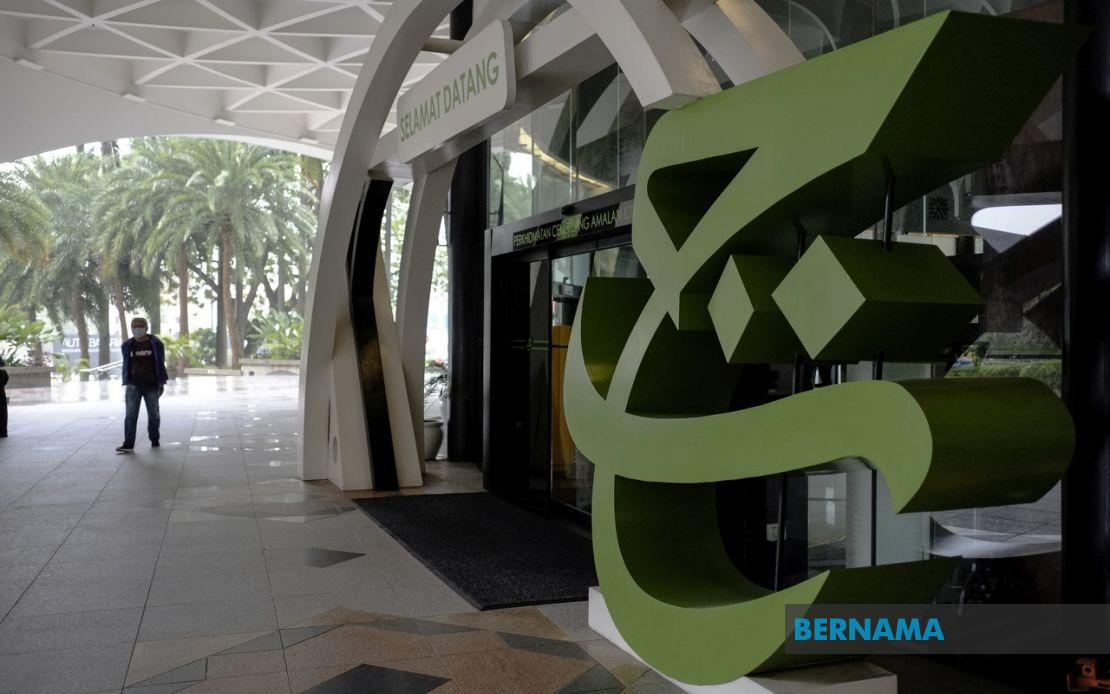
The Malaysian government has moved to bring transparency to one of the nation's most significant Islamic financial institutions by approving the declassification of a Royal Commission of Inquiry report into Tabung Haji (TH), the board that manages savings for Malaysian Muslim pilgrims. The Cabinet's decision on July 29, 2026, represents a culmination of years of remedial efforts following a major financial crisis that threatened the stability of the institution and the savings of hundreds of thousands of depositors across the country.
Tabung Haji's troubles became public knowledge in December 2018, when authorities revealed the true extent of the institution's financial distress. By the end of 2017, the organisation's liabilities of RM74.4 billion had eclipsed its assets of RM70.3 billion, creating a negative gap of RM4.1 billion in its 2017 accounts alone. More alarming was the broader structural deficit of RM10.9 billion that auditors and Bank Negara Malaysia uncovered, compounded by warnings of an impending liquidity crisis as anxious depositors rushed to withdraw RM6 billion over a compressed timeframe. The situation painted a picture of institutional decay that had accumulated gradually since at least 2014, when TH had paradoxically continued distributing profits to depositors even as its liabilities outpaced its assets.
The government's response came swiftly and decisively. By December 31, 2018, a financial rescue operation was underway through Urusharta Jamaah Sdn Bhd (UJSB), a special purpose vehicle established by the Ministry of Finance Incorporated. This mechanism channelled RM19.6 billion in sukuk—Islamic bonds—and RM300 million in fresh cash into TH's operations, effectively transferring the institution's underperforming assets to UJSB while injecting the liquidity and capital needed to restore confidence. The intervention was crucial not merely for the institution's survival, but for maintaining public faith in Islamic financial instruments and safeguarding the retirement and pilgrimage savings of ordinary Malaysians, many of whom lack alternative means of long-term wealth preservation.
Parallel to the financial stabilisation effort, the government established a Royal Commission of Inquiry in July 2021 to examine what had gone wrong at TH between 2014 and 2020. The RCI's mandate was to investigate the root causes of the financial deterioration, identify accountability gaps, and recommend structural and operational improvements. Once completed in 2022, however, the report was deliberately withheld from public scrutiny. The government's reasoning was pragmatic: releasing the findings before TH had successfully stabilised could have triggered renewed panic among depositors and undermined the recovery process. This delay, while understandable from a financial stability perspective, also raised questions about institutional transparency and public accountability.
The intervening years saw demonstrable progress in TH's rehabilitation. The institution implemented 75 per cent of the RCI's 25 recommendations for improvement, suggesting that management took the inquiry's findings seriously and acted upon them comprehensively. More tangible evidence of recovery emerged in March 2026, when TH announced a profit distribution rate of 3.5 per cent for the 2025 financial year—a figure that signalled the institution had moved decisively from crisis territory back to profitability and positive returns. This dividend announcement carried symbolic weight beyond the percentage itself; it demonstrated to millions of depositors that their savings were once again generating genuine gains rather than eroding in value.
The timing of the RCI report's release reflects broader considerations within Malaysia's governance ecosystem. After the MADANI government took office, officials signalled an intention to improve institutional transparency while maintaining prudent management of sensitive financial matters. Minister Dr Zulkifli Hasan presented the case for public release to the Dewan Negara on July 22, 2026, and Prime Minister Datuk Seri Anwar Ibrahim confirmed the decision three days later. The Cabinet's formal approval came within a week, suggesting that the report's contents, while critical of past management, did not reveal findings so catastrophic as to warrant continued secrecy now that TH had stabilised.
The report's 25 recommendations and their implementation outcomes provide a window into the specific deficiencies that contributed to TH's crisis. While the report itself has not yet been publicly examined in detail, the high implementation rate suggests recommendations addressed governance structures, investment oversight, asset management protocols, and operational controls. For Malaysian policymakers and the broader financial sector, the RCI report will serve as a case study in institutional failure and recovery, offering lessons applicable to other statutory bodies and government-linked investment vehicles that manage public assets or public trust funds.
The declassification carries implications beyond TH itself. The decision commits enforcement agencies to investigate the report's findings, potentially leading to action against individuals or entities responsible for the crisis. This aspect is critical for accountability and deterrence; financial mismanagement at a scale affecting millions of Malaysians demands consequences for those responsible. Moreover, the commitment to debate the report at a special Dewan Rakyat sitting ensures that parliamentarians and the public can examine the findings and their implications for governance standards across government institutions.
For TH's depositors—estimated at over one million Malaysian households relying on the institution for pilgrimage savings and retirement income—the report's release represents official acknowledgement that the crisis occurred and was documented thoroughly. The restoration of the 3.5 per cent profit distribution demonstrates that their patience through the stabilisation period has been rewarded. Many depositors experienced the crisis as a shock that threatened their once-in-a-lifetime hajj aspirations and long-term financial security; the recovery and transparency now offered provide some measure of reassurance and restoration of institutional trust.
The broader Southeast Asian context also matters here. Malaysia's Islamic financial sector is a regional leader, and TH, despite its recent travails, remains a flagship institution for Islamic savings products. The competent management of TH's recovery and the transparent handling of the subsequent inquiry signal that Malaysia's authorities take their stewardship of Islamic finance seriously and will address systemic problems robustly. This strengthens confidence in Malaysian sukuk markets and Islamic banking more broadly, with spillover benefits for the region's Islamic finance ecosystem.
Moving forward, the key challenge lies in implementation of the RCI recommendations and enforcement action. The fact that 75 per cent of recommendations have been implemented suggests momentum, but the remaining 25 per cent warrants scrutiny. Additionally, the report's release provides an opportunity for parliament, civil society, and the media to conduct independent analysis and hold institutions to account based on the findings. The enforced investigation into the report's conclusions by relevant agencies will be closely watched as a test of institutional accountability in Malaysia.
The journey from TH's RM10.9 billion deficit crisis to today's approval of transparency reflects both the severity of the initial problem and the resilience of Malaysia's institutional responses. While questions about governance during the 2014-2020 period require thorough public airing, the recovery itself demonstrates that structural problems in government institutions can be diagnosed, addressed, and reversed with adequate capital, management changes, and sustained focus. For Malaysians who entrust their hajj savings and retirement funds to TH, the report's release and the institution's demonstrated recovery offer justified confidence in both the institution and the government's capacity to steward it responsibly.

