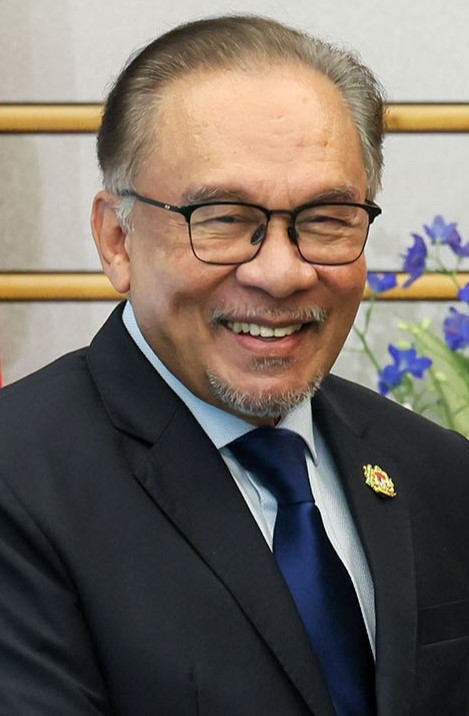
The longstanding housing crisis affecting Bukit Kiara Longhouse residents has reached a turning point with Prime Minister Datuk Seri Anwar Ibrahim's groundbreaking ceremony for a permanent residential development, signalling a watershed moment in how the federal administration addresses the needs of urban poor communities. Human Resources Minister Datuk Seri R. Ramanan characterised the decision as evidence of the government's determination to prevent the perpetuation of inequality across generations, arguing that decisive action on housing matters demonstrates a broader commitment to social justice rather than deferring difficult decisions to future administrations.
The housing initiative will deliver two new residential units to each qualifying family at no cost, representing a tangible intervention in Malaysia's persistent urban housing shortage. This approach diverges from earlier proposals that would have compromised Taman Rimba Kiara, a forest reserve that holds ecological and recreational significance for the broader Kuala Lumpur region. The final solution thus attempts to balance the pressing needs of displaced residents against environmental preservation concerns, a tension that has complicated development decisions in and around Malaysia's capital for years.
The Bukit Kiara situation exemplifies the complex legacy of informal settlements in Malaysian cities. What began as temporary shelter has evolved into a multigenerational community facing systemic obstacles to formal housing access. Over forty years, successive administrations acknowledged the problem without implementing permanent solutions, leaving families in precarious conditions despite their location in one of Malaysia's most expensive metropolitan areas. The persistence of such settlements alongside gleaming high-rises and upmarket developments underscores the nation's broader challenges with inclusive urban planning and equitable resource distribution.
Ramanan, who represents Sungai Buloh as Member of Parliament, framed the outcome as validation of residents' persistence and legal advocacy. The breakthrough resulted from sustained legal efforts initiated by residents' representatives beginning in 2018, demonstrating how institutional mechanisms can eventually yield results when communities organise effectively and seek judicial recourse. This pathway, while successful in this instance, also raises questions about why government intervention required protracted legal proceedings rather than proactive administrative response.
The Prime Minister's announcement of an additional RM1 million contribution to Kuala Lumpur City Hall for area maintenance across three years reflects awareness that construction alone cannot solve the underlying challenges facing relocated communities. Ongoing infrastructure investment, maintenance of public spaces, and service delivery remain essential for ensuring that new housing transitions smoothly into functional neighbourhoods rather than becoming another troubled development. This three-year commitment suggests a structured approach to implementation, though questions remain about funding adequacy and sustainability beyond the initial period.
For Malaysian policymakers and urban planners, the Bukit Kiara resolution offers instructive lessons about managing informal settlements in land-scarce cities. The refusal to sacrifice environmental protection while addressing housing need indicates that false choices between development and conservation need not define urban governance. However, the forty-year timeline before resolution also highlights systemic inefficiencies in how government identifies and responds to housing emergencies, particularly those affecting low-income populations without political leverage.
The project carries implications for other informal communities throughout Malaysia's major cities. Kuala Lumpur, Petaling Jaya, Klang, and other urban centres host numerous settlements where residents face similar precarity regarding land tenure and housing security. If the Bukit Kiara model proves replicable and sustainable, it could establish precedent for addressing comparable situations. Conversely, if implementation encounters obstacles or if relocated residents face unexpected hardships, the project's reputation as a template for solving urban housing crises would diminish accordingly.
Ramanan's observation that the project's modest scale belies its enormous human significance reflects the disproportionate impact that adequate housing carries for low-income families. For residents accustomed to informal living conditions, transition to permanent housing with secure tenure represents transformative change affecting health outcomes, educational opportunities for children, and psychological wellbeing. The minister's emphasis on recognising this impact, even while acknowledging the project's relatively limited financial scope, usefully redirects attention from budgetary calculations toward human outcomes.
The resolution also intersects with Malaysia's broader policy agenda around inclusive growth and reducing wealth inequality. Government statements increasingly acknowledge that persistent poverty amid national prosperity represents both a social failure and an economic inefficiency, as marginalised populations cannot fully participate in economic activity or contribute to productivity. Housing security functions as a foundation for such participation, making interventions like Bukit Kiara relevant to medium-term economic strategy rather than purely welfare considerations.
Looking forward, the success of this initiative will depend on implementation quality, community engagement during the transition, and the availability of complementary services that new residents require. Employment accessibility, educational facilities, healthcare proximity, and public transportation connectivity will determine whether relocated families genuinely experience improved circumstances. The groundbreaking ceremony represents commencement rather than completion of a process that demands sustained attention and adaptive management as unforeseen challenges inevitably emerge during a complex relocation involving vulnerable populations.