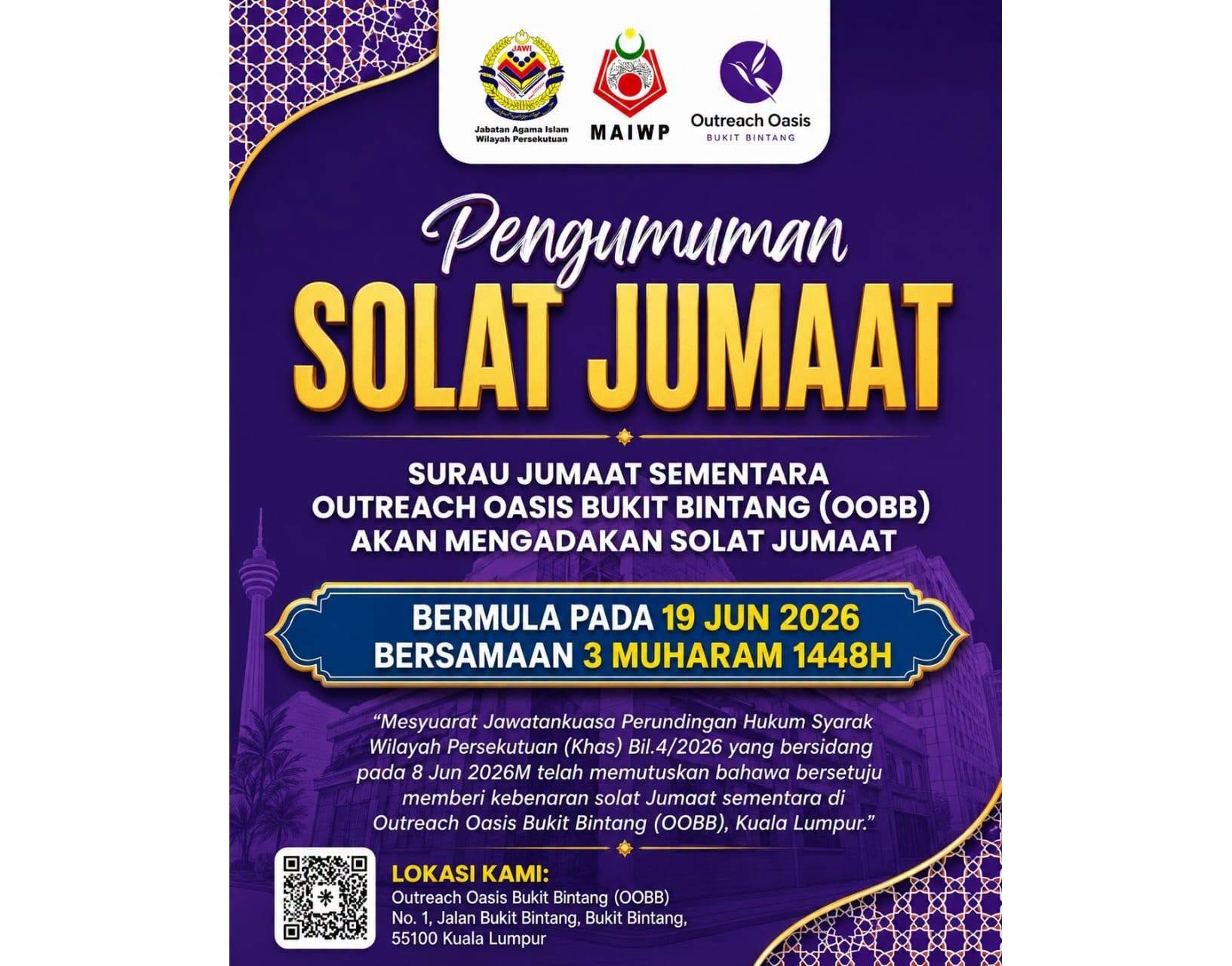
A new temporary prayer facility has been opened in Kuala Lumpur's bustling Bukit Bintang district, addressing a longstanding need for Muslims seeking to fulfil their Friday worship obligations in the city's popular commercial and tourist zone. The Bukit Bintang Outreach Oasis will serve congregants from tomorrow following special approval granted by religious authorities, providing a dedicated space for the weekly midday prayers that form a cornerstone of Islamic practice.
Minister in the Prime Minister's Department (Religious Affairs) Dr. Zulkifli Hassan announced the development through social media, framing the initiative as a historic moment for the community. The temporary arrangement represents an interim solution while construction proceeds on a permanent Friday surau at the location, ensuring that worshippers will have a proper facility once the larger project reaches completion. The minister's announcement underscores the government's commitment to supporting religious observance across all commercial districts within the capital.
The opening of this facility addresses practical challenges faced by the Muslim workforce and residents in Bukit Bintang, who previously had to travel considerable distances to access suitable prayer venues during their lunch breaks. For office workers, retail staff, and business owners operating in the area, the new facility eliminates the need to rush away from their locations or navigate through congested traffic to reach traditional prayer halls elsewhere in the city. This convenience factor carries particular significance in a district that generates substantial economic activity and attracts thousands of daily visitors.
Dr. Zulkifli's statement emphasised the temporary nature of the current arrangement while projecting confidence in the completion of permanent infrastructure. His remarks suggest that the government recognises Bukit Bintang's status as a major economic hub deserving of comprehensive religious facilities comparable to those found in residential areas. The messaging also conveys an official stance that accommodating workplace worship should be viewed as supporting rather than hindering commercial operations.
The minister extended an invitation to the Bukit Bintang community to participate in Friday prayers at the Outreach Oasis, framing attendance as a demonstration of support for Islamic values and religious life in a secular-oriented commercial district. This approach reflects a strategy of normalising religious observance within cosmopolitan spaces, positioning Friday prayers as a communal activity that strengthens social bonds rather than a practice requiring segregation from business environments. The invitation specifically targeted residents, workers, and business operators in the vicinity.
Plans for establishing a dedicated Friday surau in Bukit Bintang have been in development for some time, with government agencies working to identify suitable locations and secure necessary approvals. The decision to provide temporary facilities while the permanent structure is built demonstrates administrative pragmatism, recognising that construction timelines are unpredictable while the need for prayer spaces remains immediate. This phased approach allows the government to demonstrate responsiveness to religious needs without delaying service provision.
From a broader perspective, the Bukit Bintang initiative reflects Malaysia's approach to religious accommodation within its multicultural framework. As a Muslim-majority nation, Malaysia incorporates Islamic religious services into urban planning and development strategies, particularly in high-traffic commercial areas. However, implementing such facilities in spaces not traditionally designated for worship requires coordination between religious authorities, municipal planners, and business stakeholders to ensure compatibility with existing operations.
The temporary facility at the Outreach Oasis represents a pragmatic solution to the challenge of serving Muslim workers in Malaysia's commercial heartland. By providing dedicated prayer space during business hours, the arrangement acknowledges that religious practice and economic participation need not be mutually exclusive in a modern urban context. For employers and business owners, the availability of nearby prayer facilities may enhance employee satisfaction and productivity by reducing time pressure and commute stress during prayer times.
The project also carries symbolic significance within Malaysia's broader discourse on religious pluralism and urban development. By establishing Islamic prayer facilities in prominent commercial districts, the government signals that religious observance is valued across all environments and not confined to residential or institutional settings. This messaging proves particularly relevant in Bukit Bintang, where the diverse workforce includes both Muslim and non-Muslim employees working in close proximity.
The construction of a permanent surau at Bukit Bintang will complete a long-discussed initiative to improve religious infrastructure in the district. Once finished, the dedicated facility will offer improved amenities compared to temporary arrangements, including separate areas for ablution and prayer, climate-controlled spaces, and facilities that meet established standards for suraus. The permanent structure should accommodate larger congregations during peak prayer times, reducing crowding and enhancing the prayer experience for regular users.

