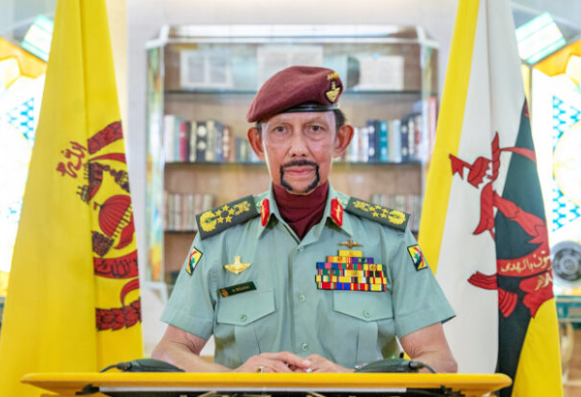
Brunei's Sultan Hassanal Bolkiah has delivered a significant address marking the arrival of the Islamic year 1448 Hijrah, positioning the annual milestone as an opportunity for the nation to strengthen its commitment to collective progress rather than simply marking the passage of time. The monarch's message underscores a dual emphasis on economic and infrastructural development alongside the cultivation of religious knowledge and moral education—two dimensions he characterises as equally essential to national wellbeing. His framing suggests that Brunei's approach to the new year transcends ceremonial observance, instead serving as a deliberate moment to recommit to long-term objectives that shape both individual lives and the nation's trajectory.
Central to the Sultan's perspective is his conviction that meaningful advancement emerges through sustained dedication and intentional action rather than passive expectation. He articulated that the new year should function as a catalyst for renewing personal and collective resolve, emphasising that substantial tasks remain across multiple sectors. This philosophical stance carries particular resonance for Southeast Asian nations grappling with rapid economic transformation and social change, where leaders frequently invoke annual milestones to rally populations around shared goals. For Malaysian observers, the message resonates with similar calls from regional leaders who stress continuity of effort as the foundation for development.
The Sultan explicitly delineated two spheres requiring attention: the material domain, encompassing economic vitality and physical infrastructure, and the spiritual realm, encompassing education, knowledge advancement, and dakwah—the Islamic concept of proselytisation and moral guidance. This categorisation reflects contemporary Islamic governance frameworks that reject false dichotomies between worldly progress and religious commitment. The articulation suggests a sophisticated understanding that spiritual values and economic development reinforce rather than contradict one another, a perspective increasingly relevant across Muslim-majority Southeast Asia as nations balance modernisation with religious identity.
Expressing gratitude for Brunei's continued peace and stability, the Sultan acknowledged the exceptional circumstances distinguishing the nation from many global regions experiencing conflict and displacement. His observation that warfare invariably produces suffering affecting all parties carries implicit commentary on contemporary geopolitical tensions affecting neighbouring regions. Brunei's freedom from major natural disasters compounds this sense of blessing, though the acknowledgement also implicitly establishes an obligation to preserve these favourable conditions through deliberate action and spiritual devotion. The Sultan attributes this stability partly to collective religious practice, including prayer, remembrance, and Quranic recitation, positioning faith as foundational to social order.
However, the address pivots sharply to confront internal security challenges threatening the nation's stability from within. The Sultan identified drug-related offences, theft, and associated criminal activity as matters demanding urgent, coordinated response, arguing that such transgressions damage Brunei's international standing while violating fundamental Islamic principles. This acknowledgement suggests that despite Brunei's relative prosperity and peace, criminal elements have emerged requiring systemic intervention. The candid identification of crime as a collective concern reflects the Sultan's determination to address problems transparently rather than obscure them, setting a tone for institutional accountability.
The monarch's prescription for addressing crime encompasses both security apparatus responses and religious institutional engagement. He explicitly called upon law enforcement and religious authorities to act decisively and promptly, suggesting that existing mechanisms may require strengthening or reorientation. Particularly significant is his emphasis on the religious sector's responsibility to intensify educational initiatives and dakwah efforts, suggesting that spiritual and moral education represent primary prophylactic measures against criminal inclination. This approach treats crime not merely as a law enforcement challenge but as fundamentally a spiritual and educational deficit requiring holistic remediation.
The Sultan's emphasis on strengthening religious education carries particular implications for Southeast Asia, where many nations struggle to integrate traditional Islamic learning with contemporary criminal justice approaches. The assertion that enhanced religious awareness and moral grounding lead to societal rejection of drugs and criminality reflects confidence in the transformative potential of faith-based interventions. For Malaysian policymakers and religious scholars, this prioritisation of dakwah and Islamic education as crime prevention mechanisms offers a framework worth examining, particularly given both nations' concerns regarding drug trafficking and related organised crime.
Recognising that institutional action alone proves insufficient, the Sultan elevated communal spiritual practice as essential to national security. His call for intensified prayer and supplication for divine protection positions faith not as supplementary to law enforcement but as integral to the security apparatus itself. This framing acknowledges the psychological and spiritual dimensions of safety, recognising that populations requiring constant vigilance benefit from faith-based frameworks that sustain resilience and social cohesion. The appeal to collective prayer reflects Islamic governance traditions emphasising that human effort and divine assistance operate in complementary rather than competing registers.
The Sultan stressed that protecting both the Islamic community and the nation represents a shared responsibility transcending institutional boundaries. This articulation moves beyond hierarchical governance models, instead invoking a concept of collective stewardship wherein citizens, religious leaders, security personnel, and administrators function as unified agents toward common objectives. For regional observers, this emphasis on distributed responsibility offers an alternative to centralised approaches, suggesting that sustainable security emerges from layered engagement across society rather than from top-down implementation alone.
Vigilance emerged as a recurring theme, with the Sultan cautioning against complacency or negligence as threats potentially more insidious than external challenges. This psychological dimension acknowledges that societies become vulnerable not primarily through overwhelmed defences but through collective inattention and diffused commitment. His invocation of constant remembrance of Allah accompanies this practical vigilance, suggesting that spiritual discipline sustains the psychological fortitude necessary for sustained attention to social problems. Malaysian and Southeast Asian societies navigating complex security environments may find this framework particularly instructive as they contemplate balancing routine normalcy with necessary alertness.
The Sultan's address concludes by extending warm wishes to all inhabitants of Brunei Darussalam, encompassing both citizens and residents in his benediction. This inclusive gesture signals that national wellbeing depends upon cooperation across diverse populations, transcending citizenship categories. For a small multicultural nation like Brunei, this explicit inclusion carries significance, affirming that stability and progress depend upon harmony across ethnic and religious lines. The message's final emphasis on unity, spiritual commitment, and collective responsibility establishes an agenda that extends well beyond ceremonial observance, instead positioning the Islamic New Year as a substantive occasion for societal recalibration toward enduring values and shared purposes.