The Paris Vivatech festival is providing a window into technologies set to reshape healthcare, transportation and security across the globe, with several breakthrough innovations capturing attention across its sprawling exhibition halls. Among the most significant developments are artificial alternatives to bone grafts, sophisticated drone propulsion systems, artificial intelligence tools to combat deepfake fraud, and non-invasive health monitoring devices that read biomarkers through sweat. These advances represent convergent trends in biotechnology, aerospace engineering, cybersecurity and sports science that could have profound implications for Southeast Asian markets.
Berlin-based Blueprint Biomed is addressing a critical gap in orthopaedic medicine by engineering synthetic bone graft substitutes designed to eliminate the complications associated with traditional autologous grafting, where surgeons harvest bone tissue from patients' own bodies. This conventional approach, while widely used across millions of procedures annually, carries inherent risks. Grafts can fail and necessitate additional surgical interventions, or trigger adverse reactions that compromise healing outcomes. Chief executive Aaron Herrera explained that the company's engineered structures eliminate these concerns entirely by removing the need for harvesting patient tissue. The Berlin firm constructs its scaffolds using three-dimensional printing technology layered with polycaprolactone, a biodegradable polyester, combined with collagen matrices. Both components are naturally absorbed by the body over time, with collagen metabolising within three months and the polyester framework breaking down over approximately two years. The artificial structures can be manufactured in virtually unlimited shapes tailored to individual patient anatomy. Blueprint Biomed is currently pursuing US$2.5 million in funding as it advances toward clinical trials, with management targeting 2028 for initial implantation in human patients. For Malaysia's substantial orthopaedic sector and ageing population, such innovations could significantly reduce post-operative complications and healthcare costs.
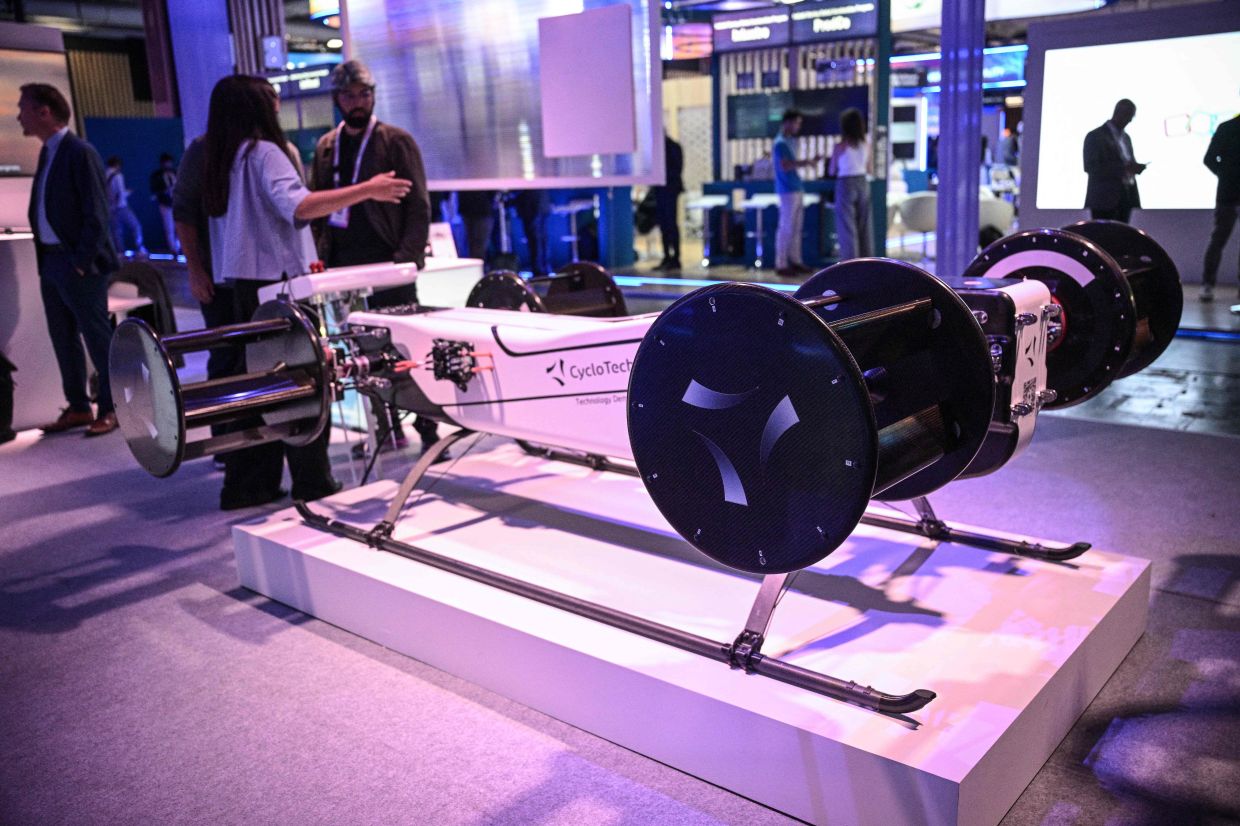
CycloTech, an Austrian startup, is revolutionising drone propulsion through innovative motor design that fundamentally reimagines how unmanned aircraft move through three-dimensional space. Conventional drone technology has already proven invaluable in diverse applications ranging from choreographed aerial performances to active military operations in theatres like Ukraine. CycloTech's cylindrical motors, built from several blade-shaped wing segments arranged around an open structure, unlock unprecedented aerial mobility by combining the vertical hover capabilities of helicopters with the forward velocity of fixed-wing aircraft. Marketing director Andrea Marchsteiner emphasised the system's flexibility, describing how the motors enable aircraft to execute precise mid-air braking, backward flight and controlled landings with exceptional accuracy. These capabilities open possibilities for last-mile package delivery in congested urban areas, potential human air transport applications, and military reconnaissance missions. The company, which employs 65 staff and has secured €40 million in prior funding rounds, is actively seeking additional investment and strategic partnerships with drone manufacturers willing to integrate its proprietary motor technology. For Southeast Asian cities grappling with urban congestion and last-mile logistics challenges, such innovations could eventually transform goods delivery networks.
French voice authentication specialist Whispeak has pivoted its core technology to address an emerging threat posed by the democratisation of generative artificial intelligence. The company originally developed voice recognition systems allowing financial institutions and sensitive services to verify caller identity through unique vocal characteristics. However, the proliferation of advanced AI tools has created a dangerous new frontier: deepfake audio synthesis. With less than ten seconds of authentic voice recording, individuals with minimal technical expertise can now generate convincing synthetic speeches indistinguishable from the original speaker. This capability poses existential risks to financial systems, family security and emergency services. Whispeak's executive leadership, headed by chief executive Florent Van Calster, has spent three years developing proprietary detection algorithms capable of identifying fraudulent deepfake audio with what the company claims represents world-leading accuracy. Van Calster asserted that the detection system achieves error rates below one percent across available training datasets, and Whispeak has validated this performance through multiple international competitions. The startup is collaborating with French telecommunications giant Bouygues to integrate deepfake detection into call screening systems that warn users of potentially fraudulent conversations in real-time. Yet Van Calster candidly acknowledged that detecting deepfakes remains an escalating technological arms race where adversaries continuously refine their synthesis capabilities.
PointFit, a Hong Kong-based health technology company, is democratising athletic performance monitoring through a revolutionary sweat-reading adhesive patch system. Professional athletes have long relied on sophisticated blood testing regimens to track biomarkers including glucose, cortisol and other physiological indicators that correlate with performance capacity and recovery status. However, these conventional approaches require invasive blood draws and expensive laboratory analysis. PointFit's wearable patch employs miniaturised sensors that read biomarker concentrations directly from skin perspiration, providing continuous non-invasive monitoring. Chief executive Kenny Oktavius, who began developing the underlying technology as a university student in 2019, explained that the system leverages artificial intelligence to calculate individualised sweat indices tailored to user demographics and environmental temperature variations. Oktavius underscored the limitations of heart rate monitoring alone, noting that elite marathon runners wearing advanced heart rate sensors still experience sudden physiological collapse because heart rate data provides incomplete insight into overall metabolic status. In contrast, hospitalised patients receive diagnostic clarity through comprehensive biomarker analysis. PointFit has piloted its technology with Red Bull's Athlete Performance Centre and Puma's specialist Nitro Labs division, validating its utility among elite athletes. Looking forward, Oktavius outlined a consumer retail strategy targeting mass-market sports brands including Decathlon and premium eyewear manufacturer EssilorLuxottica. For Southeast Asian sports science programmes and fitness industries, such technology could eventually enable more sophisticated performance optimisation at accessible price points.
These four innovations collectively illustrate the convergence of artificial intelligence, materials science, robotics and biomedical engineering that characterises contemporary technological development. Each addresses genuine inefficiencies or safety gaps in existing systems, and each has identified clear market pathways and initial validation through partnerships with established enterprises. The biotechnology advances exemplified by Blueprint Biomed reflect broader trends in regenerative medicine that could substantially improve orthopaedic outcomes for ageing populations across the Asia-Pacific region. Drone innovations from companies like CycloTech have direct applications to Southeast Asian logistics and urban mobility challenges. Cybersecurity solutions from Whispeak address the proliferating deepfake threat that impacts financial systems and personal security across all markets. Health monitoring technologies from PointFit could democratise sports science previously accessible only to elite professional athletes. What unites these enterprises is their focus on genuine user problems rather than speculative technology, and their advancement through systematic validation and strategic partnership development. The Paris Vivatech festival serves as an important venue where early-stage ventures present their solutions to investor and industry audiences, facilitating the capital formation and partnership development necessary for technologies to transition from laboratory prototypes to deployed systems.

