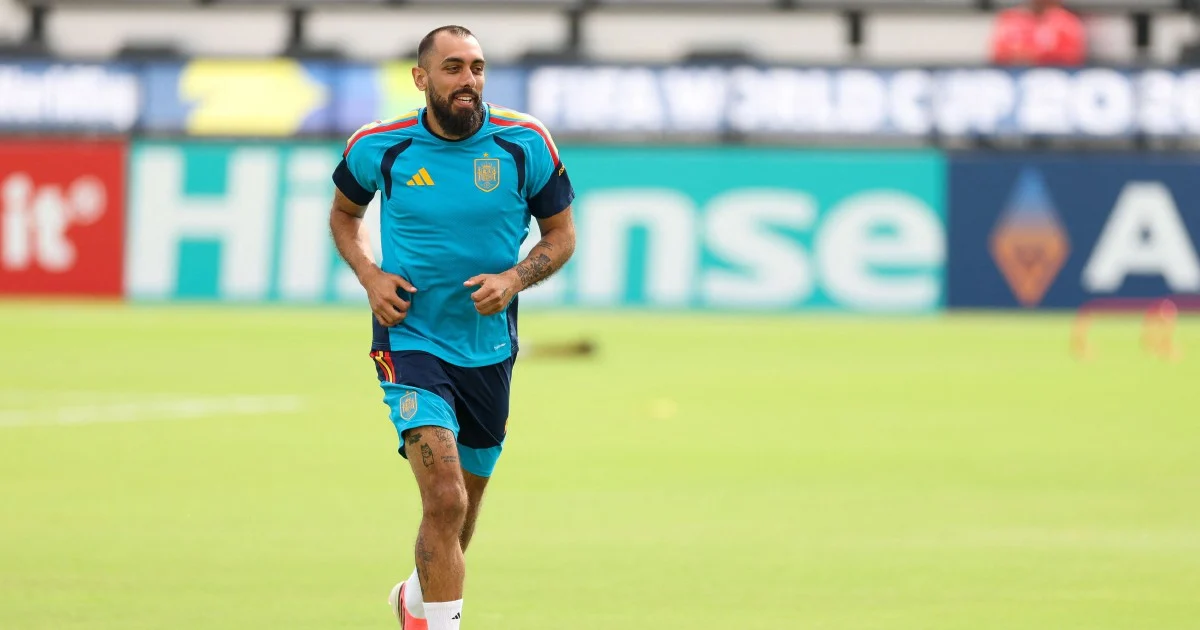
Borja Iglesias stands apart in professional football for his willingness to articulate positions on matters that most athletes avoid entirely. The Spanish striker, known for his appearances at World Cup tournaments, has become an increasingly visible voice on geopolitical and social concerns, speaking with a directness that contrasts sharply with the careful neutrality typically observed within elite sport. His public engagement with issues ranging from the Gaza conflict to discriminatory attitudes within and beyond the pitch has earned him both admiration and the dismissive label of being football's outsider—"the alien of football," as some have framed it.
In professional sports, maintaining political distance has long served as a protective strategy for athletes seeking to preserve commercial relationships and avoid alienating portions of their fanbase. Iglesias rejects this calculus entirely. His decision to paint his nails and present a deliberate aesthetic choice that challenges conventional masculinity represents a physical manifestation of his broader refusal to conform to the narrow boundaries that football traditionally imposes on its practitioners. This visual statement, however seemingly minor to observers outside the sport, carries particular weight in a culture where homogeneity of presentation remains the norm.
The footballer's willingness to address homophobia directly carries special significance across European and global football, where systemic discrimination against LGBTQ+ individuals persists despite modernisation efforts. Players who speak authentically about gender identity, sexual orientation, or the experiences of marginalised communities remain remarkably rare, making Iglesias's forthright commentary a notable deviation from industry standard. His prominence as a World Cup participant amplifies his reach, ensuring that his statements penetrate football's insular media ecosystem and reach audiences who might otherwise encounter these perspectives rarely.
Equally significant is Iglesias's engagement with international conflicts and humanitarian crises. While footballers occasionally acknowledge charitable causes, substantive public discourse about geopolitical matters—particularly those involving territorial disputes and civilian suffering—represents genuinely uncommon territory. The Gaza situation, in particular, has proven contentious within sports communities globally, with athletes facing considerable pressure when they express solidarity with Palestinians or criticism of military actions. Iglesias's decision to participate in these conversations demonstrates a personal conviction that athletic status carries moral obligations beyond performance metrics.
This stance invites considerable backlash within football's commercial infrastructure. Sponsors increasingly scrutinise athlete commentary, team management often discourages political engagement, and media coverage frequently positions activist athletes as divisive or inappropriate. For Iglesias, accepting this friction appears to be the price of intellectual honesty. His calculus suggests that remaining silent on injustice represents a form of complicity that contradicts his personal values, regardless of professional consequences.
The reception to Iglesias's activism reveals deeper tensions within contemporary sport regarding athlete expression and responsibility. Younger audiences increasingly expect public figures to demonstrate commitment to social causes, viewing silence as tacit endorsement of the status quo. Simultaneously, traditional sports constituencies often prefer maintaining sport as an apolitical sanctuary where athletes occupy predetermined roles without challenging broader societal structures. Iglesias embodies this conflict directly, appealing deeply to progressive audiences while provoking resentment among those who believe athletes should restrict themselves to performance-related discourse.
For Malaysian and Southeast Asian sports audiences, Iglesias's example carries particular relevance as these regions navigate complex relationships between sporting achievement and national identity politics. Countries across the region frequently contend with questions about whether athletes should speak on controversial domestic and international matters. The tension between commercial interests and moral conviction that Iglesias navigates mirrors debates happening across Asian sports contexts, where economic pressures often discourage athlete activism on sensitive issues.
The footballer's approach also highlights generational shifts within professional sport more broadly. Younger athletes across various disciplines increasingly view their platforms as carrying responsibility for addressing injustice, rejecting earlier models where athletes depoliticised themselves for commercial viability. Iglesias represents the vanguard of this transformation, normalising the idea that sporting excellence and social consciousness need not exist in tension.
His characterisation as an outsider—alien to football's established conventions—ultimately reflects the sport's discomfort with authenticity that deviates from prescribed norms. Rather than indicating something unusual about Iglesias himself, the label reveals how constrained football's acceptable boundaries of expression have become. For a World Cup striker to be considered extraordinary primarily because he speaks his mind about injustice suggests how far the sport remains from embracing the full humanity of its participants.
The long-term impact of Iglesias's activism remains uncertain, but his persistence suggests evolving expectations for how elite athletes leverage their visibility. Whether his approach inspires broader change or remains an isolated example depends partly on whether other prominent athletes develop sufficient courage to follow comparable paths, establishing new norms around athlete expression that transcend sport's traditional gatekeeping mechanisms.

