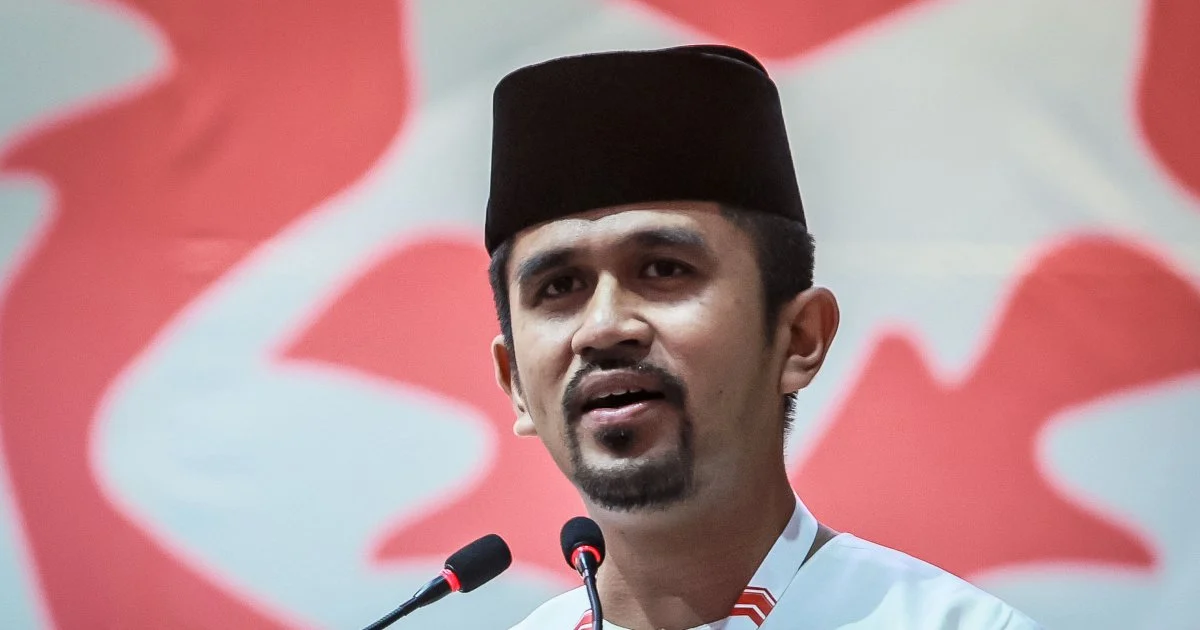
The Barisan Nasional Youth movement has launched a pointed critique of Pakatan Harapan's election preparations in Johor, with Umno Youth secretary-general Hafiz Ariffin publicly questioning why several top PH leaders in the state are absent from the opposition coalition's candidate line-up for the July 11 state election. The observation cuts to the heart of opposition campaign strategy and signals emerging fault lines within the political landscape as Malaysia approaches one of the most closely watched state-level contests in recent years.
Hafiz Ariffin's remarks represent a tactical move by BN to cast doubt on PH's organisational coherence and internal stability at a moment when election momentum matters considerably. By highlighting the conspicuous gaps in PH's candidate selection, the ruling coalition's youth wing aims to suggest either deliberate sidelining of rival factions or broader dysfunction within the opposition bloc. Such strategic questions, whether fair or not, can subtly influence public perception during the crucial weeks leading up to polling day.
Johor holds particular strategic significance in Malaysian politics. As the country's second-largest state by population and a traditional bastion of BN support, any shift in voter sentiment or coalition performance carries ripple effects across the nation. The July 11 election represents an important test of whether PH can consolidate support in a state where it has made electoral headway in recent years, or whether BN can reassert its customary dominance. The composition of each coalition's candidate roster thus becomes a matter of genuine strategic consequence.
The absence of major PH figures from the candidate list raises legitimate questions about party strategy. Opposition coalitions in Malaysia often struggle with equitable power-sharing between constituent parties and internal factionalism can surface during candidate selection processes. When prominent leaders are left off nomination papers, it typically signals either that they are being preserved for other political roles, facing internal challenges, or that inter-party negotiations within the coalition have produced unfavourable outcomes for certain constituencies or political camps.
Umno Youth's decision to publicise this issue represents a calculated effort to apply pressure on PH at a politically sensitive moment. By framing the absence as noteworthy, BN seeks to plant seeds of doubt about opposition unity and readiness. This form of political messaging, while routine in competitive elections, can have tangible effects if it resonates with voters who prize organisational competence and seem to reward coalitions that project confidence and coherence.
For PH, the challenge lies in maintaining public confidence while navigating the complex internal dynamics of a multi-party coalition. Pakatan Harapan comprises multiple political entities with distinct bases of support and leadership structures, making candidate selection inherently contested. Explaining why certain figures do not appear in the line-up requires careful messaging to different voter segments—some of whom may have strong associations with particular leaders or parties within the coalition.
The timing of BN's criticism is strategically astute. As nomination processes unfold and candidates hit the campaign trail, questions about who is running and why become live political topics. Media discussion of missing figures keeps the conversation focused on opposition vulnerabilities rather than government performance, a tactical advantage for the ruling coalition. In competitive electoral environments, controlling the narrative during pre-campaign phases often influences the broader terms of political debate.
Johor's electoral dynamics reflect broader Malaysian political transformation over the past decade. The state witnessed significant PH gains in 2018 and again in 2023, signalling that traditional BN strongholds are no longer guaranteed. However, the state remains competitive rather than tilting decisively toward opposition control, making every vote and every segment of the electorate genuinely consequential. Candidate selection thus takes on heightened importance—voters in marginal constituencies carefully evaluate their options, and the credibility and prominence of candidates matters considerably.
The opposition coalition's response to these criticisms will be revealing. PH could either defend its candidate choices as reflecting broader strategic thinking about where resources can be deployed most effectively, or it could seek to clarify any misunderstandings about why particular leaders are not standing in the July 11 election. How the coalition navigates this challenge will send signals about its internal cohesion to both supporters and the broader electorate.
For Malaysian voters watching the Johor contest, these early sparring matches between BN and PH offer insight into how each coalition approaches electoral competition and manages its internal complexities. The presence or absence of particular leaders from candidate lists ultimately matters less than how effectively parties translate their policies and vision into voter support. Nevertheless, in closely contested elections, even marginal questions about organisational competence can influence outcomes, making BN's challenge strategically sensible even if the longer-term implications remain to be determined.
The July 11 Johor state election will ultimately turn on bread-and-butter issues affecting voters' daily lives, economic opportunities, and governance quality rather than on pre-campaign positioning games. Still, how coalitions handle such criticism and construct their electoral offerings during the nomination phase establishes crucial foundations for the substantive campaign that follows. BN's questioning of PH's lineup is simply an early opening move in what promises to be a fiercely contested electoral battle in a state where genuine political competition has become the norm.

