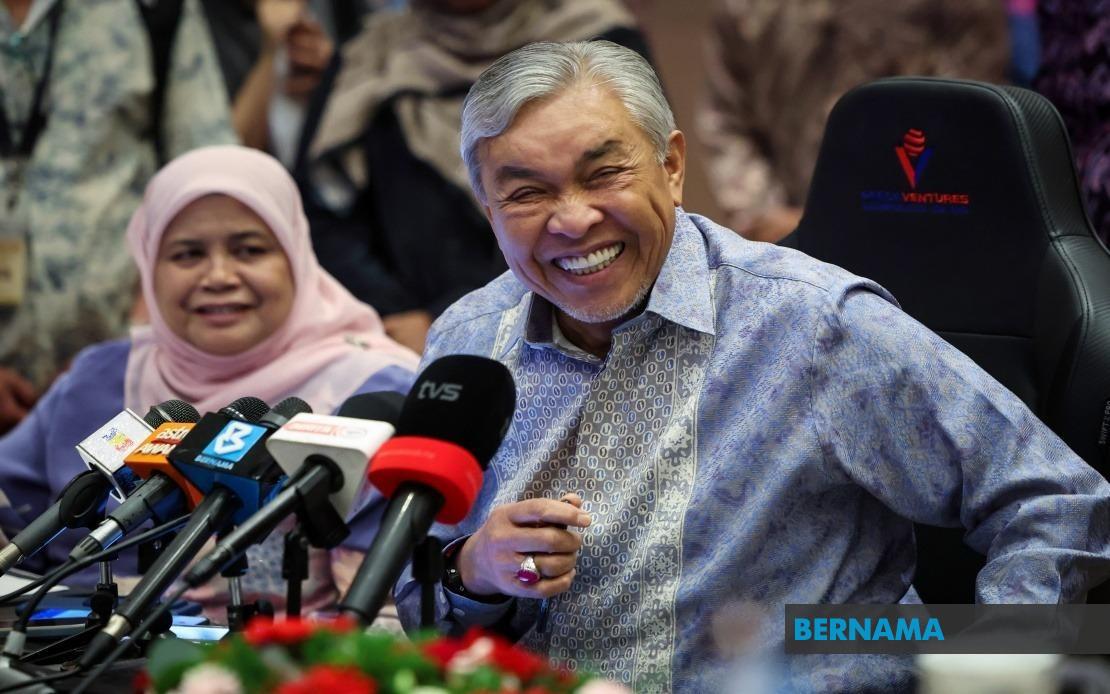
The Barisan Nasional coalition has moved to quash persistent speculation about potential political instability by reaffirming its steadfast commitment to the Unity Government through the end of Parliament's current term. Deputy Prime Minister and BN chairman Datuk Seri Dr Ahmad Zahid Hamidi issued the assurance in George Town on July 23, declaring that the coalition's loyalty to Prime Minister Datuk Seri Anwar Ibrahim remains unshaken despite recurring rumours of internal machinations.
Ahmad Zahid's emphatic statement directly addresses months of concern within political circles about whether BN, as a junior partner in the broader Unity Government arrangement, might seek to leverage its parliamentary numbers for political advantage. Speculation of this kind has periodically surfaced since the historic 2022 General Election, which produced a hung parliament and necessitated an unprecedented cross-party coalition to form a government. The Deputy Prime Minister's rejection of any "Bangkok Move" or "Dubai Move"—coded references to covert political realignment tactics—underscores the seriousness with which the BN leadership regards such rumours and their potential to destabilise the nation's political environment.
The commitment flows directly from the Yang di-Pertuan Agong's constitutional direction for establishing the Unity Government following the 2022 election outcome, Ahmad Zahid explained. This framing is significant for Malaysian readers unfamiliar with the regional context: the formation of this coalition represents a departure from Malaysia's post-independence political tradition and reflects the electorate's fragmented preferences. By anchoring BN's pledge to the Agong's original decree, Ahmad Zahid emphasises that the coalition's loyalty is rooted not merely in political calculation but in deference to the constitutional head of state—a resonant argument within Malaysia's monarchical system.
The timing of Ahmad Zahid's remarks coincides with the Negeri Sembilan state election campaign, which has exposed fractures in the broader opposition coalition. The decision by BN not to field a candidate for one state seat prompted the suspension of a party district centre in Klawang, signalling grassroots frustration with alliance decisions. Ahmad Zahid acknowledged this local difficulty while characterising it as a routine matter being resolved by state-level party management. With polling day approximately nine days away at the time of his statement, he expressed confidence that the disruption would be rectified before voters headed to the polls.
The three-cornered contest in Klawang itself illustrates the complexity of Malaysia's current political landscape. The involvement of three separate opposition factions—Pakatan Harapan, Perikatan Nasional, and Bersatu—demonstrates how the Unity Government arrangement has failed to consolidate the wider opposition into a coherent bloc. This fragmentation has created opportunities for BN to advance its position in state-level contests, even as it maintains its federal-level partnership with Pakatan Harapan. For regional observers, this dynamic highlights how Malaysia's three-tier federal system allows political coalitions to operate with different compositions at different levels of governance.
Regarding broader political developments, Ahmad Zahid dismissed claims that BN and Perikatan Nasional have been engaged in formal discussions about establishing a "Perikatan Barisan Nasional" alliance. He characterised references to such an arrangement as mere campaign rhetoric rather than substantive negotiation. This clarification carries weight, as the emergence of any formal BN-PN alignment would fundamentally reshape Malaysia's political mathematics and potentially threaten the stability of the current federal government. The fact that Ahmad Zahid felt compelled to address the matter publicly suggests that such speculation had gained sufficient traction to warrant an authoritative denial.
The light-hearted exchange of pantun verses between Ahmad Zahid and Prime Minister Anwar Ibrahim offers a softer dimension to their political relationship. Despite representing opposing sides in the Negeri Sembilan state contest, the two leaders have maintained cordial personal relations—a reflection of Malaysia's political culture, where fierce electoral competition at one level can coexist with cooperation at another. Anwar's pantun, which emphasised the importance of unity and discipline, and Ahmad Zahid's responsive verse, suggest an underlying mutual respect that transcends tactical disagreement.
For Malaysian and Southeast Asian observers, the continued stability of the Unity Government carries significance beyond domestic politics. A functioning multi-party coalition at the federal level serves as an implicit demonstration of democratic resilience and institutional maturity in a region where political instability has periodically disrupted economic activity and investor confidence. Should the Unity Government collapse, the resulting political realignment could trigger fresh elections, administrative disruption, and a period of policy uncertainty that would reverberate across ASEAN markets.
The meeting where Ahmad Zahid issued his statement—the 61st Coordination Meeting between the Minister of Rural and Regional Development and State Executive Councillors—highlights how coalition management extends into routine governmental operations. The presence of state-level BN figures, including the Perlis Menteri Besar and Penang's Rural Development Committee chairman, underscores the coalition's penetration across Malaysia's federal system. This institutional embedding makes the coalition's stability particularly important, as any rupture would create cascading administrative complications across multiple states.
Ahmad Zahid's categorical rejection of any destabilisation efforts reflects BN's pragmatic calculations about its current political position. As a component of the ruling coalition without commanding majority numbers independently, BN benefits from the legitimacy and institutional resources that come with participation in government. An attempt to topple the administration would risk retaliation through legislative means, potential dismissal from ministerial portfolios, and loss of state-level governance advantages. From this perspective, Ahmad Zahid's commitment to the Unity Government through the end of the current parliamentary term represents not merely political principle but rational self-interest aligned with stability.
Looking ahead, the forthcoming state elections and the broader trajectory toward the next general election will test BN's adherence to this commitment. As political parties prepare for contests and manoeuvre for advantage, the pressures that generate instability will likely intensify. However, Ahmad Zahid's unambiguous statement establishes a clear benchmark against which future political conduct will be measured. Should BN deviate from this explicit pledge, the political costs would be substantial—both in terms of domestic legitimacy and regional confidence in Malaysian institutions.

