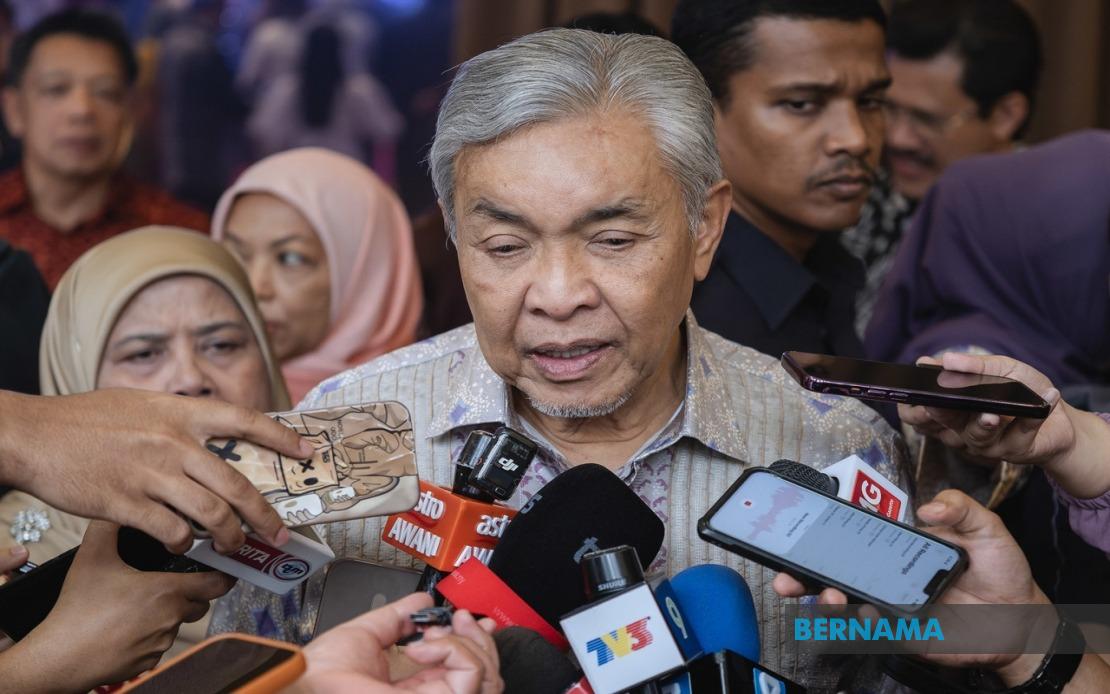
Deputy Prime Minister Datuk Seri Dr Ahmad Zahid Hamidi has made clear that Barisan Nasional will maintain strict neutrality regarding matters pertaining to the Negeri Sembilan royal institution and the state's Council of Justice and Laws (DKU), signalling the coalition's determination to stay clear of sensitive constitutional terrain during the run-up to the upcoming state election. The assurance came during a briefing to journalists after Ahmad Zahid, who simultaneously holds the UMNO presidency, attended a Ministry of Rural and Regional Development service excellence ceremony in Kuala Lumpur on June 29, having just completed consultations with party brass in the state.
The emphasis on non-interference reflects a deliberate strategic positioning by BN ahead of polling day on August 1, when voters across 36 state seats will determine the political complexion of Negeri Sembilan. Ahmad Zahid's explicit statement that the coalition would remain "outside of that sphere" regarding royal and legal matters underscores recognition that entanglement in such issues could prove politically toxic, particularly given the heightened public sensitivity surrounding institutional independence and the rule of law across Malaysia. By drawing this boundary early and publicly, BN appears intent on foreclosing any narrative that might depict the party as overreaching into domains traditionally considered beyond partisan politics.
The coalition's current strategic calculus has shifted markedly from the 15th state election, when BN operated as part of a broader multiparty arrangement that included component parties from Pakatan Harapan. That collaborative framework no longer exists, forcing the coalition to recalibrate its approach entirely. Ahmad Zahid was emphatic that this election will unfold under fundamentally different circumstances, requiring BN to rely instead on cultivating cohesion among its own ranks rather than forging cross-coalition alliances. This pivot necessitates reinforcing discipline and unity across party leadership hierarchies at federal, state, district, and grassroots levels—a prerequisite for mounting an effective campaign across the 36 contested seats.
The messaging around party unity carries particular weight given the complex political dynamics within Negeri Sembilan. Internal cohesion determines not only campaign effectiveness but also the ability to present a united front to voters concerned about political stability and decisive governance. By emphasising this priority during his consultations with state-level party leaders, Ahmad Zahid signalled that BN's performance in this election would hinge on demonstrating organisational discipline and the capacity to mobilise supporters behind a common platform. The absence of partnership arrangements with Pakatan Harapan forces, as existed previously, means BN must construct its own winning coalition through voter persuasion rather than institutional power-sharing.
For Malaysian observers of state-level politics, the Negeri Sembilan election represents an important test of BN's ability to compete independently in a post-2022 political landscape fundamentally reshaped by the Malay Majlis Agong's decision to dissolve Parliament and trigger the general election that returned BN to federal power. The coalition's performance across the country's various state contests offers valuable indicators regarding voter sentiment, the effectiveness of different campaign strategies, and the durability of BN's regional support bases. Negeri Sembilan's 36 seats, whilst modest in scale compared to larger states, nonetheless carry symbolic weight as a bellwether for broader coalition health.
The careful articulation of boundaries regarding royal and institutional matters also reflects lessons learned from previous episodes where political actors faced public backlash for perceived impropriety in their dealings with constitutional bodies. Ahmad Zahid's preemptive clarification serves to insulate BN from accusations of overreach, establishing clear parameters for appropriate political conduct during the campaign period. This appears especially prudent given heightened discourse around institutional independence and democratic norms that has characterised Malaysian public conversation in recent years. By publicly committing to non-interference, BN creates expectations against which its own conduct will be measured, whilst also signalling respect for constitutional separations.
The Deputy Prime Minister's remarks carry implications extending beyond Negeri Sembilan itself. As the senior figure articulating coalition messaging on institutional relationships, Ahmad Zahid's statements help establish baseline standards for how BN intends to govern and conduct itself in the political sphere more broadly. The coalition's willingness to respect institutional boundaries and avoid entanglement in sensitive constitutional questions suggests recognition that long-term political legitimacy depends on public confidence in democratic institutions and the impartiality of processes governing their operation. This positioning could prove advantageous in constructing a governing narrative emphasising stability and constitutional propriety.
Party unity initiatives outlined by Ahmad Zahid during his Negeri Sembilan consultations encompass mobilisation work across multiple tiers of the organisation. Securing alignment among federal-level party figures, state leadership, division chiefs, and branch-level activists creates the operational foundation necessary for an effective electoral push. The dissolution of previous multiparty arrangements means BN cannot rely on component parties from other coalitions to provide supplementary voter mobilisation or campaign infrastructure. Every dimension of the party organisation becomes proportionally more important to overall campaign success. Ahmad Zahid's emphasis on ensuring unity across all levels reflects understanding that efficiency and cohesion directly correlate with electoral performance.
The August 1 polling date itself carries significance within the broader Malaysian political calendar. Coming roughly two years into BN's return to federal governance, the Negeri Sembilan contest offers an early indication of whether the coalition's federal performance has translated into renewed voter confidence at the state level. Results here will be scrutinised for signs regarding which voter demographics remain loyal to BN, which segments have drifted toward opposition alternatives, and whether younger voters or specific geographic regions show differential patterns. Political analysts and party strategists across Malaysia will dissect the outcome for insights into coalition strength heading toward eventual federal elections.
Beyond the immediate electoral dimension, Ahmad Zahid's commentary illuminates broader themes regarding institutional relationships and the boundaries of appropriate political action in Malaysia's constitutional framework. The explicit commitment to respecting the DKU and royal institution suggests recognition that democratic legitimacy depends partly on visible respect for constitutional separations and the independence of bodies wielding legal and ceremonial authority. This framing could appeal to voters concerned about institutional health and proper democratic functioning, even as it simultaneously demonstrates BN's intention to compete vigorously within appropriate bounds.
The coalition's preparatory work in Negeri Sembilan, centred on the dual imperatives of maintaining institutional distance and strengthening internal unity, represents a calculated approach to state-level electoral competition in contemporary Malaysia. By establishing clear lines regarding non-interference with sensitive constitutional matters whilst simultaneously mobilising party resources and leadership discipline, BN seeks to position itself as a responsible governing force capable of balancing political ambition with respect for institutional independence. How effectively the coalition executes this strategy across the campaign period, and whether such positioning resonates with voters, will become apparent when polls close on August 1.

