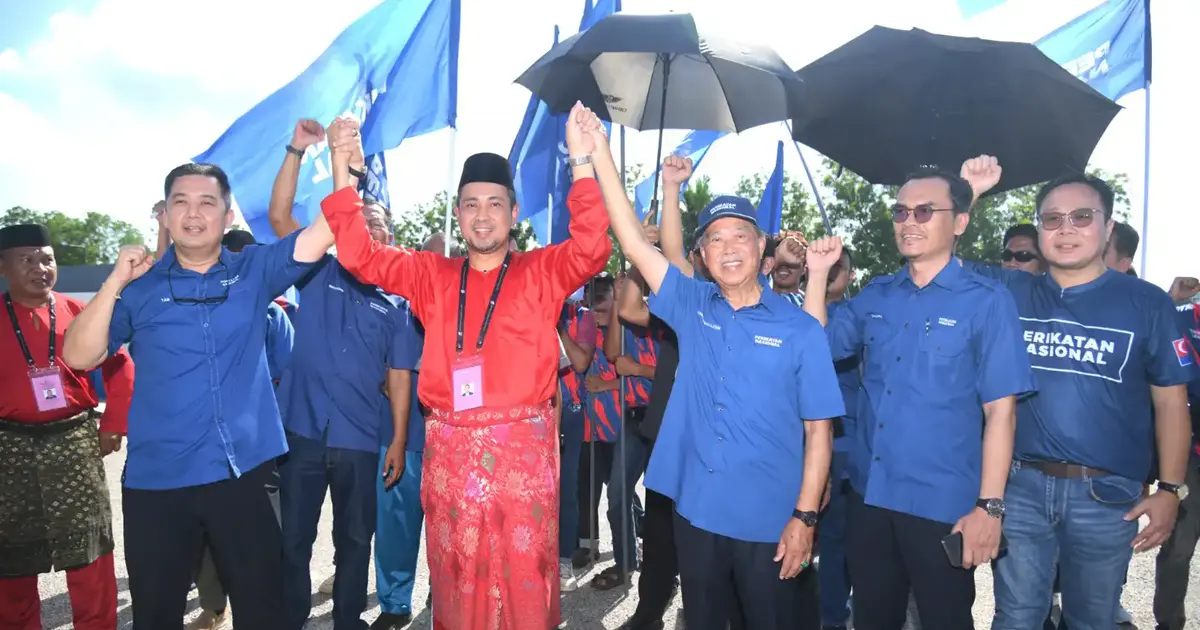
Bersatu president Muhyiddin Yassin has responded diplomatically to PAS's apparent reluctance to deploy its campaign machinery in support of Bersatu candidates, signalling that the party will proceed without coercing assistance from its Perikatan Nasional allies. The statement comes at a moment when internal friction within the coalition has become increasingly visible, particularly regarding resource-sharing and electoral support between component parties ahead of upcoming electoral contests.
Muhyiddin's measured response underscores a broader reality within Perikatan Nasional: while the coalition framework is built on principles of mutual cooperation and reciprocal backing, the president has made clear that Bersatu operates with sufficient autonomy to manage its own campaign apparatus without depending on other parties to provide critical organisational support. This pragmatic stance reflects both an acknowledgment of the coalition's internal dynamics and a determination to project confidence in the party's independent capacity.
The Perikatan Nasional alliance, which brings together Bersatu, PAS, and other smaller parties, has been characterised by periodic tensions despite its electoral success and ability to govern in several states. The machinery question is not merely a procedural matter but touches on deeper questions about power-sharing, resource allocation, and the strategic priorities of each component party. PAS, as the numerically larger and arguably more institutionally entrenched partner, operates with considerable leverage within the coalition and can exercise discretion over how it deploys its extensive grassroots network.
From Bersatu's perspective, the party has gradually built its own organisational infrastructure since its formation, moving beyond its origins as a splinter group from the United Malays National Organisation. While the party remains younger and smaller than PAS, its presence in multiple states and at the federal level has provided opportunities to develop independent campaign capabilities. Muhyiddin's statement implicitly acknowledges this trajectory, suggesting that Bersatu is sufficiently mature institutionally to operate without emergency assistance from its partners.
The broader coalition dynamics also reflect regional variations in PAS's willingness to cooperate. In some states where Bersatu holds significant sway or where local political calculations differ, PAS may calculate that full cooperation serves its interests. In other contexts, PAS leadership may prioritise its own party's electoral gains over coalition-level harmony. This selective approach to machinery deployment reveals the pragmatic rather than ideological basis of some coalition partnerships within Malaysian politics.
For Malaysian observers, the episode illustrates how formal coalition arrangements can mask underlying power asymmetries and competing agendas. Perikatan Nasional presents itself to voters as a unified alternative to established coalitions, yet its internal management reveals the kinds of disagreements that any multi-party arrangement must navigate. The willingness or reluctance of individual parties to provide specific forms of support becomes a proxy for their confidence in coalition unity and their calculation of electoral outcomes.
Muhyiddin's refusal to portray the machinery issue as a serious grievance serves multiple strategic purposes. It prevents internal coalition disputes from becoming public scandals that might undermine voter confidence in Perikatan Nasional's stability. It also allows Bersatu to maintain dignity by appearing self-sufficient rather than dependent on larger partners. At the same time, it signals to rank-and-file Bersatu members that their party stands on solid institutional ground, capable of prosecuting electoral campaigns with its own resources.
The Malaysian political context has shown that campaign machinery remains critically important despite evolving voter behaviour and increased reliance on social media outreach. Traditional ground organisation, voter registration assistance, and field coordination continue to influence electoral outcomes, particularly in constituencies where contests remain competitive. Therefore, PAS's positioning regarding machinery deployment carries real electoral consequences for Bersatu, regardless of how diplomatically Muhyiddin frames the arrangement.
Regional implications also merit consideration, as Perikatan Nasional has become a significant force in multiple Southeast Asian state-level contexts. Internal coalition management practices in Malaysia's federal structure inform how similar multi-party arrangements function elsewhere in the region. The question of whether coalitions can maintain unity while allowing component parties to pursue divergent electoral strategies remains unresolved, and Perikatan Nasional provides an ongoing case study in this regard.
Looking forward, the sustainability of coalition arrangements like Perikatan Nasional may depend less on formal declarations of cooperation and more on whether component parties can convince their grassroots supporters that coalition membership serves their interests better than purely competitive positioning. Muhyiddin's steady approach to the machinery question reflects an understanding that short-term discord must be managed carefully to preserve longer-term coalition viability, even as underlying tensions between parties persist.

