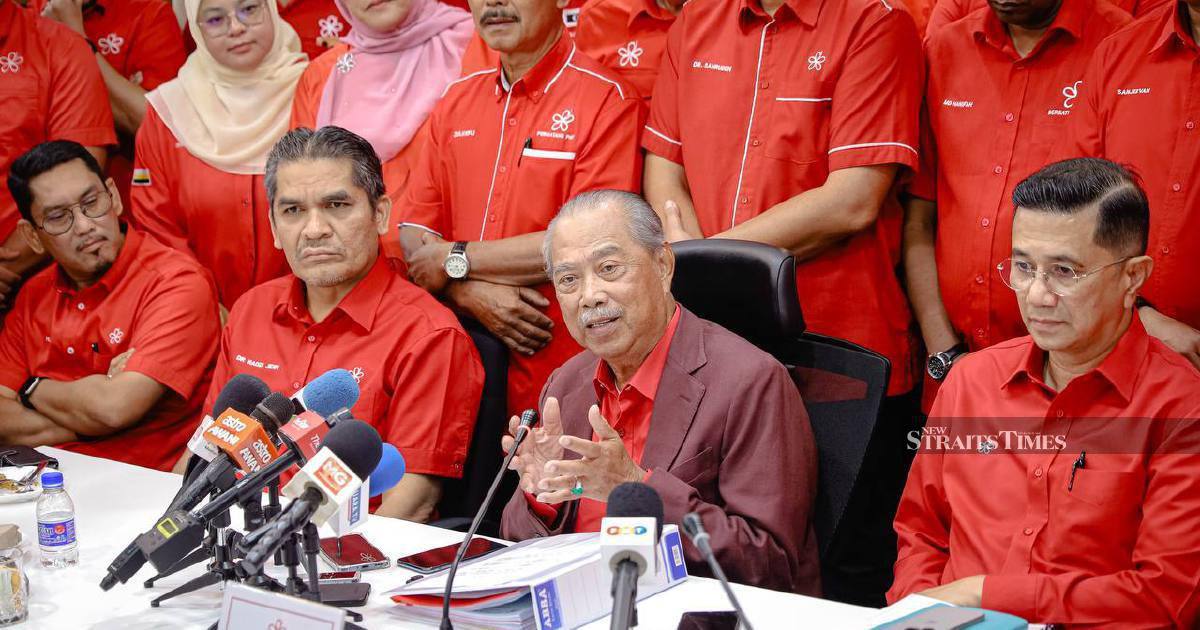
Tan Sri Muhyiddin Yassin, the president of Bersatu, has indicated his party stands prepared to directly contest against Pas in Johor should both organisations find themselves competing for the same legislative seats. The statement from the Bersatu chief reflects growing uncertainties surrounding seat allocation arrangements ahead of the state election, suggesting that pre-poll negotiations between the coalition partners may not have fully resolved territorial divisions.
The possibility of intra-coalition rivalry in Johor carries significant implications for the broader political landscape in Malaysia's most populous state. Johor has traditionally been a stronghold for Umno, but shifting electoral dynamics and the fragmentation of Malay-Muslim political representation have created new competitive opportunities. With multiple Islamist and Malay-centric parties now vying for influence, the state has become a crucial testing ground for how well the coalition can maintain unity when pursuing overlapping political ambitions.
Bersatu's willingness to openly acknowledge the prospect of confrontation with Pas demonstrates the fault lines that exist within the current governing coalition structure. Rather than soft-pedalling this possibility, Muhyiddin's forthright stance suggests the party leadership believes it possesses sufficient grassroots strength to mount credible campaigns even in constituencies where Pas might traditionally have had an advantage. This confidence reflects Bersatu's efforts to build organisational capacity since its formation and subsequent political manoeuvres over recent years.
The Johor election has assumed heightened significance as a barometer of political support across Malaysia. The state's demographic composition, encompassing both urban and rural areas with substantial Malay-Muslim populations, makes it representative of broader voting patterns that could influence future national political calculations. Any electoral performance by Bersatu or Pas in Johor would likely reverberate through coalition dynamics at the federal level, potentially affecting ministerial allocations, policy priorities, and strategic partnerships.
Pas has emerged as an increasingly formidable political force in Malaysian Islamist politics, particularly after its strong parliamentary performances in recent election cycles. The party's expansion into states where it previously held minimal presence has created direct competition with other Malay-Muslim oriented parties. In Johor, where Pas has invested organisational effort, a three-way contest between Umno, Pas, and Bersatu could fragment the Malay vote, potentially producing unexpected electoral outcomes that defy conventional predictions.
The seat allocation question reveals deeper tensions about how coalition members view power-sharing arrangements. Typically, Malaysian political coalitions negotiate pre-election seat divisions to minimise wasteful three-cornered contests and consolidate opposition to rivals. When such arrangements break down or prove insufficient to satisfy all parties' ambitions, open acknowledgment of potential clashes becomes a negotiating tactic—signalling that a party will not subordinate its interests and expects significant concessions in return.
For Malaysian voters, particularly those in Johor, this dynamic presents both challenges and opportunities. Direct competition between coalition partners could provide voters with clearer policy choices and distinct candidate options, allowing for more meaningful electoral selection. Conversely, it risks vote-splitting that enables the incumbent to maintain dominance despite declining overall support, a phenomenon familiar from previous Malaysian elections where opposition fragmentation inadvertently benefited ruling parties.
Muhyiddin's statement also reflects internal Bersatu calculations about the party's electoral viability. Since its formation from a Umno breakaway faction, Bersatu has struggled to establish independent political identity beyond its leaders' prominence and their ability to navigate coalition politics. Demonstrating readiness to contest competitive races independently, rather than accepting a subservient position in seat allocations, projects strength to internal party members and external observers assessing which coalition partner will emerge as a genuine political force.
The broader context includes Malaysia's transition toward more fluid electoral alignments where previously stable voting blocs have become less predictable. The influence of personality-based politics, particularly around prominent figures like Muhyiddin, has intensified, sometimes overriding traditional communal voting patterns. In this environment, Johor becomes a crucial proving ground where different political models and leadership approaches will be tested against actual electoral preferences.
Coalition unity in Malaysian politics has consistently proven fragile when faced with competitive pressures and finite political prizes. The Johor situation exemplifies how ostensible allies can rapidly become rivals when constituencies and ministerial positions appear contested. Whether Bersatu and Pas ultimately reach accommodation or proceed to direct competition will reveal much about the resilience of current coalition structures and the trajectory of Malaysian politics heading into subsequent electoral cycles.

