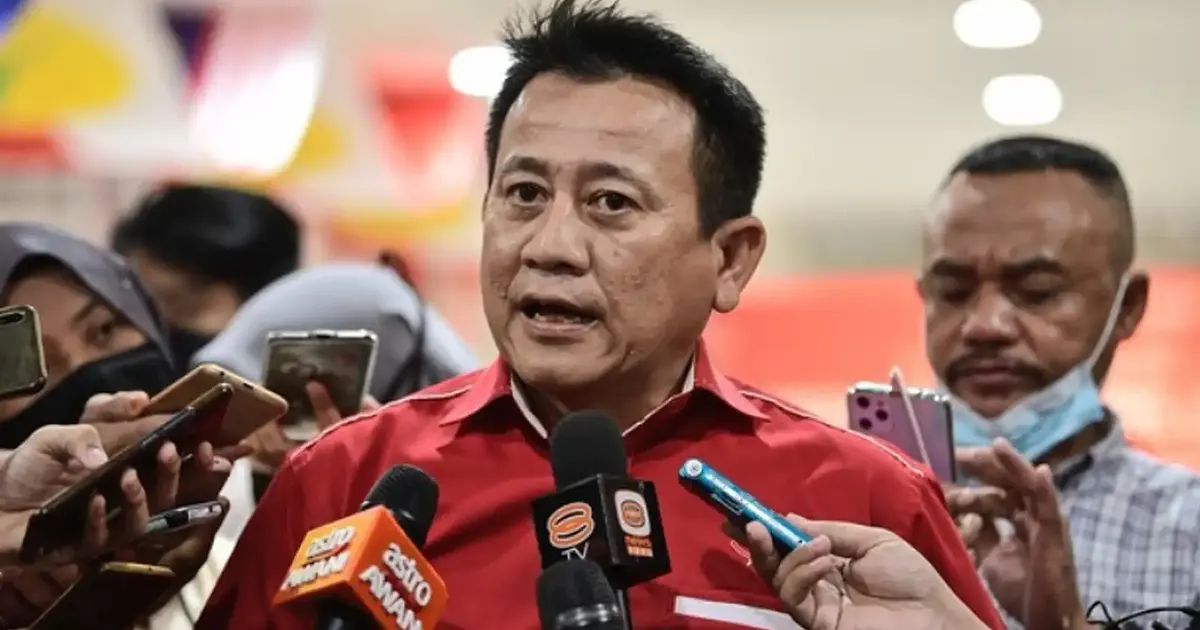
The ongoing restructuring of Malaysia's political coalitions has sparked fresh controversy within Perikatan Nasional, as questions mount about which parties can be accommodated within the opposition bloc. Bersatu's information chief Tun Faisal Ismail Aziz has moved to dispel suggestions that his party is blocking Pejuang's pathway into PN, a clarification that underscores the delicate internal negotiations currently unfolding between coalition members.
The distinction Tun Faisal drew between different parties seeking admission to PN carries significant implications for how the coalition manages its expansion and maintains cohesion. By specifically identifying Parti Wawasan Negara as the source of Bersatu's reservations rather than Pejuang, Bersatu appears to be positioning itself as a pragmatic gatekeeper concerned with coalition stability rather than as an obstruction to growth. This nuanced positioning reflects the complex calculations that dominate Malaysian opposition politics, where the balance between broadening support and preserving internal unity remains perpetually contested.
The concern Bersatu raised regarding Parti Wawasan Negara centres on fears that this party's entry could generate friction among existing coalition partners. Such anxieties typically emerge when new members possess ideological differences, overlapping support bases, or potential disputes over resource allocation and political positioning within the alliance. In the context of PN's ongoing development as an alternative to the Pakatan Harapan coalition, internal harmony remains critical to establishing itself as a credible governing alternative.
Pejuang, led by former prime minister Mahathir Mohamad, brings considerable political weight and experience to any alliance it joins. The party's potential incorporation into PN has generated debate about whether the coalition can accommodate a figure of Mahathir's stature without triggering power struggles or reshuffling existing hierarchies. Unlike some smaller parties seeking coalition membership, Pejuang's admission would carry symbolic and institutional consequences that ripple throughout PN's leadership structure and decision-making processes.
Bersatu's distinction between different applicants suggests the party is taking a selective approach to coalition expansion. Rather than adopting a blanket opposition to new membership, Bersatu appears willing to evaluate each prospective member individually, weighing potential benefits against risks of internal disruption. This stance positions the party as both open to growth and protective of existing relationships—a delicate political tightrope that requires careful management.
The internal dynamics within PN reflect broader patterns in Malaysian politics where opposition coalitions face constant pressure to expand their appeal while maintaining ideological coherence and personal relationships among leadership. The balance between these competing imperatives has historically been difficult for Malaysian coalitions to sustain. Pakatan Harapan's eventual fragmentation and the subsequent formation of PN demonstrate how internal tensions, unresolved contradictions, and disputes over power-sharing can unravel even seemingly unified alliances.
For Malaysian observers, the question of which parties PN will ultimately accept carries implications for the opposition's credibility and viability. If PN appears too restrictive in its membership criteria, it risks being perceived as exclusionary and limited in scope. Conversely, if the coalition accepts too many members without establishing clear mechanisms for conflict resolution, it might reproduce the internal problems that plagued previous opposition alliances. Tun Faisal's statement suggests Bersatu recognises this tension and is attempting to navigate it through measured selectivity.
The timing of these discussions coincides with Malaysia's evolving political landscape, where both government and opposition are attempting to consolidate their positions ahead of potential electoral cycles. PN's ability to present itself as a cohesive, inclusive alternative to the ruling administration depends significantly on how successfully it manages its internal relationships and expansion strategy. The party admission controversy, while seemingly technical, serves as a bellwether for PN's maturity as a political organisation.
Parti Wawasan Negara's position in these negotiations remains less clear, but Bersatu's specific naming of the party suggests ongoing discussions about the best structure for PN's future membership. Whether Parti Wawasan Negara might eventually withdraw its application, restructure its positions, or challenge Bersatu's concerns could significantly influence how the coalition evolves. Similarly, Pejuang's timeline for potential admission and the conditions that might be attached to its entry are likely to become clearer as PN's leadership continues deliberations.
Regional observers monitoring Malaysian politics will note that coalition dynamics in Kuala Lumpur continue to reflect deeper questions about how diverse political actors can cooperate effectively. PN's handling of these membership decisions will offer insights into whether the coalition has learned from previous alliance failures or whether it remains vulnerable to the factionalism that has repeatedly destabilised Malaysian opposition blocs. Tun Faisal's clarification, while seemingly defensive, represents an attempt to project measured leadership during a potentially fractious period.

