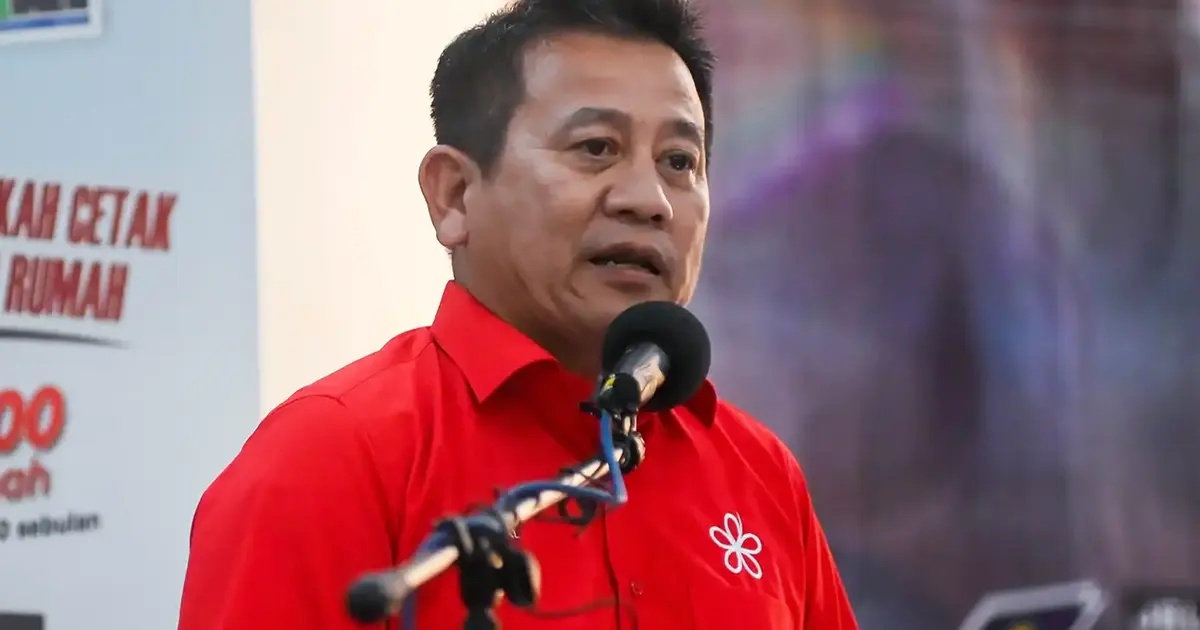
Tun Faisal Ismail Aziz, the information chief of Bersatu, has openly criticised PAS for allegedly leveraging the latest Perikatan Nasional reshuffle to consolidate its power within the coalition, suggesting that the Islamist party's command style has become progressively more autocratic. The accusation marks an escalation in tensions within PN, a relatively young political alliance that has struggled to maintain internal cohesion since its formation, and signals deepening fissures between its constituent parties.
The reshuffle in question appears to have shifted key positions in ways that strengthen PAS's institutional influence over coalition decision-making. Such manoeuvres are common in Malaysian politics, where control over party positions translates directly into influence over policy direction, resource allocation, and electoral strategy. For Bersatu, a much smaller player in the PN arrangement, the perception that PAS is amassing disproportionate authority represents a fundamental threat to the partnership's balance of power.
According to Faisal's assessment, PAS's conduct reveals an underlying authoritarian temperament that has remained latent but is now becoming unmistakably visible to other coalition members. This characterisation carries significant weight, as it provides a framework through which other PN partners and observers can interpret PAS's behaviour. In Malaysian politics, public accusations of authoritarianism carry reputational consequences, particularly among voters who value democratic participation and collective decision-making within their political movements.
The timing of Faisal's statement is noteworthy given PN's precarious position within Malaysia's current political landscape. The coalition has been attempting to position itself as a viable alternative to both Barisan Nasional and Pakatan Harapan, yet internal discord undermines this ambition. Voters and potential coalition partners are more likely to support alliances that demonstrate stability and genuine collaboration among member parties. Public disputes over power distribution suggest institutional weakness and raise questions about PN's capacity to govern effectively.
Bersatu, led by Muhyiddin Yassin, faces particular vulnerabilities within the PN arrangement. The party commands a significantly smaller parliamentary representation than PAS and lacks the Islamist party's established grassroots machinery across numerous Malaysian states. This structural disadvantage means Bersatu risks being sidelined in coalition decision-making, a concern that likely motivated Faisal's public intervention. By articulating grievances vocally, Bersatu attempts to signal its importance and demand respect for its interests.
The accusation of authoritarian consolidation also reflects broader ideological tensions within PN. While PAS commands a clearly defined Islamic platform that appeals to its voter base, Bersatu positions itself as a broader-based party with support across different demographic segments and religious backgrounds. These differing orientations create policy disagreements and strategic divergences that have periodically erupted into public disputes. PAS's apparent dominance threatens to pull the coalition toward more religiously defined positions that may alienate segments of Bersatu's support base.
For Malaysian observers, this conflict within PN carries implications beyond the coalition itself. The strength and coherence of opposition coalitions affects the overall political equilibrium in the country. A fractured PN might struggle to offer voters a compelling alternative, potentially benefiting the ruling coalition or Pakatan Harapan. Conversely, if PN can resolve its internal dynamics and present a united front, it would significantly reshape Malaysia's three-way political competition.
PAS's response to these accusations will be revealing. The party might defend its leadership actions as necessary coordination, argue that Faisal misrepresents the reshuffle's actual impact, or dismiss the criticism as jealousy from a weaker partner. Alternatively, PAS could use the criticism as an opportunity to reassert its democratic credentials and commitment to PN's collective governance framework. How the party chooses to respond will indicate whether these tensions can be managed or whether they might escalate into a coalition-threatening crisis.
The broader context matters as well. PN was formed partly as a response to internal Umno factionalisation and perceived exclusion from power, attracting politicians who felt marginalised. The coalition's founding premise suggested greater inclusivity and shared decision-making compared to the perceived hierarchies of larger established parties. If PN now exhibits the same centralised power dynamics that motivated its formation, the coalition loses a key element of its political narrative and appeal.
Looking forward, the sustainability of PN depends substantially on whether internal disagreements like this one can be resolved through dialogue and compromise, or whether they fester into deeper rifts. Political alliances in Malaysia frequently demonstrate remarkable resilience, surviving numerous public disputes through behind-the-scenes negotiations and pragmatic compromises. However, they equally often collapse when fundamental questions about power distribution and decision-making authority remain unresolved. Faisal's intervention signals that Bersatu at least views these questions as urgent and non-negotiable within the PN framework.