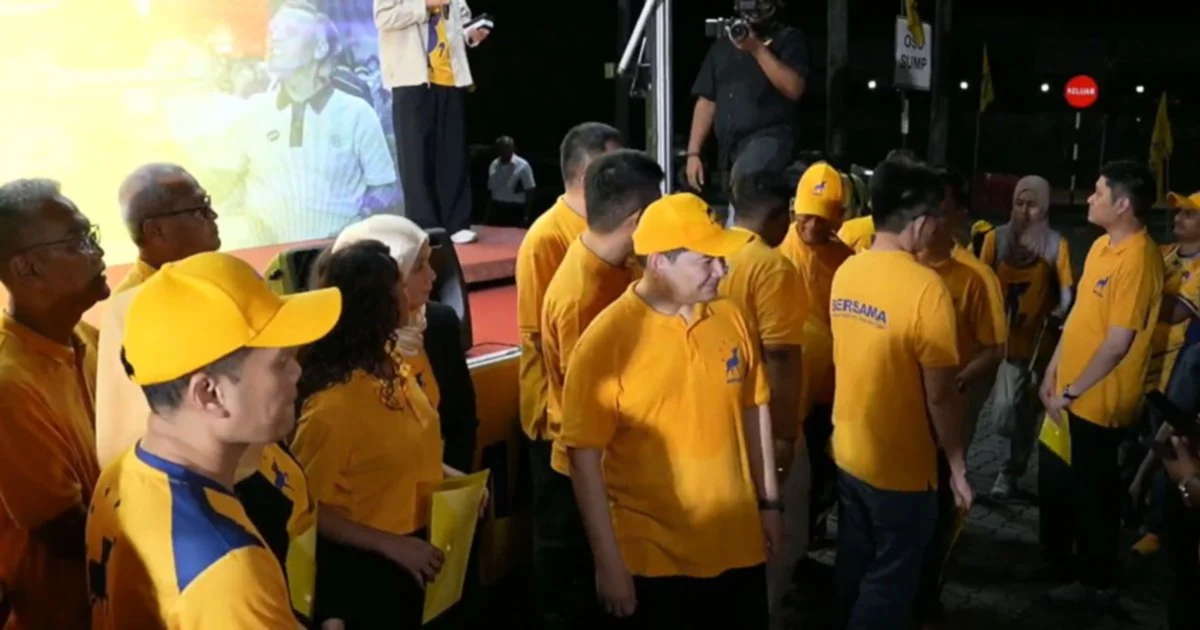
Parti Bersama Malaysia made a strategic move on Friday by announcing its candidate roster for the 16th Johor state election, presenting a lineup designed to appeal to voters across multiple demographic segments. The party unveiled 15 candidates who collectively represent a cross-section of Malaysia's working and business classes, signalling an attempt to broaden its electoral appeal beyond traditional political support bases. This selection reflects a conscious effort by the newer political entity to position itself as a pragmatic, ground-level alternative to more established opposition and ruling coalition parties.
The composition of Bersama's candidate selection demonstrates a deliberate strategy to embed representatives from the commercial and industrial sectors within its political structure. The inclusion of an entrepreneur speaks to the party's intention to connect with business-minded voters and self-employed individuals who often feel marginalised by larger political formations. Similarly, fielding a supermarket manager introduces a candidate with direct experience in retail operations and supply chain management, sectors that touch the daily lives of ordinary Johoreans through employment and consumer activity. This diversification signals that the party is not primarily recruiting from legal or academic circles, but rather from the productive economy itself.
The presence of a logistics worker on the candidate list carries particular significance for Southeast Asian electoral dynamics. Logistics remains a critical and rapidly expanding sector across Malaysia, with workers in this field experiencing distinct workplace pressures, wage considerations and career mobility challenges. By nominating someone from this occupation, Bersama demonstrates awareness of emerging workforce constituencies whose interests may not be adequately represented within conventional party structures. Logistics employees often work irregular hours, face gig-economy pressures and have limited access to traditional union protections in some settings, creating a potential constituency receptive to fresh political messaging.
Bersama Malaysia itself represents the newer generation of Malaysian political parties, having emerged outside the traditional two-bloc framework that has dominated national politics for decades. The party's decision to launch its Johor campaign with this particular candidate profile suggests it is attempting to disrupt conventional electoral patterns by positioning itself as a vehicle for working and middle-class interests. This approach differs markedly from how both Barisan Nasional components and Pakatan Harapan coalitions typically field candidates, who traditionally come from professional or political family backgrounds.
The 15-candidate formation for Johor carries strategic implications given the state's electoral significance. Johor has historically been a Barisan Nasional stronghold, though recent elections have seen increased competition from opposition parties and independent candidates. By contesting 15 of the state assembly seats, Bersama is committing meaningful resources to a single state contest, concentrating effort rather than spreading candidates thinly across multiple states. This focused approach suggests either confidence in specific constituencies or a targeted strategy aimed at achieving breakthroughs in particular demographic areas where the party believes its messaging will resonate.
The timing of this announcement aligns with broader Malaysian electoral cycles and internal political repositioning. As established parties navigate governance challenges and evolving voter expectations, newer formations like Bersama are attempting to capture voters dissatisfied with traditional options. The candidate selection process itself often reveals a party's internal strengths and constraints; the ability to recruit credible candidates from various professions suggests at least some degree of grassroots organisational capacity and community connections.
From a Malaysian political perspective, the emergence of viable third-force options remains significant. While Bersama has not achieved breakthrough electoral success at national scale, its participation in state-level contests like Johor prevents any simple two-sided competition and potentially fragments votes in ways that reshape electoral mathematics. For voters weary of binary political choices, the availability of genuinely alternative candidates becomes increasingly important for democratic representation.
The occupational diversity within Bersama's Johor slate also reflects evolving expectations about candidate credentials among Malaysian voters. Contemporary electorates increasingly value practical experience and demonstrated competence in specific fields over pure political pedigree or long-standing party association. An entrepreneur's understanding of business regulation, a supermarket manager's grasp of supply chains and workforce management, and a logistics worker's intimate knowledge of operational challenges all represent legitimate forms of expertise that voters may find compelling when evaluating candidates.
For Johor specifically, this candidate lineup enters a competitive state political environment. The state has witnessed shifting electoral patterns in recent cycles, with voter volatility increasing as attachment to traditional political formations weakens. Introducing Bersama's candidates into this environment adds complexity to campaign dynamics, forcing both Barisan and Pakatan-affiliated parties to address a three-way competition rather than a straight contest. Whether Bersama can convert this candidate diversity into electoral victories will likely depend on campaign messaging effectiveness, ground organisation and the party's ability to articulate policy positions that differentiate it from established competitors whilst remaining credible to voters evaluating practical governance capability.

