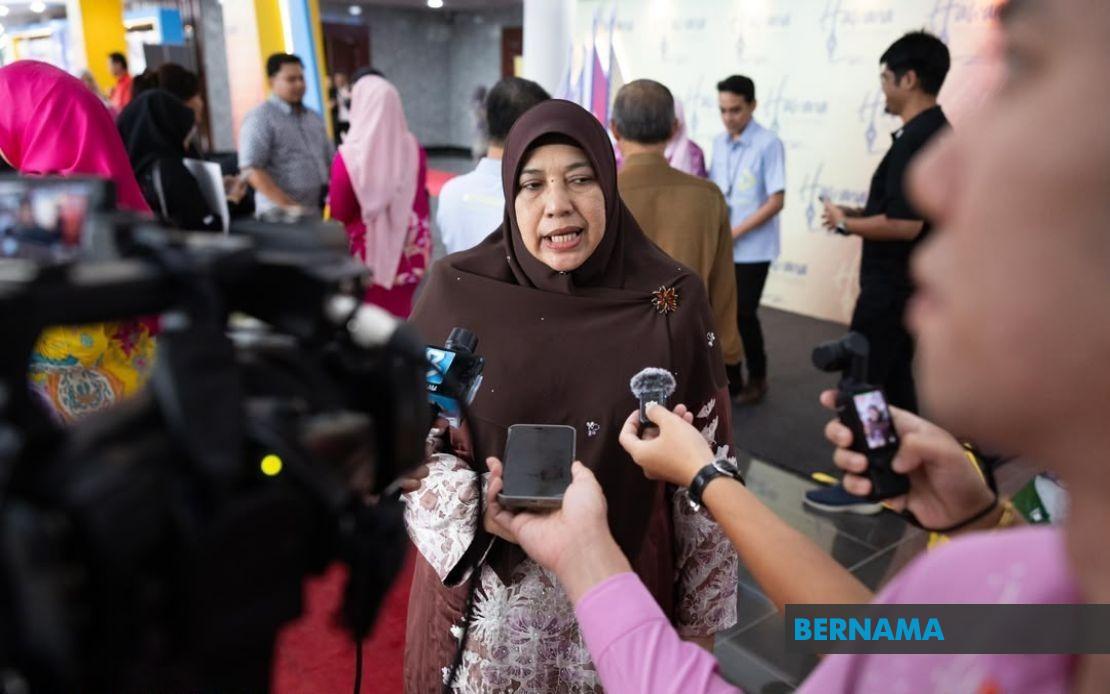
The Malaysian National News Agency has demonstrated substantial capability in managing major national events through its successful hosting of the National Journalists' Day (HAWANA) 2026 Grand Finale, which drew approximately 1,000 media professionals from Malaysia and across the ASEAN region to Butterworth in Penang. The three-day gathering, themed "Media Integrity Strengthens Credibility," concluded at PICCA Convention Centre @ Butterworth Arena, marking a significant milestone for the state's role as a hub for regional media discourse. The event's success underscores Bernama's evolution from a news distribution service into an organization capable of executing complex, multi-stakeholder events that reinforce professional standards across the industry.
Bernama chief executive officer Datin Paduka Nur-ul Afida Kamaludin emphasized the organization's pride in staff performance across multiple sub-committees, highlighting a particularly noteworthy first: the agency's inaugural live broadcast produced entirely using in-house capabilities. This achievement distinguishes HAWANA 2026 from previous editions and signals a strategic shift toward operational self-sufficiency. The production of video content, promotional posters, and layout designs by Bernama's own teams eliminates dependency on external contractors while building institutional capacity in emerging media technologies. For Malaysian news organizations operating in an increasingly cost-conscious environment, the agency's demonstration of internal competency in artificial intelligence-assisted video production offers a practical model for content creation efficiency.
The event's patronage by Prime Minister Datuk Seri Anwar Ibrahim, Penang Chief Minister Chow Kon Yeow, and Communications Minister Datuk Fahmi Fadzil reflected the government's commitment to professional journalism standards at a time when media credibility faces both technological and trust-related challenges globally. The presence of senior political figures underscored the strategic importance the administration places on maintaining positive relations with the media sector while reinforcing messaging around journalistic responsibility. This alignment between government support and professional media gatherings creates a framework within which journalists can engage in peer discussion and professional development without the appearance of regulatory capture.
Nur-ul Afida articulated an expansionist vision for the HAWANA platform, indicating that future editions would rotate to different Malaysian states to provide journalists with opportunities to network while familiarizing themselves with regional development and governance issues. This decentralization strategy could strengthen provincial news coverage by building relationships between journalists and local stakeholders outside the Klang Valley media ecosystem. For Southeast Asian journalists accustomed to regional conferences concentrated in major metropolitan centers, the prospect of rotating venues across Malaysia's diverse states represents an accessible alternative that reduces travel costs while promoting geographic diversity of professional engagement.
The enthusiastic response from attending media practitioners and preliminary inquiries about the 2027 venue suggest sustained confidence in HAWANA as the primary professional platform for the Malaysian journalism community. Unlike international conferences that attract Malaysian journalists sporadically, HAWANA's annual cycle and domestic focus create consistency in professional interaction patterns. This stability enables journalists to build ongoing relationships with peers, participate in skill-sharing initiatives, and collectively address industry-wide challenges such as digital transformation, audience monetization, and emerging threats to editorial independence.
Bernama's tenure as implementing agency represents its sixth consecutive year managing HAWANA since the Communications Ministry delegated responsibility for the event. This extended mandate reflects organizational trust and suggests satisfaction with execution quality, though Nur-ul Afida's emphasis on hoping for continued appointment indicates some uncertainty about future arrangements. The continuation of Bernama's role matters significantly for the agency's institutional development, as event management experience builds organizational prestige and provides revenue diversification opportunities beyond traditional news distribution. For Malaysian news industry observers, Bernama's successful event management demonstrates that government-affiliated agencies can operate with professional standards comparable to private event organizations.
The participation of journalists from other ASEAN countries introduced comparative perspectives on media practices across Southeast Asia, where press freedom conditions, regulatory frameworks, and technological adoption vary considerably. These cross-border interactions facilitate knowledge exchange about emerging journalistic challenges and solutions, positioning HAWANA as a platform that extends beyond Malaysia's borders to influence regional professional standards. For smaller ASEAN news organizations lacking access to international journalism conferences, participation in HAWANA offers meaningful professional development at relatively modest cost.
The theme of media integrity and credibility selected for HAWANA 2026 addresses a pressing concern across Southeast Asia, where misinformation, disinformation, and declining public trust in institutions challenge journalistic institutions. By anchoring the conference around these foundational principles, organizers positioned the gathering as responsive to contemporary professional anxieties rather than ceremonial. The emphasis on credibility strengthening acknowledges that individual journalists and news organizations must actively defend professional reputation rather than assuming public confidence based on institutional history alone.
Bernama's demonstrated capacity in artificial intelligence-assisted content production and live broadcasting has implications for Malaysian media infrastructure. The agency's competency in these areas could evolve into service offerings for smaller news organizations and regional broadcasters lacking in-house technical capabilities. This potential represents an opportunity for Bernama to transition from competitor toward industry infrastructure provider, a role that could generate revenue while strengthening the broader media ecosystem's technological capacity.
Looking forward, HAWANA's expansion trajectory and Bernama's organizational learning suggest that annual editions will likely grow in scope and professional impact. The platform's establishment as a marquee event in the Malaysian journalism calendar creates momentum for sustained participation and speaker quality. For news organizations in Malaysia and Southeast Asia monitoring professional development opportunities, HAWANA represents an increasingly valuable touchpoint for networking, skill advancement, and exposure to peers addressing shared industry challenges.

