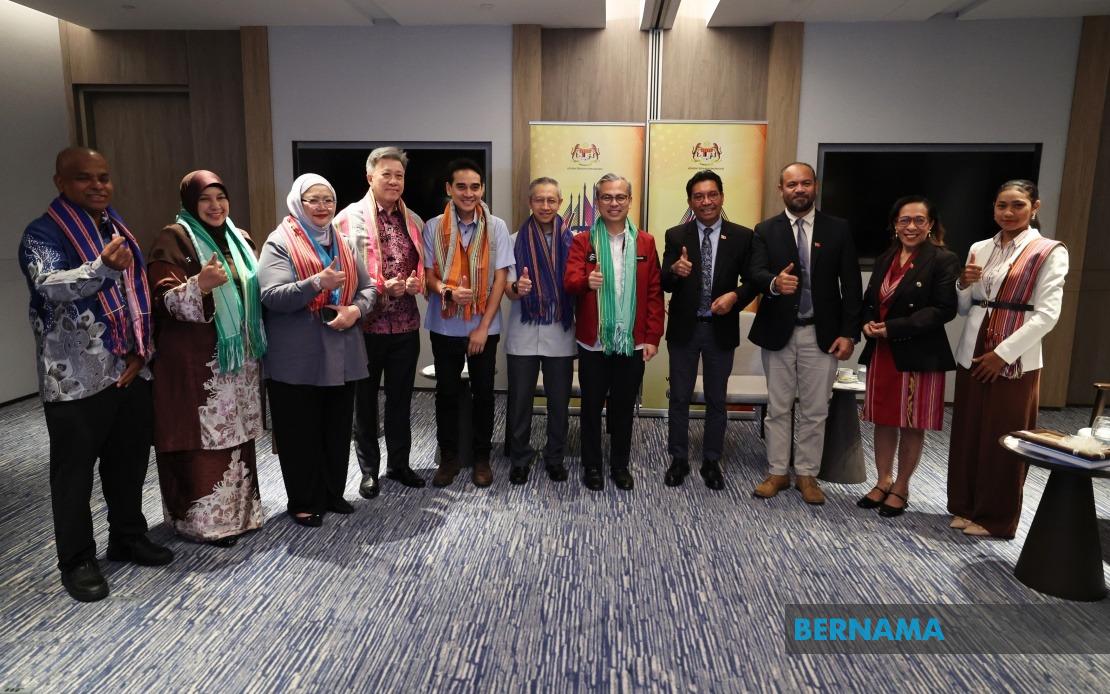
Malaysia's national news agency Bernama and Timor-Leste's official news body, Agência Noticiosa de Timor-Leste (TATOLI), have entered into a formal partnership designed to enhance journalistic standards and information sharing across Southeast Asia. The memorandum of understanding was officially exchanged on June 20 during the National Journalists' Day (HAWANA) 2026 celebration at the PICCA convention centre in Butterworth, with Communications Minister Datuk Fahmi Fadzil and Timor-Leste's Secretary of State for Social Communication, Expedito Loro Dias Ximenes, presiding over the signing ceremony witnessed by Prime Minister Datuk Seri Anwar Ibrahim.
The strategic initiative represents a broadening of Bernama's regional footprint at a critical moment for ASEAN cohesion. Timor-Leste officially joined ASEAN in October 2025 as the bloc's 11th member state, and this collaboration signals Malaysia's commitment to integrating the newer member into the regional information ecosystem. Bernama Chief Executive Officer Datin Paduka Nur-ul Afida Kamaludin emphasised that the partnership extends beyond simple content exchange to encompass multifaceted cooperation in news dissemination, photographic material, multimedia resources, and structured professional development initiatives. The arrangement underscores how traditional news agencies continue to shape regional narratives even as digital platforms proliferate.
One significant dimension of the MoU centres on linguistic reach and cultural accessibility. Bernama currently reports in six languages—Bahasa Melayu, English, Tamil, Mandarin, Arabic, and Spanish—enabling it to serve diverse audiences across Asia and globally. Through the partnership, Bernama news will be carried on the TATOLI platform in four languages: Tetum, Portuguese, Bahasa Indonesia, and English. This multilingual approach ensures that Malaysian perspectives reach Timorese audiences in their preferred languages while simultaneously exposing Malaysian readers to coverage of Timor-Leste through localized reporting. The agreement also prompted Bernama to consider introducing Portuguese translations, positioning the agency to reach Portuguese-speaking communities worldwide and reflecting the growing recognition of linguistic diversity as a strategic asset in regional communications.
The collaboration carries substantial implications for professional journalism standards across Southeast Asia. Both agencies recognize that in an era of rapid digital dissemination and widespread misinformation, maintaining credible, verified reporting becomes increasingly vital to public trust. TATOLI President Noémio Mateus Soares Falcão stressed the importance of strengthening journalists' professional capacity through cooperation and constructive dialogue. He highlighted that the partnership would promote innovation in media operations while contributing to an information environment characterized by freedom, responsibility, and societal benefit. His remarks acknowledge the tension between open information flows and the need for professional gatekeeping, a challenge particularly acute in Southeast Asia where many societies grapple with balancing press freedom against concerns about disinformation and social stability.
The training component of the partnership addresses a concrete capacity-building need within TATOLI's operations. A cohort of Timorese reporters will undertake training at Bernama's facilities before year-end, benefiting from the Malaysian agency's accumulated expertise across multiple media platforms. Bernama operates the Bernama School of Journalism and maintains the Bernama Excellence Centre, both drawing on more than two decades of professional training experience. The organization maintains specialized educators and editorial staff across online news, television, digital media, radio, and photography, enabling it to offer comprehensive instruction in contemporary journalism practices. This knowledge transfer represents valuable technical assistance, particularly significant for a newer ASEAN member seeking to develop robust media institutions aligned with regional standards.
The timing and context of this collaboration reflect broader ASEAN institutional development following Timor-Leste's accession. TATOLI, established in 2016, operates as Timor-Leste's official news dissemination body and serves a critical function in broadcasting government information. The news agency, however, operates within a smaller media market than many established Southeast Asian counterparts, and partnership with a mature regional player like Bernama provides valuable exposure to established editorial practices and multinational content networks. For Bernama, the relationship strengthens its position as a regional media leader and demonstrates Malaysian soft power through journalism cooperation—an understated but meaningful dimension of regional influence.
The agreement also addresses the evolving information landscape across digital platforms, where verification and professional standards face constant pressure. Falcão emphasized that the speed at which information travels across social media requires heightened responsibility from journalists to ensure public access to factual, verified content grounded in professional principles. This concern resonates throughout Southeast Asia, where rapid smartphone penetration has created large populations consuming news primarily through digital channels often lacking institutional editorial oversight. By strengthening cooperation between established news agencies, the MoU aims to amplify the reach of professionally-produced journalism and create institutional counterweights to fragmented, unverified digital information flows.
Bernama's institutional history lends weight to its role as a training partner. Established under parliamentary legislation on April 6, 1967, and officially launched on August 30, 1967, to commemorate the nation's independence decade, Bernama has evolved from a single-language domestic news service into a multilingual regional media player. The agency's longevity and institutional stability provide TATOLI with access to proven organizational models and editorial frameworks. Bernama Chairman Datuk Seri Wong Chun Wai, alongside Penang Chief Minister Chow Kon Yeow, attended the signing ceremony, signaling support from both federal and state-level leadership for strengthening Malaysia's media cooperation credentials within ASEAN.
The collaboration emerged following sustained overtures from TATOLI prior to Timor-Leste's official ASEAN accession. According to Nur-ul Afida, the initiative originated from Timorese interest in deepening media ties, with Bernama undertaking careful evaluation to ensure mutually beneficial outcomes for both organizations and their respective personnel. This measured approach reflects professional consideration of institutional capacity and shared interests rather than superficial diplomatic gesturing. The partnership thus rests on genuine operational needs and concrete content exchange possibilities rather than ceremonial frameworks.
From a Southeast Asian perspective, this arrangement exemplifies how traditional news agencies maintain relevance and influence within an increasingly digital media environment. Rather than succumbing entirely to competition from digital platforms and social media, established news organizations like Bernama strategically leverage their institutional credibility, professional expertise, and existing network infrastructure to deepen regional connections and expand their reach. The training and content-sharing dimensions of the MoU create mutual dependency and encourage long-term institutional relationships that transcend individual political administrations or momentary news cycles.
The HAWANA 2026 event itself underscored the continuing importance of journalism and press freedom within ASEAN governance frameworks. The ceremony drew representatives from multiple member states, including Cambodia's Ministry of Information and Laos' Cabinet Office at the Ministry of Technology and Communications, indicating that media cooperation and journalistic standards constitute recognized policy priorities across the bloc. This regional attention to media matters reflects growing recognition that information quality and institutional journalism capacity contribute to democratic legitimacy, informed public discourse, and ultimately to regional stability and integration.
Moving forward, the success of this partnership will depend on sustained institutional commitment and substantive resource allocation to training programmes and content exchange mechanisms. Bernama's demonstrated capacity to deliver professional instruction through its School of Journalism and Excellence Centre provides a foundation, though long-term effectiveness will require continuous adaptation to evolving media technologies and audience consumption patterns. For Malaysian readers, the partnership represents both an institutional achievement highlighting the country's media leadership within ASEAN and a recognition that regional integration extends meaningfully into communications infrastructure and professional standards—dimensions often overlooked in discussions of Southeast Asian cooperation that typically focus on trade, security, or political forums.

