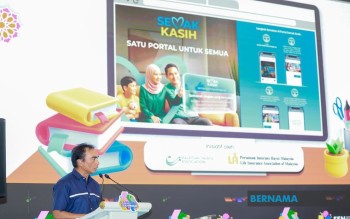
Bank Negara Malaysia has opened a new digital gateway designed to reconnect families with forgotten financial protection. The 'Semak Kasih' portal, unveiled at the Terengganu Financial Literacy Carnival, represents a coordinated effort to trace insurance policies and takaful certificates that remain unclaimed across the country. Deputy Governor Adnan Zaylani Mohamad Zahid emphasised that the platform simplifies the process of verifying coverage and contacting providers, addressing a significant gap in Malaysia's financial safety net where beneficiaries remain unaware of protection their loved ones secured for them.
The scale of the problem is substantial. Industry estimates from the Malaysian Takaful Association and the Life Insurance Association of Malaysia suggest that approximately 50,000 insurance policies and takaful certificates involving death benefits have never been claimed by their intended recipients. These unclaimed benefits represent a pool of financial resources that could provide critical support to families during periods of hardship, whether triggered by medical emergencies, accidents, or property loss. The existence of such a backlog highlights a fundamental disconnect between the protection that families have purchased and their awareness of those provisions when crisis strikes.
The initiative comes at a time when Malaysia's cost of living crisis demands that households maximise every available financial resource. Insurance and takaful products are designed to function as safety nets during life's most challenging moments, yet families unable to locate relevant documentation or proof of coverage cannot access these benefits. The portal addresses this by centralising information and streamlining connections between beneficiaries and providers, effectively reducing the friction that has historically prevented claims from being processed. This technological intervention acknowledges that the problem is not a shortage of protection but rather an information and accessibility challenge.
Insurance and takaful companies have previously attempted to contact beneficiaries through conventional channels, sending letters and dispatching agents to locate claimants. These manual efforts, while well-intentioned, have proven insufficient in reaching all eligible parties. The 'Semak Kasih' portal shifts responsibility partly to beneficiaries themselves, empowering them to proactively search for coverage rather than waiting for providers to find them. This two-way approach recognises that families may be more motivated to search systematically through a dedicated platform than to respond to unsolicited outreach efforts.
Beyond this specific initiative, Bank Negara's broader financial ecosystem reflects a strategic pivot toward inclusive access to financial security. The central bank continues to support small and medium enterprises through microfinancing schemes offering loans up to RM100,000 without requiring guarantors or collateral—a recognition that traditional banking criteria often exclude businesses with limited assets but genuine potential. The SME Stabilisation Relief Facility, with RM5 billion allocated to support companies affected by the West Asia conflict, demonstrates how financial institutions are adapting support mechanisms to address geopolitical and economic disruptions affecting Malaysian enterprises.
The iTekad initiative underscores the importance of equitable economic participation. With more than 14,000 participants nationwide benefiting from this programme, including about 600 in Terengganu, the scheme has successfully raised incomes and living standards across diverse communities. These targeted interventions reflect an understanding that financial resilience requires multiple entry points and that one-size-fits-all banking cannot serve Malaysia's diverse population effectively.
Financial literacy emerges as a critical pillar in Bank Negara's broader strategy. Research cited during the launch reveals concerning consumer behaviour patterns: approximately 37 per cent of Malaysians engage in impulsive online shopping, while 26 per cent carry unsustainable debt burdens. These statistics underscore how digital financial access, while expanding economic opportunity, simultaneously increases vulnerability to poor decision-making. The central bank's emphasis on financial education from childhood acknowledges that economic resilience depends not merely on access to products but on the wisdom to use them prudently.
The Financial Education Forum initiative represents an attempt to democratise financial knowledge. By developing an inclusive, user-friendly website serving as a comprehensive educational resource—with specific attention to persons with disabilities—Bank Negara is recognising that financial literacy remains unevenly distributed across Malaysian society. Supporting accessibility for marginalised communities reflects an understanding that sustainable economic security requires broad-based understanding rather than concentration of financial knowledge among privileged groups.
Universities play an expanding role in this educational ecosystem. Collaborations such as the FEN Proaktif 2.0 Programme with Universiti Malaysia Terengganu integrate financial management training into university curricula, preparing graduating students with practical skills before entering the workforce. This institutionalisation of financial education within tertiary institutions establishes healthy habits during formative career years, potentially preventing debt accumulation and poor financial decisions that could burden individuals for decades.
The psychological dimension of financial security receives implicit recognition throughout these initiatives. Adnan Zaylani's statement that consistent saving from youth yields significant long-term returns appeals to delayed gratification and compound growth—concepts that require patient understanding rather than immediate consumption. By framing financial decisions as personal choices within individual control, the messaging empowers Malaysians to view themselves as architects of their financial futures despite external economic volatility.
For Malaysian households navigating persistent cost-of-living pressures, the 'Semak Kasih' portal represents concrete relief. By systematising access to dormant benefits, the portal could unlock millions of ringgit in claimed benefits across the country. Families unaware they possessed protection can now verify coverage and initiate claims, transforming forgotten policies into tangible financial support during emergencies. The initiative demonstrates how technology, properly deployed, can bridge gaps between existing financial infrastructure and actual household access to that infrastructure.
The broader context reveals Bank Negara's recognition that financial stability in Malaysia requires both institutional innovation and individual behaviour change. The 'Semak Kasih' portal addresses the institutional dimension by creating infrastructure to connect beneficiaries with providers. Simultaneously, financial literacy programmes address the behavioural dimension by cultivating wiser decision-making among citizens. Together, these efforts suggest that sustainable economic security emerges not from any single intervention but from comprehensive strategies touching both systems and individual mindsets, from forgotten insurance certificates to childhood financial habits.

