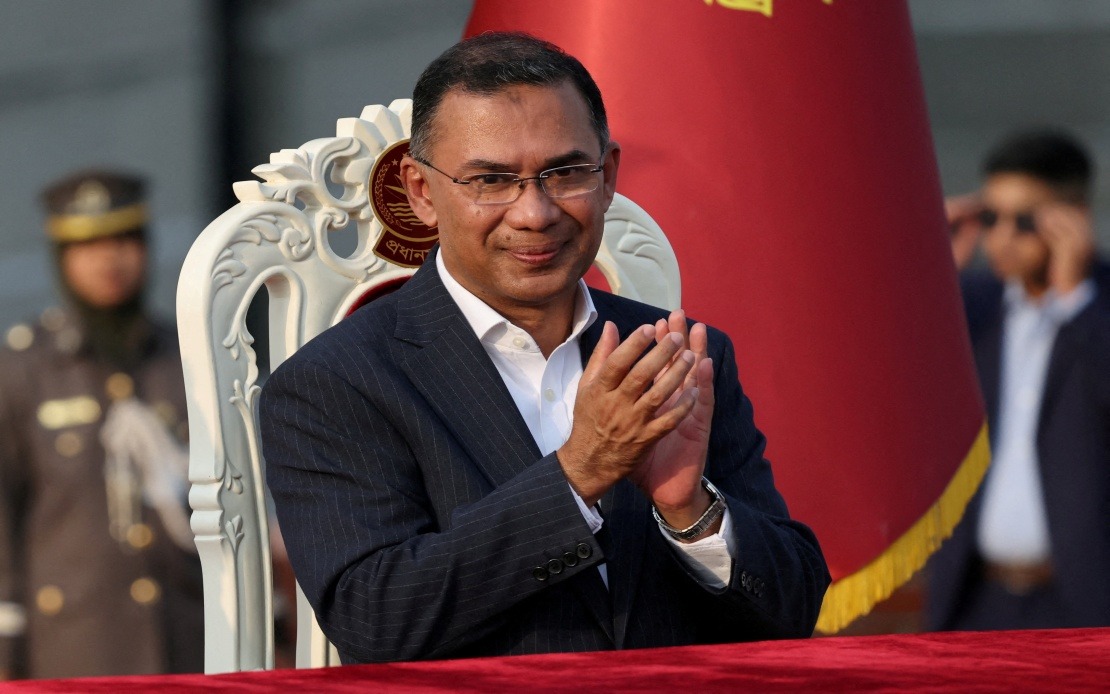
Bangladesh Prime Minister Tarique Rahman is set to arrive in Malaysia on June 22 for an official state visit that will carry symbolic weight as his first bilateral engagement abroad since taking office earlier this year. The visit, undertaken at the personal invitation of Prime Minister Datuk Seri Anwar Ibrahim, underscores the strategic importance both nations place on their relationship and signals Bangladesh's intent to deepen ties with key regional partners during a formative period of its new administration.
Rahman will receive the full ceremonial treatment reserved for visiting heads of government, with an official welcoming ceremony followed by formal bilateral discussions at the Perdana Putra Complex. The choice of Malaysia as the destination for his inaugural overseas bilateral visit reflects the depth of the relationship and suggests the Bangladesh government views cooperation with Kuala Lumpur as a priority as it establishes its foreign policy direction under new leadership. The timing is also significant, occurring just months into Rahman's tenure, when establishing strong regional anchors becomes crucial for domestic legitimacy and international standing.
The bilateral agenda is expected to encompass a broad spectrum of shared interests. Both leaders will conduct a comprehensive review of existing Malaysia-Bangladesh relations and identify new avenues for collaboration spanning multiple sectors. Priority areas include trade and investment expansion, human resource development initiatives, semiconductor manufacturing and technology transfer, energy cooperation, agricultural partnerships, and educational exchange programmes. These sectors reflect both nations' development priorities and offer practical opportunities for mutual economic benefit, particularly given Malaysia's advanced position in technology and semiconductor industries and Bangladesh's emerging manufacturing capabilities.
Regional and international matters will also feature prominently in discussions, allowing the two governments to align positions on issues affecting Southeast Asia and South Asia more broadly. This diplomatic dimension gains importance as both nations navigate complex regional dynamics, from maritime security concerns to trade arrangements and multilateral cooperation frameworks that intersect their geopolitical interests.
The visit will be formalised through the signing of several bilateral instruments that institutionalise cooperation commitments. An memorandum of understanding on cultural cooperation will facilitate people-to-people exchanges, academic collaborations, and cultural diplomacy initiatives that strengthen the social fabric binding the two nations. Additionally, two exchanges of notes will be executed addressing counter-terrorism research collaboration and investment promotion and facilitation mechanisms. These instruments reflect shared security concerns and mutual recognition that enhanced investment frameworks can drive economic growth for both countries.
Bangladesh's delegation will be substantial, with Rahman accompanied by his spouse Dr Zubaida Rahman, Foreign Minister Dr Khalilur Rahman, and a cohort of senior government officials. This composition signals the importance Bangladesh attaches to the visit and provides opportunities for bilateral engagement across multiple government departments, enabling deeper institutional relationships beyond the prime ministerial level. The inclusion of the foreign minister ensures continuity in diplomatic coordination and provides a platform for officials to establish working relationships that will facilitate ongoing bilateral engagement.
The economic dimension of the bilateral relationship is substantial and growing. In 2025, bilateral trade reached RM12.18 billion, equivalent to approximately US$2.84 billion, placing Bangladesh among Malaysia's significant trading partners globally at 28th position. More importantly, Bangladesh ranks as Malaysia's second largest trading partner within South Asia, trailing only India, reflecting the scale of commercial interaction. Malaysia's export performance to Bangladesh has been particularly robust, with outbound shipments valued at RM10.08 billion, predominantly comprising petroleum products that supply Bangladesh's energy requirements. This export dominance underscores Malaysia's role as a key supplier of energy resources to Bangladesh's growing economy.
Imports flowing from Bangladesh to Malaysia, while smaller at RM2.10 billion, demonstrate the complementary nature of the bilateral trade relationship. Bangladesh supplies textiles, apparel, and footwear products that fill market niches in Malaysia's consumer economy and manufacturing supply chains. This composition reflects Bangladesh's manufacturing strength in labour-intensive sectors where the country has developed competitive advantages. The asymmetry in trade flows, favouring Malaysian exports, also highlights potential for deepening import relationships and identifying new Bangladeshi products that could gain market access in Malaysia.
The visit arrives at a propitious moment for bilateral economic expansion. Both nations are pursuing developmental agendas that create natural complementarities. Malaysia's technology and capital availability align well with Bangladesh's labour resources and emerging manufacturing capabilities. Expanding semiconductor cooperation could prove particularly fruitful, as Malaysia hosts established semiconductor manufacturing clusters while Bangladesh seeks to develop higher-value manufacturing beyond traditional textiles. Energy cooperation also holds promise given Malaysia's oil and gas expertise and Bangladesh's rising energy demands as industrial output accelerates.
Educational partnerships represent another dimension where the visit can yield tangible benefits. Malaysian universities and technical institutions have long attracted Bangladeshi students, and the visit provides an opportunity to expand these flows through scholarship programmes and institutional twinning arrangements. This educational investment generates mutual returns, cultivating networks of professionals with cross-border experience who can facilitate future cooperation in business and governance. The outflow of skilled workers also addresses Bangladesh's need for human capital development while creating diaspora communities that strengthen people-to-people ties.
The hosting of an official luncheon by Anwar Ibrahim provides an informal setting for the Bangladesh delegation to engage with Malaysian business leaders, academics, and officials beyond formal bilateral meetings. Such occasions often generate practical business connections and understanding that formal meetings cannot achieve. The social dimensions of high-level visits frequently generate momentum for cooperation extending well beyond the visit itself.
Rahman's choice of Malaysia as the destination for his first official bilateral visit carries diplomatic messaging beyond the immediate bilateral agenda. It signals that Bangladesh under his leadership prioritises Southeast Asian engagement and recognises the region as central to its economic and geopolitical future. For Malaysia, the visit affirms the country's status as a preferred partner for South Asian governments and validates years of diplomatic investment in Bangladesh. The visit therefore serves broader strategic purposes for both nations' regional positioning while advancing concrete bilateral cooperation across multiple domains.

