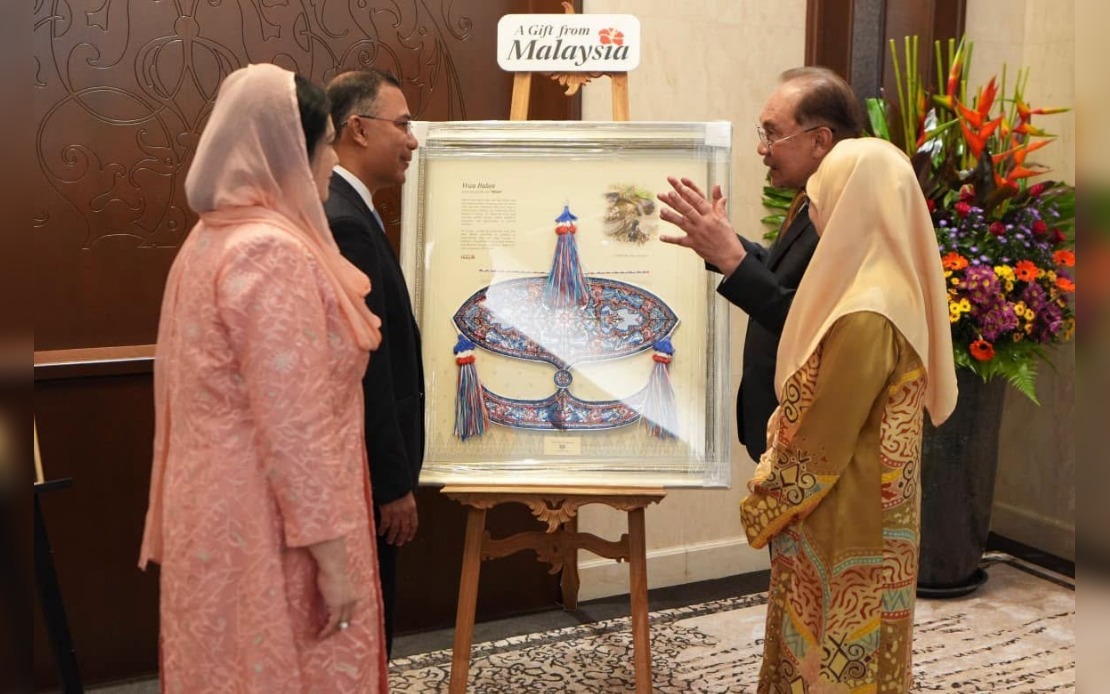
Bangladesh Prime Minister Tarique Rahman wrapped up his first state visit to Malaysia on Monday with a firm declaration to deepen cooperation with his Malaysian counterpart, Prime Minister Datuk Seri Anwar Ibrahim. The visit underscores the strategic importance both nations place on their relationship, which extends well beyond formal diplomatic protocols into substantive people-to-people connections that have grown steadily over decades.
Rahman, accompanied by his wife Dr Zubaida Rahman, expressed profound gratitude for the reception accorded by the Malaysian leadership. Through a statement released via the Bangladesh Ministry of Foreign Affairs, he specifically commended Prime Minister Anwar Ibrahim and his spouse Datuk Seri Dr Wan Azizah Wan Ismail for their hospitality, describing it as reflective of the deeper friendship binding the two nations. This courteous acknowledgment carries diplomatic weight, signalling Bangladesh's intention to cultivate warmer governmental relations at the highest levels.
The visit provided a platform for substantive discussions between the two premiers on expanding cooperation across multiple domains. While specific agreements were not detailed in the statement, the emphasis on a "multifaceted partnership" suggests engagement spanning trade, investment, cultural exchange, security, and development cooperation. For Malaysia, home to a significant Bangladeshi expatriate community, such partnerships carry economic and social ramifications that resonate beyond official circles.
Rahman also acknowledged the personal reception granted by His Majesty Sultan Ibrahim, King of Malaysia, a gesture that reflects the ceremonial importance Malaysia ascribed to the visit. The involvement of Malaysia's constitutional monarch signals that Bangladesh, as a fellow Southeast Asian democracy with shared interests in regional stability, merits elevated diplomatic status within Kuala Lumpur's foreign policy framework.
Crucially, Rahman grounded the contemporary relationship in historical context, invoking his family's significant role in Bangladesh's political development. He referenced his father, Shaheed President Ziaur Rahman, who served as President, and his mother, Begum Khaleda Zia, who served as Prime Minister. This historical framing suggests that current diplomatic overtures build upon foundations laid decades ago when Bangladesh's leadership forged initial connections with Malaysia. For Malaysian audiences, this context clarifies that the relationship enjoys deep roots rather than representing recent or transactional engagement.
The emphasis on enduring bonds transcending mere institutional cooperation reflects a broader regional approach both nations increasingly adopt. As Southeast Asia navigates complex geopolitical dynamics—including great power competition and transnational challenges—bilateral relationships rooted in historical goodwill and people-to-people links become strategically valuable. Bangladesh, positioned at the intersection of South and Southeast Asia, represents a natural partner for Malaysia's regional engagement ambitions.
Bangladesh's commitment to strengthening ties with Malaysia assumes added significance given regional economic dynamics. With Bangladesh emerging as a manufacturing hub and Malaysia maintaining its position as a technology and services centre, bilateral trade and investment opportunities remain substantial. The state visit likely explored frameworks for expanding commercial partnerships, particularly in sectors where Malaysian expertise and capital could facilitate Bangladesh's development objectives.
The reference to "bilateral and multilateral ties" suggests Rahman and Anwar discussed not only their nations' direct relationship but also coordination within regional institutions. Both countries participate in ASEAN-related mechanisms, with Bangladesh holding a strategic partnership status. Enhanced coordination on regional issues—from maritime security to climate change and economic integration—could yield dividends for both nations and the broader Indo-Pacific region.
For Malaysia, receiving a state visit from Bangladesh's premier demonstrates diversification of its diplomatic engagement beyond traditional partners. It signals to regional stakeholders that Kuala Lumpur actively cultivates relationships across South and Southeast Asia, reinforcing Malaysia's positioning as a bridge nation capable of navigating multiple geopolitical spheres. This approach complements Malaysia's established ties with India while opening fresh avenues for regional cooperation.
The warm personal dimension of the visit, evident in Rahman's gratitude for the hospitality extended, matters substantially in diplomatic practice. Political relationships anchored in personal rapport between leaders often prove more resilient when navigating disagreements or competing interests. The positive tone suggests both premiers are positioned to move beyond ceremonial exchanges toward substantive collaboration on issues of mutual concern.
Looking ahead, the visit appears to establish momentum for expanded engagement across government, business, and civil society sectors. The specific mechanisms for deepening cooperation—whether through joint committees, expanded trade agreements, or enhanced people-to-people exchanges—will likely emerge through subsequent official channels. For Malaysia's substantial Bangladeshi expatriate population, enhanced governmental relations could yield practical benefits including improved consular services and bilateral labour agreements.
Rahman's concluding statement demonstrates Bangladesh's strategic calculation that strengthening ties with Southeast Asian partners, particularly Malaysia, serves its long-term development and security interests. As Bangladesh continues its transformation into a middle-income nation and grapples with regional challenges, partnerships with established Southeast Asian economies offer valuable experience and potential cooperation frameworks. The inaugural state visit thus represents not merely ceremonial courtesy but a deliberate investment in a relationship both leaders view as consequential for their respective nations' futures.

