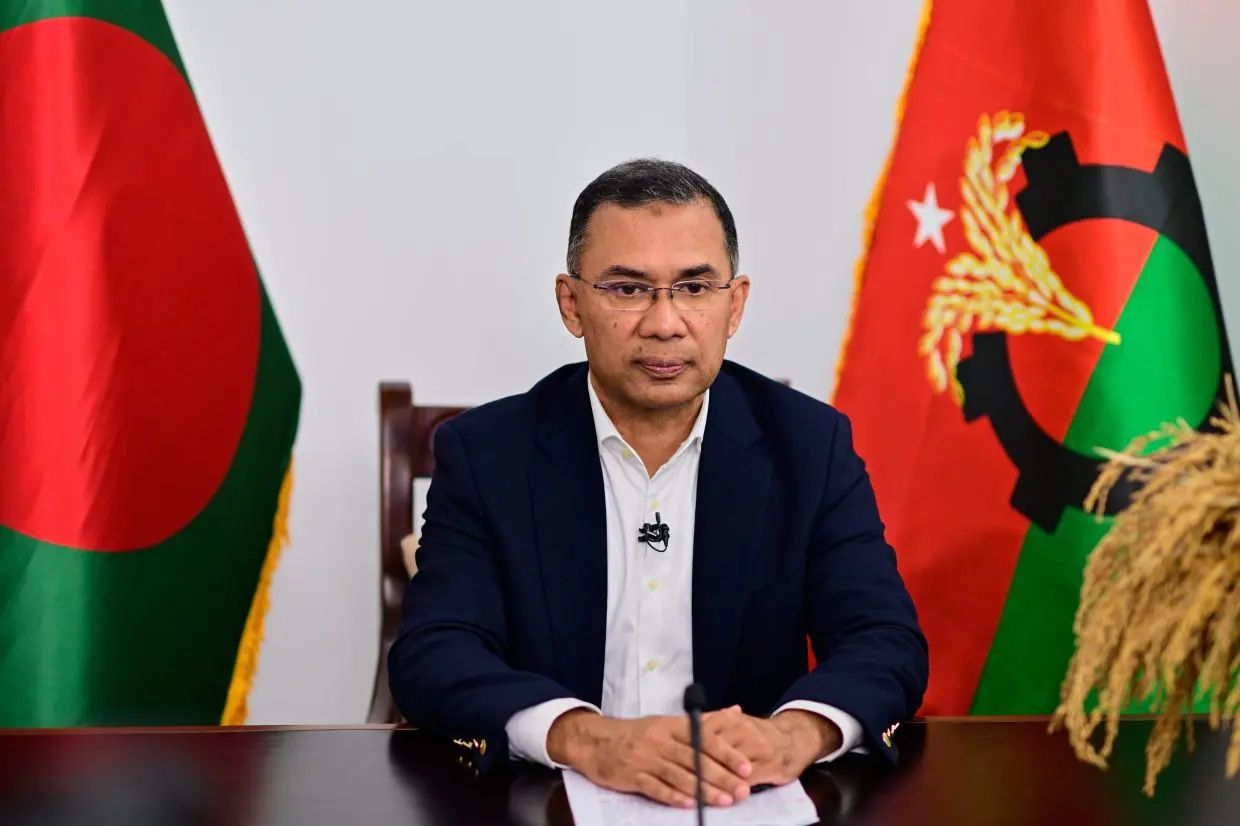
Bangladesh's recently appointed Prime Minister Tarique Rahman is set to embark on his inaugural foreign visit this weekend, choosing Malaysia and China as his first destinations rather than neighbouring India—a symbolic move that underscores the dramatically altered political landscape in Dhaka since February's transition to his government. The foreign ministry confirmed Saturday that Rahman will arrive in Malaysia on Sunday, followed immediately by travel to China, a sequencing that carries considerable diplomatic weight given the historical centrality of India-Bangladesh relations and the sharp deterioration in ties following last year's political upheaval.
The decision to prioritise Malaysia reflects both practical economic considerations and a deliberate recalibration of Bangladesh's regional partnerships. Malaysia hosts approximately 800,000 Bangladeshi workers, representing more than one-third of the country's entire foreign labour force, making it an economically significant partner for a nation heavily dependent on remittances and labour exports. This substantial diaspora community has long constituted a vital link between the two countries, yet the visit signals something deeper: an assertion that Bangladesh intends to diversify its external relationships and reduce its overwhelming dependence on India, a reliance that shaped policy under the previous government.
The China leg of Rahman's tour carries particular strategic significance, with trade discussions and infrastructure development topping the bilateral agenda. Among the specific projects likely to feature prominently in Beijing conversations is the long-stalled Teesta River initiative, a comprehensive management scheme involving river dredging, embankment reinforcement, and irrigation network development designed to restore functionality to one of Bangladesh's most critical waterways. Chinese financial and technical backing for such an undertaking would represent a meaningful alternative to the Indian engagement that has historically dominated Bangladesh's major infrastructure partnerships, potentially reshaping the balance of external influence over the country's development trajectory.
The timing and sequence of Rahman's inaugural tour fundamentally reflect the seismic political rupture that Bangladesh experienced during 2024's anti-government uprising. The former Prime Minister Sheikh Hasina, who maintained close alignment with New Delhi throughout her tenure, was forced to flee the country as mass protests erupted against her administration, an event that sent shockwaves through India's regional strategy. Since Hasina's dramatic departure, relations between Dhaka and Delhi have deteriorated markedly, with multiple friction points emerging between the neighbouring states that share a complex history and extensively porous borders.
The extradition of Sheikh Hasina represents perhaps the most legally and diplomatically fraught issue currently straining Bangladesh-India relations. Hasina has remained in hiding within India since her escape during the revolution, and the Rahman government has repeatedly pressed New Delhi for her return to face justice in Bangladesh. India's continued provision of sanctuary to the fugitive former premier, whether for strategic calculation or humanitarian grounds, remains a persistent irritant in bilateral ties. This unresolved matter has become emblematic of the fundamental divergence in interests between the two governments, signalling that the post-transition period has not healed the deep political divisions created by Hasina's ouster.
Beyond the extradition dispute, border management has emerged as another contentious domain. India has increasingly transferred individuals it categorises as illegal migrants across the shared frontier into Bangladeshi territory, a practice that Rahman's government views as an unwarranted burden-shifting of what are fundamentally Indian domestic demographic challenges. These cross-border population movements have generated humanitarian complications and security concerns within Bangladesh, further poisoning the atmosphere between Dhaka and Delhi during a period when constructive dialogue might have been expected following the transition to new leadership.
The broader geopolitical context of Rahman's diplomatic initiative involves the long-standing strategic competition between India and China for influence across South Asia. India has consistently viewed Chinese engagement in the region with considerable wariness, perceiving it as a challenge to New Delhi's traditional sphere of predominance. By deliberately opening its doors to closer Chinese partnerships on infrastructure and trade, Bangladesh is navigating a familiar regional dynamic in which smaller nations must carefully balance relationships with larger powers. Rahman's government appears to be signalling that Bangladesh will not automatically defer to Indian preferences but will actively seek alternatives that serve its own development interests.
Foreign ministry officials characterised the dual visits as constituting a comprehensive diplomatic initiative designed to reinvigorate Bangladesh's economic partnerships at a moment of transition. This framing suggests that Rahman's administration views foreign engagement not merely as ceremonial courtesy calls but as substantive efforts to secure material benefits for a country of 170 million people facing significant development challenges. The careful selection of Malaysia and China—both major economic actors with substantial capacity to provide investment, technology transfer, and market access—demonstrates strategic thinking about which external relationships offer the greatest potential returns.
The symbolic weight of bypassing India on an inaugural foreign tour cannot be understated. Historically, newly appointed leaders frequently prioritised visits to India given geographic proximity, historical ties, and the subcontinent's political significance. Rahman's divergent choice signals a conscious break from patterns established under Hasina's regime and represents a public assertion that his government intends to operate according to its own strategic calculus rather than inherited assumptions. This departure carries implications that extend well beyond ceremonial diplomacy, potentially foreshadowing substantive shifts in how Bangladesh allocates its diplomatic attention and economic partnerships across the coming years.

