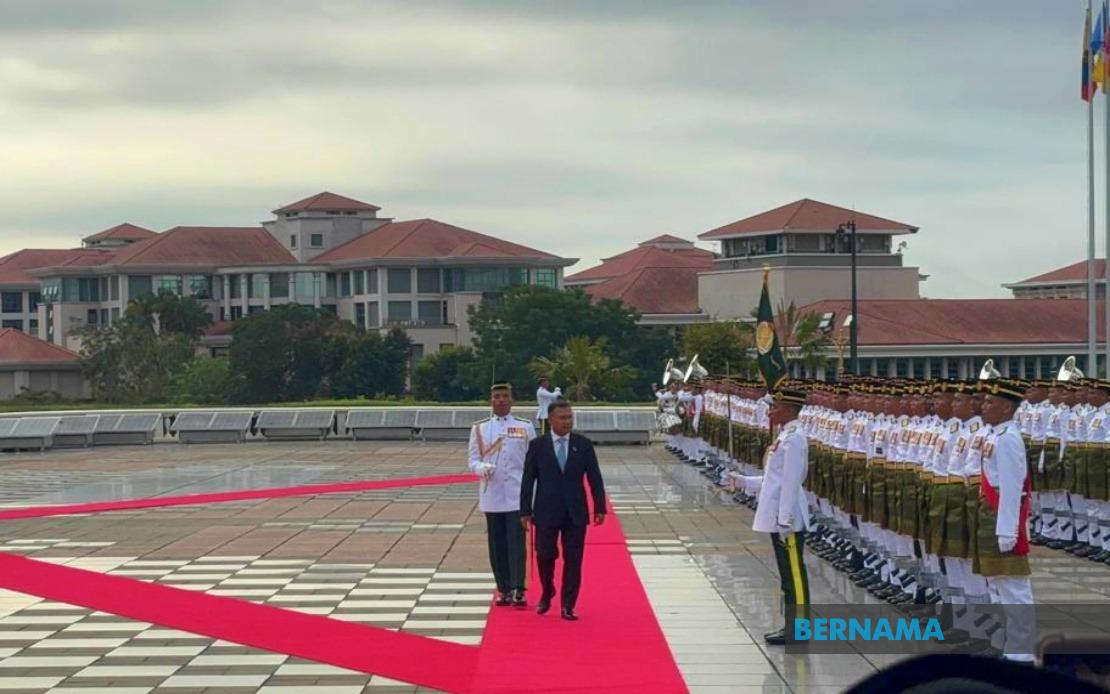
Bangladesh Prime Minister Tarique Rahman arrived in Malaysia on a two-day official visit, receiving a full state reception at the Perdana Putra Complex in Putrajaya this morning. The formal welcome ceremony underscores the strategic importance both nations place on their bilateral relationship, particularly as regional economic integration becomes increasingly vital for South and Southeast Asian countries navigating a complex geopolitical landscape.
Prime Minister Datuk Seri Anwar Ibrahim personally received Tarique at 9 am, followed by the ceremonial playing of both national anthems—a traditional diplomatic protocol that signals mutual respect and equal standing between the two governments. The symbolic gesture reflects Malaysia's commitment to nurturing ties with one of South Asia's key economies and a nation of considerable geopolitical significance in the broader Indo-Pacific region.
The reception included full military honours, with a guard of honour comprising three officers and 103 personnel from the First Battalion of the Royal Ranger Regiment, commanded by Major Nur Ahmad Zaim Zahari. The scale and formality of the ceremony demonstrated the high-level nature of the engagement, attended by Deputy Prime Minister Datuk Seri Dr Ahmad Zahid Hamidi, Foreign Minister Datuk Seri Mohamad Hasan, Home Minister Datuk Seri Saifuddin Nasution Ismail, Communications Minister Datuk Fahmi Fadzil, and other senior Cabinet members, along with foreign diplomats and government officials.
Following the ceremonial proceedings, Tarique conducted a private one-on-one meeting with Anwar before participating in comprehensive bilateral discussions involving senior ministers and officials from both delegations. These conversations are expected to examine existing cooperation mechanisms and identify pathways for deepened engagement across multiple sectors critical to both economies' development trajectories.
The bilateral agenda encompasses several substantive areas. Trade and investment remain fundamental, given Malaysia's significant economic interests in Bangladesh and vice versa. Human resource management cooperation reflects both nations' recognition that skilled labour mobility and professional development are essential for regional competitiveness. The inclusion of semiconductors on the discussion list demonstrates how Malaysia and Bangladesh are positioning themselves within global supply chains, particularly as technology manufacturing becomes increasingly decentralised from traditional hubs. Energy cooperation addresses the urgent need for sustainable and reliable power sources as both economies expand, while agricultural collaboration taps into Bangladesh's large agricultural sector and Malaysia's agro-technology expertise. Educational exchanges strengthen people-to-people connections that underpin long-term diplomatic relationships.
Beyond bilateral matters, Tarique and Anwar are anticipated to exchange perspectives on pressing regional and international concerns affecting both nations' interests. This dimension of the talks reflects how smaller and mid-sized Asian economies increasingly coordinate positions on global challenges ranging from trade disputes to climate change and security concerns affecting maritime Southeast Asia and South Asia.
The visit will conclude with the signing of three formal instruments formalising cooperation. A Memorandum of Understanding on Cultural Cooperation will establish frameworks for artistic and cultural exchanges, fostering deeper societal bonds between populations. Two Exchanges of Notes covering counter-terrorism research and investment promotion and facilitation address contemporary security challenges and economic facilitation respectively, acknowledging that prosperity and stability are mutually reinforcing. Following these signings, Anwar will host an official luncheon honouring the Bangladesh delegation, a customary diplomatic gesture that provides informal opportunities for frank discussion and relationship-building among senior officials.
Tarique is accompanied by his spouse, Dr Zubaida Rahman, along with Foreign Minister Dr Khalilur Rahman and other senior government officials, indicating the comprehensive nature of Bangladesh's delegation and its commitment to substantive engagement across multiple policy domains. The composition of the visiting party suggests that all major ministries with stakes in Malaysia-Bangladesh relations are represented, facilitating coordinated decision-making and implementation of any agreements reached.
The economic relationship between Malaysia and Bangladesh has grown substantially, with 2025 trade reaching RM12.18 billion (USD2.84 billion). Malaysia's exports to Bangladesh, totalling RM10.08 billion (USD2.35 billion), are dominated by petroleum products, reflecting Bangladesh's energy requirements as it industrialises. This export concentration presents both opportunity and vulnerability—opportunity for Malaysia to develop more diversified trade offerings, and vulnerability if global energy markets fluctuate. Conversely, Malaysian imports from Bangladesh amounting to RM2.10 billion (USD0.50 billion) comprise mainly textiles, apparel and footwear, showcasing Bangladesh's competitive strengths in labour-intensive manufacturing sectors.
Bangladesh's ranking as Malaysia's 28th largest global trading partner, combined with its status as Malaysia's second largest trading partner, export destination and source of imports within the South Asian region after India, demonstrates the relationship's significance within Malaysia's broader trade architecture. This positioning reflects both the commercial opportunities Bangladesh presents and the competition from India, which commands Malaysia's largest South Asian trading relationship. For Malaysian businesses, Bangladesh offers access to a market of over 170 million people and increasingly sophisticated infrastructure for manufacturing and commerce.
The visit also carries implications for Malaysia's broader strategic positioning in Asia. As Western powers refocus attention on Indo-Pacific affairs and great power competition intensifies, Malaysia's relationships with major South Asian economies gain heightened importance. Bangladesh, as a significant player in South Asia and increasingly in broader Asian geopolitics, represents a natural partner for Malaysia's efforts to maintain equidistance and maximise regional influence through pragmatic bilateral relationships.
This official visit represents more than ceremonial engagement—it reflects the maturing nature of Malaysia-Bangladesh relations and both nations' determination to translate diplomatic goodwill into concrete economic and security cooperation that benefits their respective populations and contributes to regional stability and prosperity during a period of considerable international uncertainty.

