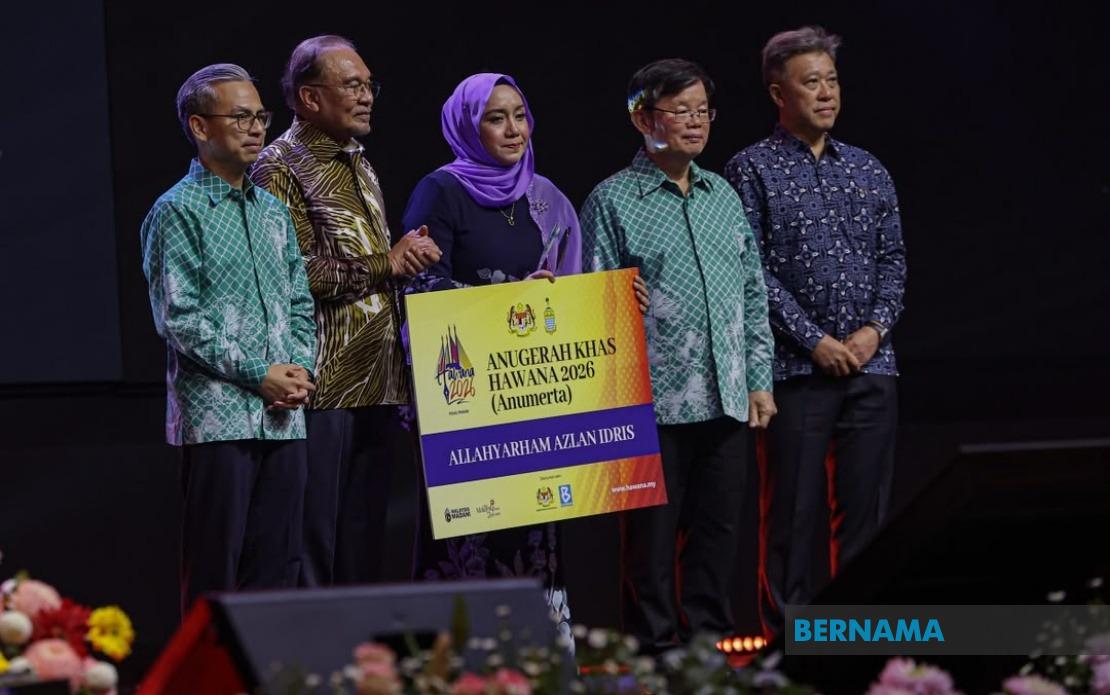
The National Journalists' Day celebration, known locally as HAWANA, honoured the memory of Azlan Idris this year by bestowing upon him a special award in recognition of his substantial contributions to Malaysia's broadcast journalism sector. Prime Minister Datuk Seri Anwar Ibrahim presented the accolade on June 20 at the PICCA@Arena Butterworth Convention Centre, where it was accepted by Azlan's widow, Wan Syahrina Wan Abdul Rahman. The ceremony brought together prominent figures from Malaysia's political and media establishment, underscoring the respect Azlan commanded within the industry.
Azlan's career trajectory spanned multiple decades and several of Malaysia's most significant broadcasting platforms. Before his eventual role overseeing Bernama Radio's operations, he served with major television networks including TV3, NTV7, and Channel 9, positions that allowed him to accumulate extensive expertise in content delivery and editorial leadership. His appointment to lead Bernama Radio came at a formative period for the national news agency's broadcasting ambitions, coinciding with the launch of that platform in 2007. Over the subsequent years, he became instrumental in shaping the station's editorial direction and operational framework.
Beyond his primary responsibilities at Bernama Radio, Azlan demonstrated remarkable commitment to the broader journalism community through his organisational work. He took on the chairmanship of the main celebration committee for HAWANA, a prestigious annual gathering that brings the country's media professionals together to recognise excellence and foster collegial spirit. From the 2022 edition held in Melaka onwards, Azlan stewarded the event through four consecutive years, a tenure that highlighted his ability to manage complex logistics and ensure that the celebrations reflected the values and achievements of Malaysia's journalistic fraternity.
Azlan passed away on January 15 at the age of 57, a loss that reverberated throughout Malaysia's media landscape. His death prompted reflection on his decades-long influence across broadcast journalism, from his early work in commercial television to his crucial role in establishing Bernama Radio as a credible news source. The decision to award him the HAWANA 2026 Special Award represented the media community's acknowledgement that his contributions extended far beyond routine editorial duties—he had helped shape institutional cultures and mentored emerging journalists.
The ceremony itself drew considerable attendance from senior media industry figures and government representatives. Present alongside Prime Minister Anwar Ibrahim were Penang Chief Minister Chow Kon Yeow and Communications Minister Datuk Fahmi Fadzil, reflecting the cross-sector significance attributed to Azlan's work. Bernama's leadership, including chairman Datuk Seri Wong Chun Wai and chief executive officer Datin Paduka Nur-ul Afida Kamaludin, attended to pay their respects and acknowledge their colleague's legacy. This convergence of political, regulatory, and industry figures underscored how journalism occupies a central position within Malaysia's governance and public discourse structures.
The HAWANA awards system itself carries historical weight within Malaysia's media establishment. Inaugurated to celebrate the profession and recognise outstanding individuals, HAWANA has grown into an annual institution where peers, government officials, and media organisations collectively affirm the importance of quality journalism. Special awards, distinct from regular recognition categories, are reserved for individuals whose career impact transcends conventional metrics—those who have fundamentally influenced how news is gathered, verified, and disseminated. Azlan's selection reflected this elevated standard.
For Bernama Radio specifically, Azlan's tenure represented a critical developmental phase. Launching a dedicated news radio service in a competitive broadcasting environment required both editorial vision and operational pragmatism. Azlan's background across multiple networks provided him with insights into audience expectations and technological capabilities. Under his stewardship, Bernama Radio established itself as a reliable news source, contributing to the diversification of Malaysia's radio landscape beyond entertainment-focused programming. His institutional legacy persists within the station's current operations and editorial philosophies.
The posthumous nature of this award invites contemplation on how the journalism profession honours its figures after they have departed. In Malaysia, such recognition often catalyses written reflections and oral histories that preserve institutional memory. Azlan's award will likely prompt colleagues and successors to document his approaches to editorial decision-making and his mentoring practices, ensuring that his accumulated wisdom remains accessible to future generations of broadcast journalists. This practice of honouring the deceased serves both ceremonial and practical functions—it provides closure for families while simultaneously creating archival records.
For Malaysian readers and the regional journalism community, Azlan's recognition underscores the enduring value placed on broadcast journalism in an era increasingly dominated by digital platforms. Radio remains a crucial medium for news dissemination, particularly in reaching audiences with limited internet access or those who consume news during commutes and work activities. Azlan's work in developing Bernama Radio contributed to maintaining this medium's relevance within Malaysia's broader media ecosystem. His award reaffirms that traditional broadcast journalism, while evolving, retains institutional importance.
The timing of this award, presented at HAWANA 2026, also reflects on broader themes within Southeast Asian journalism. The region faces ongoing challenges regarding media independence, professional standards, and the sustainability of newsrooms amid economic pressures. When established figures like Azlan are memorialised through institutional recognition, it reinforces community standards and collective commitment to excellence. His life's work exemplifies the possibility of long-term career dedication within journalism, a model increasingly uncommon as industry disruption creates instability for many practitioners.
Wan Syahrina Wan Abdul Rahman's acceptance of the award on behalf of her late husband carries personal significance for the Azlan family while also representing public acknowledgement of journalism's demands on professionals' personal lives. Those who reach senior editorial positions typically invest substantial hours and emotional energy, often at considerable cost to family time and personal wellbeing. The family's presence at the ceremony subtly validates these sacrifices and acknowledges that journalism remains fundamentally a human endeavour, dependent on individuals who commit themselves to accuracy, fairness, and public service.

