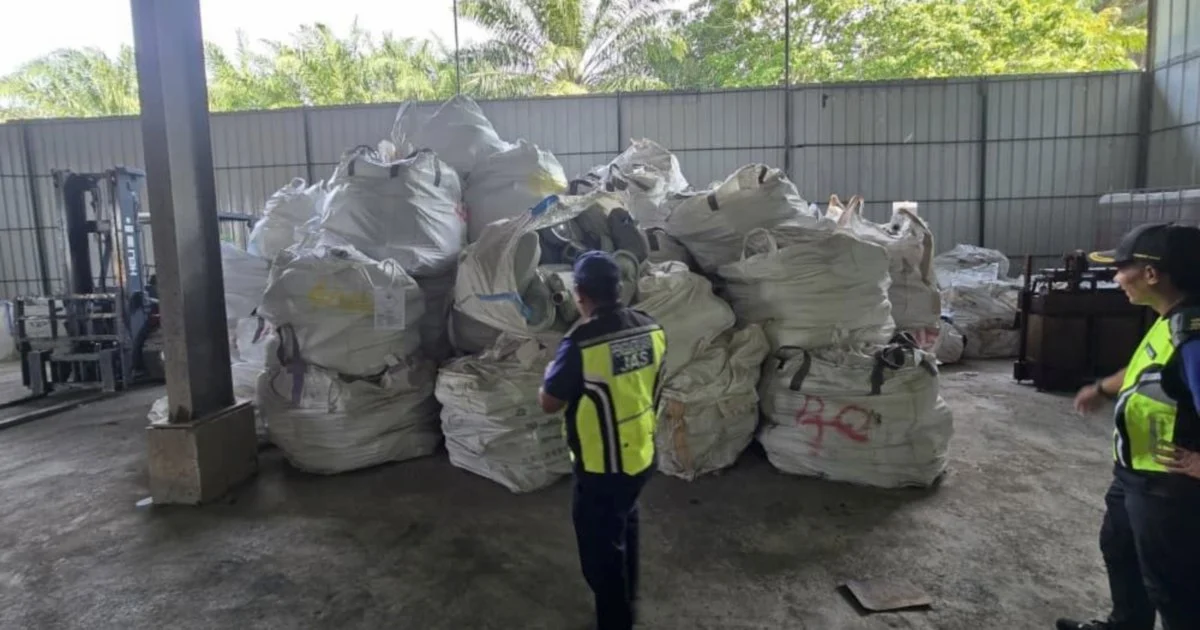
Kuantan's law enforcement agencies have dealt a significant blow to illicit e-waste trafficking in the state after conducting a coordinated raid on an unlicensed electronic waste facility in the Gambang industrial zone. The General Operations Force executed the operation yesterday, uncovering what appears to be a substantial illegal operation trafficking in discarded electronics. Officers recovered materials and equipment with a combined market value of RM6.4 million, marking a notable seizure in ongoing efforts to combat environmental crime in Pahang.
The raid resulted in the detention of the factory manager, though additional details regarding charges and the extent of the individual's involvement remain undisclosed pending further investigations. Authorities have not yet released the manager's identity or preliminary statements regarding the scope and duration of the facility's operations. The detention signals the beginning of what is expected to be a comprehensive inquiry into the illegal enterprise's supply chains, customer networks, and operational procedures.
Electronic waste represents an increasingly troubling environmental and public health hazard across Southeast Asia. Improperly processed e-waste releases hazardous substances including lead, mercury, and cadmium into soil and water systems, posing severe risks to local communities and ecosystems. Malaysia, as a middle-income nation with significant technological consumption and obsolescence rates, faces mounting pressure from illicit recyclers who operate without environmental safeguards or proper certification. These illegal facilities typically extract valuable metals and components through crude methods, bypassing international conventions governing hazardous waste movement and treatment.
The discovery in Gambang highlights the sophistication of transnational e-waste smuggling networks that have increasingly targeted Southeast Asian countries. Criminal operators exploit regulatory gaps and inadequate enforcement resources to establish processing hubs in jurisdictions with lower oversight. Legitimate recyclers operating under environmental standards face severe competitive disadvantages against these unregulated competitors, creating perverse market incentives. The RM6.4 million valuation suggests the recovered inventory contained significant quantities of precious metal-bearing components, circuit boards, and rare earth elements that command premium prices in black market channels.
Government agencies have intensified scrutiny of industrial zones and manufacturing clusters following a series of similar discoveries across Peninsular Malaysia. The Gambang facility joins a growing list of illegal operations uncovered in recent months, indicating that authorities are deploying more sophisticated detection methods and intelligence gathering. Environmental crime syndicates have demonstrated remarkable adaptability, relocating operations frequently and obscuring their activities behind legitimate manufacturing licenses or shell company structures. The General Operations Force's success in this instance reflects improved inter-agency coordination and intelligence sharing among Malaysian law enforcement bodies.
International pressure regarding Malaysia's e-waste handling has mounted substantially in recent years. Various environmental groups and foreign governments have criticized inadequate enforcement of the Basel Convention, which regulates hazardous waste transportation. Malaysia ratified this treaty but continues facing criticism from international observers regarding implementation effectiveness. The recovery of RM6.4 million in illicit materials represents just a fraction of the estimated total e-waste trafficking volume moving through Southeast Asia annually, suggesting far larger criminal networks remain beyond authorities' immediate reach.
The Kuantan seizure carries implications for Malaysia's broader environmental governance agenda. As the country seeks to position itself as a responsible developing nation on the global stage, tackling environmental crime becomes increasingly critical for international reputation and trade relationships. Nations pursuing stringent environmental enforcement increasingly screen trading partners' records, with poor performance potentially affecting market access and investment flows. The raid demonstrates commitment to combating these illicit networks, yet sustained success requires adequate resourcing, specialized training, and sophisticated monitoring infrastructure that remain challenging for many enforcement agencies.
Rare earth elements and precious metals extracted from e-waste hold substantial economic value for processors, driving the sector's criminal expansion. A single kilogram of circuit boards can contain higher concentrations of certain metals than ore deposits, explaining why sophisticated criminal operations pursue this market segment. However, the crude processing methods employed by illegal facilities generate toxic byproducts and environmental contamination far exceeding what certified recyclers would produce. Communities adjacent to illegal processing sites face exposure to heavy metal dust, toxic runoff, and atmospheric pollutants that cause respiratory illness and developmental disorders among children.
The investigation's expansion will likely reveal connections between the Gambang facility and broader smuggling networks operating across Malaysia and neighboring countries. Thai and Vietnamese operators have been implicated in numerous cases involving Malaysian e-waste trafficking, suggesting regional coordination among criminal enterprises. Authorities will examine financial records, shipping documents, and customer communications to map the network's structure and identify downstream recipients of processed materials. International cooperation with environmental law enforcement agencies in neighboring countries may be necessary to fully dismantle the operational chain.
Provinces and states throughout Malaysia must enhance their enforcement capabilities to combat similar operations before they become entrenched. The Gambang discovery underscores the necessity for continuous vigilance, improved monitoring technologies, and adequate funding for environmental crime units. Legitimate recycling businesses have consistently called for stronger enforcement against illegal competitors, arguing that unequal regulatory burdens undermine the entire sector's viability. Going forward, Malaysian authorities will likely increase inspection frequency at industrial facilities suspected of handling electronic materials, establishing permanent task forces dedicated to environmental crime investigation and prosecution.

