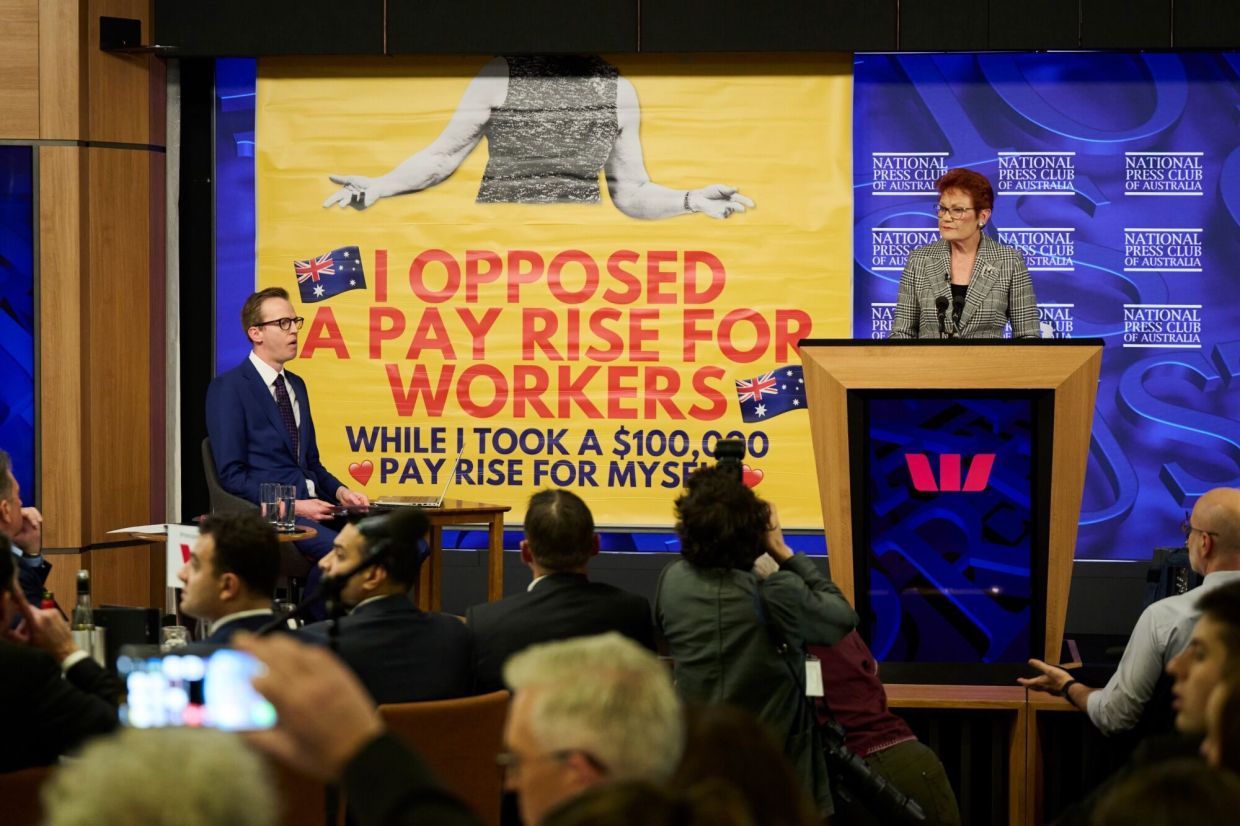
Pauline Hanson, leader of Australia's One Nation party, has launched a frontal assault on the nation's multiculturalism framework, declaring that Australia must become a monocultural society despite its multiracial composition. Speaking at the National Press Club in Canberra on Wednesday, Hanson articulated a vision sharply at odds with three decades of mainstream Australian policy, arguing that a unified cultural identity is incompatible with the country's current approach to diversity. Her remarks represent a significant moment in her 30-year political career—the first time she has addressed the Press Club venue, underscoring the provocative nature of her message and her party's growing political influence.
Hanson framed her argument around Australia's intensifying housing affordability crisis, a concern that has moved to the forefront of voters' minds as property prices have soared beyond the reach of many working Australians. She contended that excessive immigration levels are fundamentally responsible for the shortage of affordable housing stock, positioning migration policy as the root cause rather than one factor among many. By connecting cultural assimilation demands to an immediate bread-and-butter issue affecting millions of Australians, Hanson has crafted a narrative that intertwines identity politics with economic grievance—a potent combination in contemporary populist movements globally.
In her prepared remarks, Hanson distinguished between racial and cultural composition, a distinction that appears designed to deflect charges of racism while maintaining a hardline position on social cohesion. She acknowledged Australia's multiracial character but insisted that this reality must operate within a single, overarching cultural framework. The concept of "one cultural umbrella" suggests an assimilationist model where immigrant communities would be expected to abandon cultural practices and adopt a dominant Australian identity. This formulation represents a departure from the multicultural model that has guided Australian immigration policy since the 1970s, which historically emphasized the coexistence and celebration of multiple cultural identities within a shared civic framework.
One Nation has pledged to "slash" migration numbers, with Hanson specifically naming restrictions on people from regions she characterizes as "immersed in extremism like radical Islam." This language echoes security concerns that have periodically emerged in Australian political discourse, particularly following terrorist incidents and heightened international tensions. The framing conflates geographic origin with ideological inclination, a rhetorical move that critics argue oversimplifies security threats and unfairly stigmatizes entire populations based on religious or cultural affiliation.
The timing of Hanson's intervention reflects One Nation's surging political fortunes. The party has climbed substantially in opinion polling over the past year, particularly since the centre-right coalition government's electoral collapse in May of the previous year. This trajectory illustrates broader political realignment occurring across developed democracies, where voters dissatisfied with establishment parties are gravitating toward populist alternatives promising decisive action on issues they perceive as neglected.
Australian households have faced a potent combination of economic headwinds that have animated One Nation's appeal. Inflation has resurged, pushing living costs upward across the economy. Interest rates have climbed as the central bank has fought inflationary pressures, substantially increasing mortgage burdens for borrowers. Fuel costs have spiked due to geopolitical disruption in the Middle East, creating cascading effects throughout the economy. In her address, Hanson attributed these challenges primarily to immigration policy and the transition costs of green energy initiatives—interpretations that align with her party's broader political agenda but that economists debate vigorously.
Prime Minister Anthony Albanese's Labor government has attempted to address some of these economic pressures through targeted policy interventions. The administration temporarily reduced fuel excise, providing modest relief at the pump for motorists. On the housing front, the government has pursued tax reforms intended to expand the supply of affordable housing and improve accessibility for first-time buyers. However, these measures have offered only incremental relief for voters experiencing genuine financial stress, leaving space for populist parties to position themselves as offering bolder solutions.
Albanese has characterized the rise of One Nation and similar movements as expressions of "simplistic grievance-based politics," contending that they offer easy scapegoats rather than substantive solutions to structural economic problems. This diagnosis suggests that citizens are turning to populist parties not because their arguments are persuasive but because the incumbent economic model has ceased functioning adequately for ordinary Australians. The Prime Minister's framing implies that housing unaffordability, wage stagnation, and rising living costs reflect systemic failures in macroeconomic management and policy design rather than immigrant-driven problems.
For Southeast Asian readers and policymakers, Australia's political convulsions carry particular significance. The region depends substantially on Australian investment, tourism, and educational partnerships. Any sustained shift toward restrictionist immigration and inward-looking policies could ripple through regional economies. Additionally, Hanson's rhetoric regarding Islamic communities and Middle Eastern geopolitics may influence Australia's diplomatic relationships within the predominantly Muslim Southeast Asian region, potentially affecting security cooperation and trade dynamics that have developed over decades.
The debate over multiculturalism versus monoculturalism in Australia also raises questions relevant to plural societies throughout Southeast Asia. Many nations in the region comprise diverse ethnic, religious, and linguistic communities navigating questions about national identity, integration, and social cohesion. How Australia resolves these tensions may offer cautionary lessons about the political risks of allowing economic grievances to calcify into cultural and religious division, or conversely, about the challenges of maintaining multicultural frameworks when distributional conflicts intensify.
Hanson's intervention signals that questions of immigration, cultural identity, and economic distribution will dominate Australian politics in coming years. Whether her diagnosis of Australia's housing crisis proves persuasive to voters, or whether the government's alternative explanations gain traction, will substantially shape the political landscape. The contest between these competing narratives—whether Australia's problems stem from excessive diversity or from policy failures in housing supply, wage growth, and economic management—will determine whether the nation continues its postwar multicultural trajectory or pivots toward more exclusionary approaches.