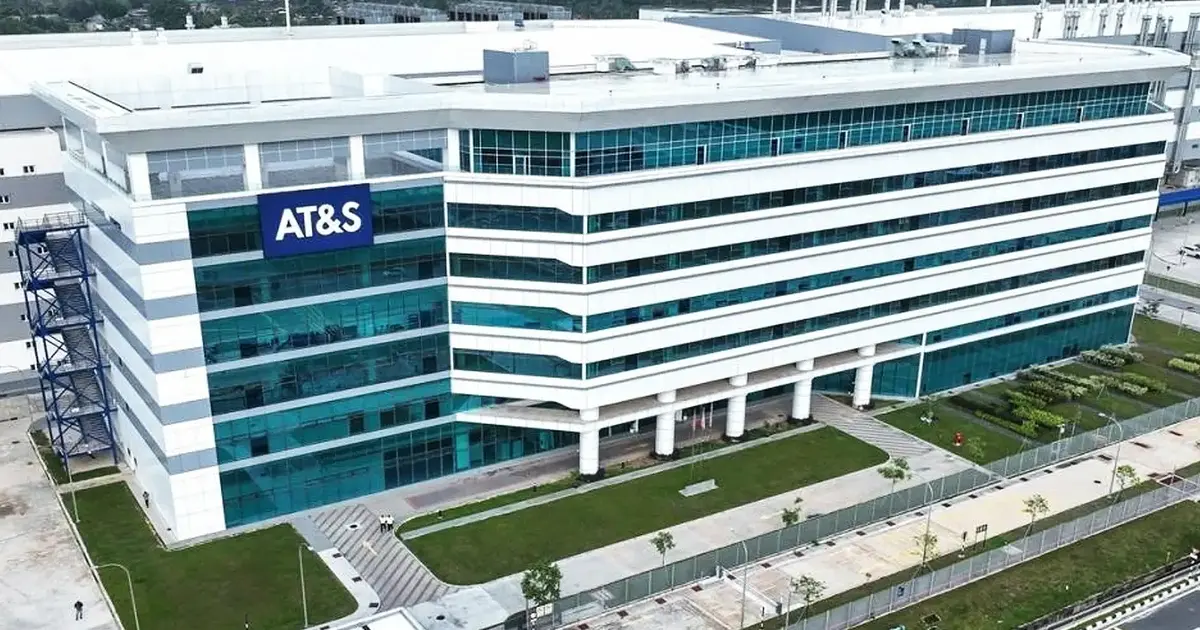
Austria-based electronics company AT&S has committed to investing RM9.4 billion in establishing a manufacturing facility in Kulim, Kedah, a development that Prime Minister Anwar Ibrahim characterizes as evidence of renewed international investor appetite for Malaysia's economic opportunities. The investment underscores the country's growing prominence as a destination for advanced manufacturing within the semiconductor supply chain, a sector increasingly vital to global technology and defence systems.
Prime Minister Anwar Ibrahim attributed the substantial capital commitment to international recognition of Malaysia's strengthened governance frameworks and institutional stability. His remarks position the Kulim project within a broader narrative of economic confidence restoration following years of political uncertainty and governance concerns that had deterred foreign direct investment. The timing of AT&S's decision reflects a calculated assessment by major multinational firms that Malaysia now offers a more predictable and transparent operating environment for capital-intensive manufacturing ventures.
AT&S, a leading supplier of high-end printed circuit boards and interconnection technologies, operates across multiple continents and serves automotive, industrial, and telecommunications sectors. The company's choice of Malaysia as a production hub suggests strategic recognition of the country's existing strengths in electronics manufacturing, skilled workforce availability, and established supply chain networks. Kulim, already home to several semiconductor and electronics manufacturers, offers existing industrial infrastructure and clustering advantages that reduce operational risks for newcomers to the region.
The RM9.4 billion commitment represents one of the larger foreign direct investment announcements in Malaysia's electronics sector in recent years, signalling a potential reversal of investor hesitancy that characterised the previous political period. Manufacturing facilities of AT&S's projected scale typically create thousands of direct employment opportunities alongside substantial indirect job generation through supplier networks and supporting services. For Kedah specifically, the investment promises meaningful economic diversification and skills development within its industrial base.
Semiconductor manufacturing and advanced electronics assembly have become strategically important to Southeast Asia as global supply chains reorient away from traditional concentration in East Asia. Malaysia's geographic proximity to China and Thailand, combined with its established reputation for precision manufacturing and quality control, positions it competitively within this rebalancing dynamic. The AT&S investment reflects confidence that these structural advantages will persist and strengthen over the medium term.
Governance quality functions as a critical variable in foreign investors' site selection for major manufacturing commitments. Companies undertaking multiyear capital expenditure programmes require confidence in regulatory consistency, intellectual property protection, and transparent business relationships. Anwar Ibrahim's emphasis on governance improvements therefore addresses a substantive concern that had previously inhibited investment decisions by major technology firms considering Malaysia against competing locations in Vietnam, Thailand, and Indonesia.
The Kulim project also carries implications for Malaysia's technology ecosystem development and supply chain resilience. AT&S's presence attracts supporting industries in materials sourcing, logistics, and specialized services, gradually building downstream capabilities that enhance the country's value proposition for future investors. Over time, such clustering can generate localized innovation ecosystems and specialized labour markets that create competitive advantages extending beyond the initial investor.
International semiconductor supply chains face ongoing pressure from geopolitical fragmentation and efforts by major economies to develop domestic capacity. Malaysia's neutral geopolitical positioning and established democratic institutions offer relative stability compared to alternative manufacturing locations facing greater political volatility or international scrutiny. AT&S's investment decision implicitly reflects confidence that Malaysia will maintain this positioning and avoid complications arising from regional tensions affecting neighbouring jurisdictions.
The project's success will substantially depend on execution within timeline and budget parameters, reliable utility provision, and effective coordination between AT&S and federal and state authorities. Kulim's track record managing large manufacturing facilities provides some assurance, though projects of this scale invariably face unforeseen challenges. Transparent communication between the investor and government regarding potential obstacles will remain critical to maintaining the positive momentum this investment represents.
For Malaysia's broader economic strategy, the AT&S announcement validates the government's emphasis on attracting high-value manufacturing and establishing the country as a critical node within restructured global supply chains. The investment demonstrates that systemic improvements in governance and institutional functioning generate tangible economic returns through renewed investor confidence. Beyond immediate employment and revenue benefits, the project reinforces Malaysia's positioning within an increasingly multipolar global manufacturing landscape, where neutral, stable countries with established industrial capacity command premium valuations.
Industry analysts will be watching closely to assess whether AT&S's decision catalyzes additional semiconductor and advanced electronics announcements from other multinational firms evaluating Malaysia against alternative Southeast Asian locations. Competitive pressure to secure similar investments remains intense across the region, with Vietnam and Thailand actively bidding for equivalent projects. AT&S's confidence in Malaysia could shift the competitive dynamics if other firms revise their assessments upward.