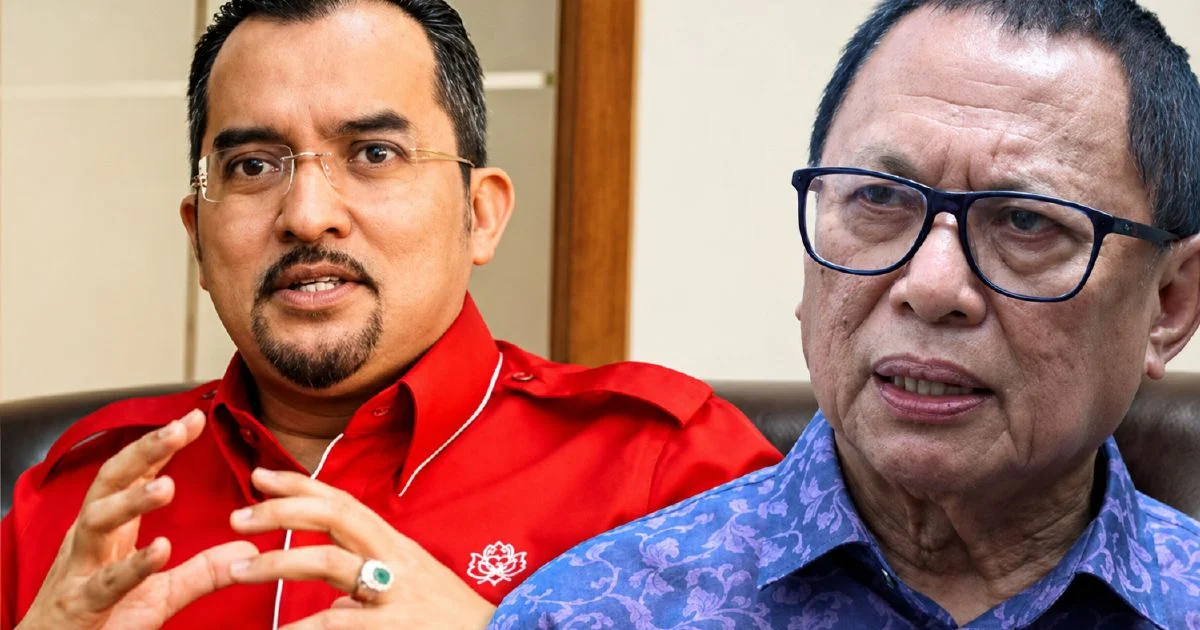
Tensions within Umno have escalated dramatically in Johor Baru, where party secretary-general Datuk Dr Asyraf Wajdi Dusuki has launched a pointed rebuttal against Datuk Dr Mohd Puad Zarkashi over the circumstances surrounding the latter's resignation from the party. The exchange represents the latest fracture within Malaysia's longest-governing political organisation, laying bare underlying disagreements about party discipline, individual autonomy, and the appropriate boundaries of palace involvement in party management.
The disagreement centres on Puad Zarkashi's recent decision to step away from Umno, a move that has triggered competing narratives about what prompted the departure and the roles various figures played in facilitating it. Asyraf Wajdi's forceful response suggests the party leadership views the circumstances surrounding the resignation as warranting clarification or correction of the public record, signalling that the matter touches on sensitive matters of party governance and institutional hierarchy.
Puad Zarkashi has made assertions concerning palace connections and alleged influence over party decisions, claims that appear to have provoked particular defensiveness from the secretariat. The invocation of the palace—Malaysia's constitutional monarchy—introduces a dimension that typically commands careful handling within Malaysian political discourse, given the revered status of the institution and sensitivities around any suggestion of improper involvement in day-to-day partisan affairs. For the party's leadership to respond so visibly indicates they view such allegations as requiring immediate rebuttal.
The timing of this internal dispute carries significance for Umno as it navigates broader challenges to its political dominance. The party has experienced membership fluctuations and leadership contests in recent years, and high-profile departures can amplify questions about internal cohesion and the party's ability to retain senior figures. A sitting party member, particularly one with the profile of Puad Zarkashi, choosing to leave raises inevitable questions about whether disagreements reflect deeper structural or ideological fissures within the organisation.
Ashyraf Wajdi's decision to respond so directly rather than maintaining diplomatic silence or allowing party machinery to address the matter quietly suggests the leadership takes the allegations seriously and fears that silence might be interpreted as acknowledgment. The assertion of a counter-narrative becomes crucial for maintaining the party's institutional credibility and demonstrating effective management of internal dissent. By engaging publicly, the secretary-general signals that party discipline and accountability remain operational priorities.
The involvement of palace references adds layers of complexity that extend beyond routine party management. In Malaysian politics, the constitutional monarchy occupies a unique position, commanding respect across ideological divides while remaining officially non-partisan. When resignations become entangled with claims about royal involvement or influence, the reputational stakes multiply for all parties involved. The palace itself prefers to remain above partisan wrangling, and any suggestion of inappropriate involvement in internal party matters risks reflecting poorly on the institution's carefully maintained political neutrality.
For Southeast Asian and Malaysian observers, this exchange illuminates the persistent tensions between Malaysia's democratic institutions and the complex role that traditional power structures—including the monarchy—play in political life. While constitutional frameworks ostensibly separate the crown from partisan politics, practical political reality often reveals more intricate relationships, where informal consultation and institutional respect create grey zones that invite competing interpretations.
The broader context matters considerably. Umno has weathered scandals, leadership transitions, and periodic membership crises over the past decade. Retaining senior party figures becomes increasingly important as the organisation seeks to consolidate its political position and project stability to both supporters and coalition partners. High-profile departures, whether voluntary or contested, immediately become symbols—either of the party's strength in enforcing standards or its weakness in retaining talent, depending on the interpretation one accepts.
Ashyraf Wajdi's robust counter to Puad Zarkashi also reflects the secretary-general's broader remit to maintain party machinery, discipline, and public standing. The secretariat functions as the administrative spine of the organisation, responsible for enforcing decisions, managing membership, and protecting institutional interests. When senior members resign under disputed circumstances or make public allegations, the secretariat becomes implicated and must respond to protect its operational authority and credibility.
The exchange between these two figures underscores that Malaysian politics continues to operate within multilayered frameworks where party interests, individual ambitions, institutional prerogatives, and constitutional relationships simultaneously compete for influence. Neither straightforward democratic competition nor traditional hierarchies entirely explain political outcomes; instead, outcomes emerge from negotiations among these overlapping systems.
Moving forward, how both figures present their cases publicly will likely influence perceptions of the party's internal health and governance standards. For Umno's wider membership and electoral supporters, the spectacle of senior leaders trading allegations raises questions about organisational effectiveness and leadership judgment. The party's ability to manage this dispute and restore focus to its political agenda will partly determine whether this incident becomes a temporary friction or the opening chapter of more significant internal realignment.
Ultimately, the Asyraf Wajdi-Puad Zarkashi disagreement encapsulates persistent challenges facing established political parties across Southeast Asia: maintaining internal discipline while preserving space for individual expression, honouring institutional traditions while adapting to contemporary expectations, and respecting constitutional frameworks while navigating the informal power structures that continue shaping practical political life.

