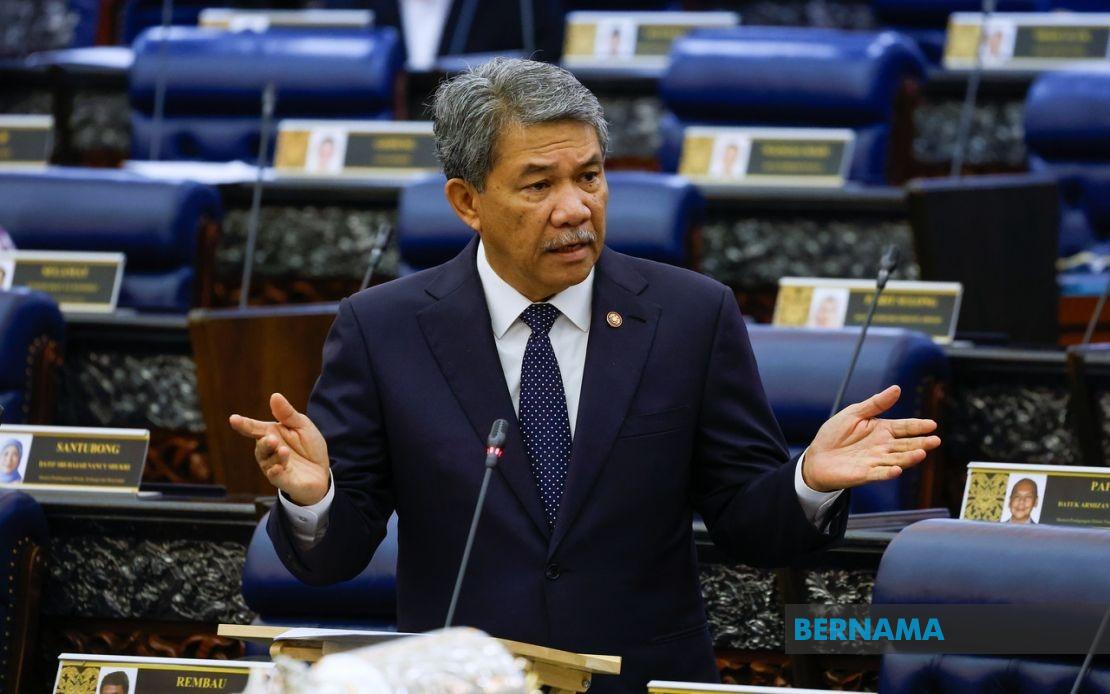
Malaysia's Foreign Minister Datuk Seri Mohamad Hasan has indicated that ASEAN is actively reassessing its approach to implementing the Five-Point Consensus in Myanmar, acknowledging that despite some positive indicators, the country remains far from meeting the benchmarks established by the regional bloc's leadership. Speaking in Parliament on June 25, Mohamad outlined how regional leaders are grappling with the challenge of translating the framework into concrete progress on the ground, even as the consensus continues to serve as ASEAN's foundational tool for peace diplomacy in the troubled nation.
The Five-Point Consensus, agreed by ASEAN leaders in April 2021, established a roadmap centred on immediate ceasefire, provision of humanitarian aid, dialogue facilitation, observation missions, and engagement with Myanmar's military leadership. However, nearly three years after its adoption, the framework has struggled to gain traction, with the military junta continuing to consolidate power while armed opposition groups maintain their resistance across the country. Mohamad's comments suggest growing frustration within ASEAN about the pace of implementation and the need to recalibrate diplomatic strategies without abandoning the foundational consensus that underpins regional policy.
At the 48th ASEAN Summit held in Cebu, Philippines on May 8, the ten member states reached a significant decision to task their foreign ministers with conducting informal bilateral and multilateral engagements with Myanmar's government. These consultations are designed to take stock of current political and military developments and chart a course for the next phase of peace efforts. Rather than abandoning the Five-Point Consensus entirely, ASEAN leaders want their foreign ministers to explore how the framework can be refreshed and made more responsive to Myanmar's evolving crisis dynamics, while ensuring that any substantial modifications remain subject to approval by ASEAN heads of state.
Mohamad's statements reflect a delicate balancing act within ASEAN. The consensus mechanism requires collective agreement from all member states, meaning unilateral action by any single country is constrained. Yet the forum appears willing to acknowledge that rigid adherence to the original framework without adjustment has yielded limited results. The foreign ministers' informal engagements represent a middle path—allowing for exploratory conversations and relationship-building without formally revising the consensus in ways that might trigger diplomatic complications or signal weakness to Myanmar's military leadership.
A particularly significant element of Malaysia's position involves extending Myanmar's existing six-month ceasefire, which was set to expire at the end of July. Malaysia has actively advocated for this temporary cessation of hostilities to transition into a second, longer-term phase of violence reduction. This proposal recognises that sustainable peace cannot be built on short-term pauses but requires sustained de-escalation coupled with meaningful dialogue. The proposal also implicitly acknowledges that Myanmar's government and armed groups need time to build confidence and establish mechanisms for future negotiations.
Mohamad has further pressed Myanmar to provide a comprehensive roadmap outlining how the peace process will advance beyond temporary ceasefires toward permanent political settlement. Crucially, this roadmap must accommodate inclusive dialogue with all relevant stakeholders—not simply negotiations between the junta and select groups, but engagement with the National Unity Government, the People's Defence Force, ethnic armed organisations, and civil society representatives. The breadth of this requirement underscores ASEAN's recognition that Myanmar's conflict involves multiple layers of political contestation that cannot be resolved through bilateral military-to-military talks alone.
The regional bloc's evident concern about Myanmar's potential marginalisation within its own political development carries significant strategic implications for Southeast Asia. ASEAN leadership fears that if Myanmar becomes increasingly isolated or destabilised, rival powers with competing geopolitical interests—particularly China and India—will step into the resulting vacuum. Such intervention could transform a domestic Myanmar crisis into a proxy struggle among major powers, fundamentally destabilising ASEAN's regional architecture and drawing member states into difficult alignments that contradict the bloc's cherished principle of non-interference in internal affairs.
Malaysia's commitment to engaging with the full spectrum of Myanmar's political actors reflects ASEAN's broader diplomatic strategy. Rather than treating the junta as the sole legitimate interlocutor, Malaysia maintains channels with the civilian-led National Unity Government, the armed People's Defence Force representing popular resistance, and ethnic armed organisations controlling territory in border regions. This multi-stakeholder engagement approach aims to prevent any single faction from achieving total dominance while creating pressure for negotiated settlement through coalition-building among opposition elements.
The timing of these diplomatic initiatives matters considerably. Myanmar's military has faced mounting pressure from coordinated armed resistance, economic deterioration, and growing international isolation. The proposed ceasefire extension and Malaysian-backed proposals for dialogue could create openings if the junta perceives that engagement serves its consolidation interests better than continued unilateral confrontation. However, Myanmar's government has historically resisted external pressure, viewing ASEAN mediation efforts with suspicion as potential constraints on its sovereignty.
For Malaysian policymakers and broader Southeast Asian observers, the unfolding situation carries implications for regional stability and ASEAN's credibility as a conflict-resolution mechanism. The bloc's ability to move beyond merely affirming principles toward facilitating tangible political progress in Myanmar will significantly influence its relevance in managing future regional crises. The emphasis on new approaches and informal engagement suggests ASEAN recognises that traditional consensus-building and public declarations have exhausted their utility, necessitating more flexible, behind-the-scenes diplomatic work that can adapt to Myanmar's complex realities.

