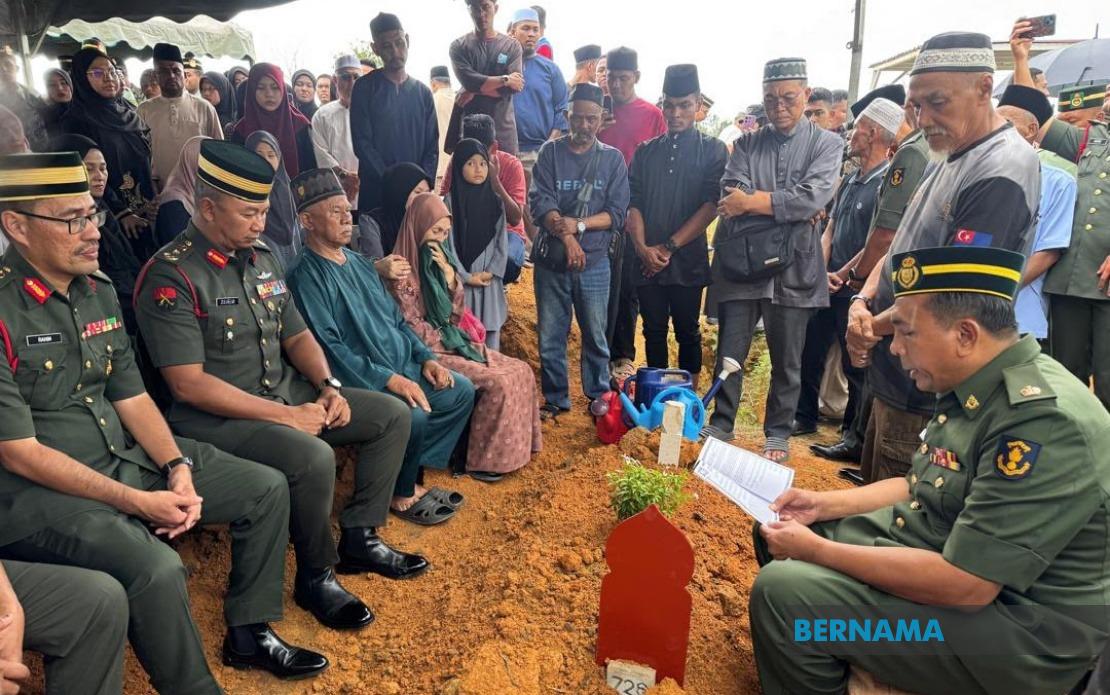
The Malaysian military community is mourning the loss of Private Siti Khadijah Sungip, a 24-year-old officer who died during a grenade exercise at Hobart Camp in Gurun, Kedah. The incident, which occurred on June 16 during a routine training session, claimed the lives of two personnel including Corporal Norazmi Abu Bakar. Both officers succumbed to their injuries en route to Sultan Abdul Halim Hospital in Sungai Petani. The tragedy has devastated Siti Khadijah's family, whose dreams of seeing a new generation continue their distinguished military heritage have been shattered in a single moment of devastating accident.
Siti Khadijah's decision to enlist represented more than a career choice—it embodied a deliberate choice to follow in the footsteps of her father, Sungip Jais, a 65-year-old retired soldier who served with the Royal Artillery Regiment. According to her father, the youngest of seven siblings had harboured ambitions of military service since childhood, driven by genuine passion rather than mere familial obligation. After completing her Diploma in Civil Engineering from the Mara Higher Skills College in Sri Gading, she made the conscious decision to pursue army service, joining the ranks last year with determination and commitment. Her father reflected on her motivations, explaining that she had explicitly voiced her intention to preserve the family's military tradition and honour their shared legacy of service to the nation.
What made Siti Khadijah's commitment particularly notable was her willingness to prioritise family obligations over personal milestones. Despite her age and the expectations society places on young women regarding marriage prospects, she expressed clear intentions to postpone matrimony indefinitely, preferring instead to remain at home where she could provide care and support to her ageing parents. Her father, visibly emotional during interviews, revealed that she had repeatedly emphasised this priority, stating she wanted to focus on looking after her mother and father first. This selfless orientation towards family responsibilities underscores the character of a young woman who viewed military service not as an escape from family duties but as a way to contribute meaningfully while maintaining her commitment to filial piety.
Siti Khadijah's performance during her first year of service had already begun to distinguish her among her cohort. In January, she received the Best Female Recruit (Academic) Award following her completion of basic military training at the Army Basic Training Centre in Port Dickson, Negeri Sembilan. Born on September 19, 2002, she underwent her training as a female recruit with Juliet Company before being posted to the Royal Army Engineers Regiment, where she was serving at the time of the incident. These early commendations suggested a promising military career ahead, with colleagues and superiors recognising both her academic capabilities and her dedication to the demands of military life.
The final communication from Siti Khadijah came in the hours before the tragedy. Her elder sister, Siti Zaihah, recalled receiving a WhatsApp photograph at midnight on June 15, which has now become the family's most poignant memento. The image captured Siti Khadijah during a shooting practice session—reportedly the aspect of training she enjoyed most during her service. In accompanying messages, she mentioned that further training would commence the following morning, with the grenade exercise scheduled to begin around 8 am. There were no indications of concern or apprehension in her communications; she appeared to be navigating her duties with the same cheerful demeanour she consistently displayed.
The shocking notification of the accident came swiftly but with initial uncertainty about its severity. Siti Zaihah described receiving a telephone call around 1 pm on June 16 informing her that her sister had been involved in an incident. Her immediate assumption was that some minor mishap or road traffic accident had occurred—a natural mental response when faced with such alarming news. The devastating reality became clear only moments later when a second call revealed that the accident had occurred during the grenade exercise training and that her sister had been fatally injured. The sudden transition from routine military activity to tragedy underscores the inherent risks that service personnel face, risks that are often overlooked until tragedy strikes.
Family members emphasised that there had been no warning signs or behavioural changes that might have foreshadowed this catastrophe. When Siti Khadijah returned home for the recent Aidiladha holidays—approximately one week before the incident—she appeared her usual self. Her sister described her as happy and content, exhibiting no visible stress, concern, or unusual emotional states that might suggest anything amiss. This normalcy makes the tragedy all the more difficult to comprehend and accept. The family had no reason to suspect that what would be routine training exercises carried such lethal consequences, a reality that haunts many military families whose loved ones face occupational hazards as part of their daily responsibilities.
The circumstances surrounding the grenade exercise accident raise important questions about training protocols and safety measures in military installations. While the original source does not provide detailed explanations of what caused the explosion or what specifically went wrong during the exercise, such incidents underscore the critical importance of rigorous safety procedures, proper equipment maintenance, and comprehensive protective measures during live ordnance training. For Malaysia's military establishment, this tragedy represents an opportunity to conduct thorough reviews of training methodologies and ensure that all necessary precautions are being implemented to prevent similar incidents. The loss of trained personnel, particularly promising young officers like Siti Khadijah, represents not only a personal tragedy for families but also a loss of valuable human capital and institutional knowledge within the armed forces.
Siti Khadijah's legacy within her family and unit will endure despite her brief time in service. Her decision to join the military represented a personal commitment to national service and a desire to honour her family's tradition of military dedication. For her father, watching his youngest daughter pursue a career he had long left behind must have been a source of tremendous pride, even as it carried the anxiety that all military families experience. The fact that she had already distinguished herself academically and was establishing herself within her unit speaks to her potential had circumstances been different. Her loss is felt not only by her immediate family but also by her colleagues and the broader military community who recognised her merit and promise.
The broader context of women in Malaysia's armed forces adds another dimension to this tragedy. As the military increasingly opens its ranks to women in combat and technical roles, female service personnel like Siti Khadijah represent the future diversity and capability of the armed forces. Her participation in the same training exercises as her male counterparts, and her performance metrics that earned her early commendation, demonstrate that women are fully capable of meeting the demanding standards of military service. Yet this tragedy also reminds the public that female personnel face identical occupational hazards and risks, a reality that must be carefully considered as recruitment and training policies evolve.
The funeral and burial of Siti Khadijah took place at Taman Sri Lambak Islamic Cemetery in her hometown of Kluang, where she was laid to rest this afternoon following her sudden death. Her remains were returned to the community and family she had sought to serve and protect, even as she remained devoted to her parents and siblings. The loss represents not merely the end of an individual life but the conclusion of a series of aspirations, dreams, and potential contributions that she would have made both to her family and to the nation through military service. For her father, the grief is particularly acute—he will not witness his youngest daughter's continued rise through the military ranks, nor will she have the opportunity to care for her parents in their later years as she had so earnestly hoped to do. This multiplicity of loss—personal, familial, and professional—defines the true impact of training accidents within military communities, where the stakes of occupational danger are measured in shattered family dreams and untapped potential.

