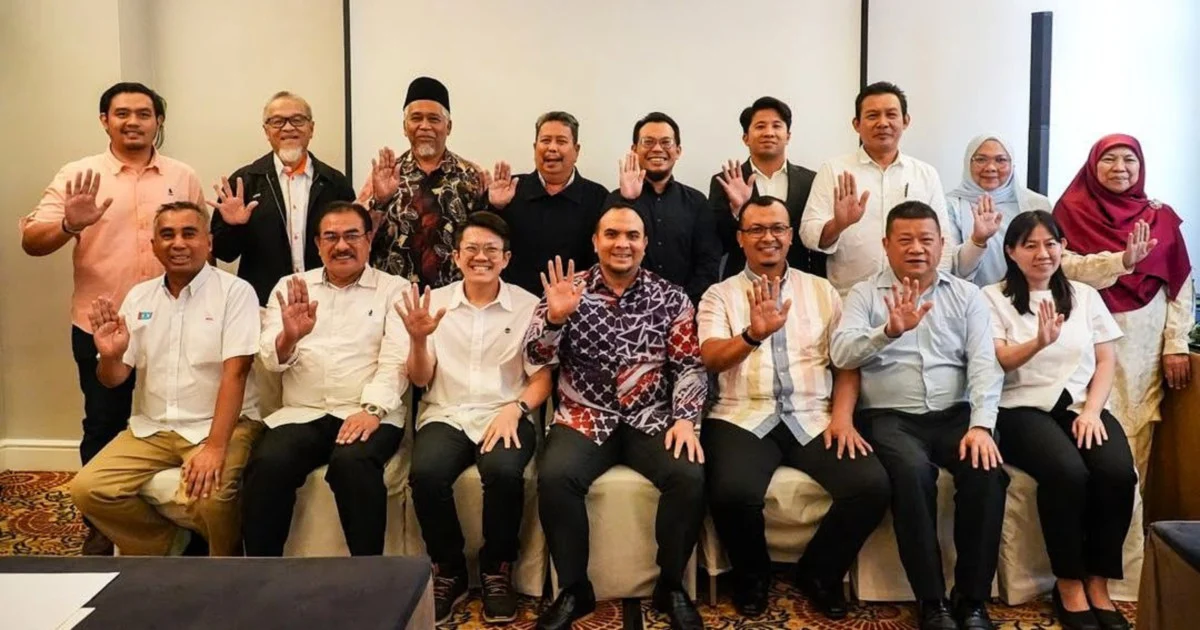
Datuk Ahmad Farhan Fauzi, who serves as Prime Minister Datuk Seri Anwar Ibrahim's political secretary, has been named the new chairman of Pakatan Harapan in Pahang. The appointment represents a significant move in the coalition's organisational structure within the state, placing a trusted aide to the Prime Minister at the helm of regional party operations.
Ahmad Farhan's elevation to the position reflects the coalition's efforts to strengthen its administrative framework in Pahang, a crucial battleground state where political dynamics have shifted considerably over recent years. As the political secretary to Malaysia's top elected leader, his appointment carries considerable symbolic weight, indicating the Prime Minister's direct investment in ensuring party cohesion and strategic direction at the state level.
The role of PH chairman in any state carries substantial responsibility, encompassing coordination among the coalition's constituent parties, management of internal party affairs, and stewardship of electoral strategies during campaign periods. Ahmad Farhan's appointment suggests the coalition intends to leverage his proximity to the Prime Minister to streamline decision-making processes and ensure alignment between national party directives and state-level implementation.
Pahang has historically been a competitive political arena, with various coalitions and independent candidates vying for influence. The appointment of someone directly connected to Putrajaya's corridors of power may be interpreted as an attempt to consolidate PH's standing in the state and project a unified leadership vision. This move also underscores the importance national party leadership places on Pahang's political landscape.
For Malaysian political observers, the appointment illustrates broader patterns in how ruling coalitions manage their internal structures. By positioning trusted figures from the Prime Minister's office into strategic state roles, PH seeks to create clear lines of communication and ensure coordinated responses to regional political challenges. This centralised approach to state chairmanships has become increasingly common among major Malaysian coalitions.
The implications for Pahang's political landscape are noteworthy. Ahmad Farhan's leadership may influence how the coalition prioritises resource allocation, candidate selection, and engagement with local communities. His direct relationship with the Prime Minister could potentially accelerate decision-making on matters requiring federal-state coordination, from development projects to policy implementation.
Ahmad Farhan's professional background and proximity to Malaysia's highest political circles position him to navigate the complex dynamics of managing multiple parties within a coalition framework. The PH coalition in Pahang comprises different political entities with sometimes divergent interests, requiring skilled mediation and leadership to maintain unity ahead of potential electoral contests.
The appointment also carries implications for other state leaders within Pahang's political establishment. Coalition members and opposition figures will likely assess how Ahmad Farhan's tenure shapes party operations, electoral competitiveness, and the distribution of political attention and resources between Pahang and other states. Such appointments often ripple through broader political calculations at both state and national levels.
In the context of Malaysia's evolving political landscape, where coalitions frequently undergo reorganisations and leadership transitions, Ahmad Farhan's appointment represents a calculated effort to strengthen institutional structures. The move reflects lessons learned from previous electoral cycles and an apparent commitment to ensuring more effective governance and political coordination at the state tier.
For Pahang specifically, this development signals that the national leadership views the state as sufficiently important to warrant direct oversight through a figure of Ahmad Farhan's stature. Whether this translates into enhanced political performance for the coalition will likely become apparent as the state confronts upcoming political cycles and governing challenges. The appointment marks another chapter in the ongoing evolution of Malaysia's complex coalition politics.

