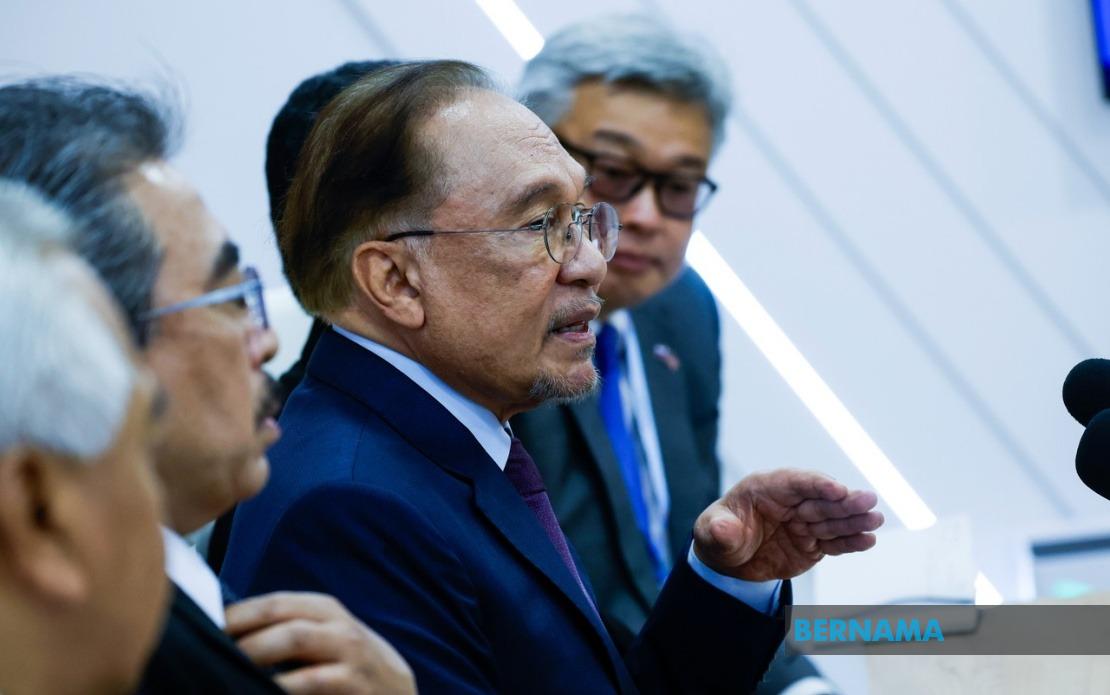
Prime Minister Datuk Seri Anwar Ibrahim's two-day working visit to Kazan has delivered concrete gains for Malaysian energy security, with Russia pledging to establish a stable, long-term framework for supplying petroleum, oil, and gas. The commitment represents a strategic shift away from Malaysia's traditional reliance on short-term or annually-renewed contracts, which often leave the country vulnerable to price volatility and supply disruptions in an increasingly unstable global market. Speaking at the closing press conference of the ASEAN-Russia Commemorative Summit, Anwar outlined how this arrangement would provide Malaysia with greater predictability and security in one of its most critical economic sectors.
The pathway to this agreement is already well advanced, with company representatives from both nations having completed preliminary discussions in Kazan. The broad principles governing the long-term energy cooperation have already secured approval from both governments, leaving mainly procedural and technical details to be finalised. Anwar indicated that the negotiating teams will be asked to accelerate the signing process upon his return to Kuala Lumpur, with draft agreements already prepared and ready for final review. This compressed timeline suggests both capitals view energy security cooperation as a priority that warrants expedited handling, reflecting the urgency with which Malaysia views its energy diversification strategy.
The backdrop to this energy initiative is Malaysia's growing recognition that it cannot afford to depend heavily on any single source of oil and gas supplies. The country faces mounting pressure to secure reliable, long-term energy sources as global markets remain susceptible to geopolitical shocks, supply chain disruptions, and volatile pricing. Russia, despite Western sanctions and economic isolation, remains one of the world's largest energy producers with substantial reserves. For Malaysia, Russia represents both geographical and political diversification—a non-traditional partner that offers an alternative to established Middle Eastern suppliers and provides leverage in navigating complex international energy markets.
Beyond energy, Anwar articulated a broader vision for Malaysia's engagement with Russia and other emerging economies, emphasizing that the nation must abandon excessive caution in pursuing international economic partnerships. This represents a subtle but significant policy reorientation, suggesting that Malaysia should prioritise pragmatic economic interests over geopolitical alignment concerns. The Prime Minister called for practical facilitations including visa-free travel arrangements and direct air routes between Malaysia and Russia, recognising that sustained economic partnerships require human connectivity and ease of movement. These facilitations would reduce transaction costs for businesses, encourage tourism, and deepen the interpersonal networks that underpin long-term commercial relationships.
On the bilateral front, Anwar met with Rustam Minnikhanov, the Head of the Republic of Tatarstan, to explore cooperation opportunities spanning trade, investment, education, tourism, the halal industry, technology, and talent development. Tatarstan holds particular significance as one of Russia's most productive oil-and-gas-producing regions, making it a natural partner for Malaysia's energy aspirations. The meeting expanded cooperation beyond energy into sectors where Malaysian expertise and demand could create mutual benefits—particularly in halal certification and food production, areas where Malaysia holds regional leadership and where Russian producers seek access to growing Muslim-majority consumer markets in Asia.
The energy sector discussions specifically highlighted downstream opportunities including refining and petrochemicals, sectors where Malaysia possesses established infrastructure and industrial expertise. Petronas, Malaysia's national oil company, features prominently in these conversations as the implementing partner. The long-term framework being negotiated likely contemplates not merely crude oil and gas shipments but integrated value chains encompassing processing, refining, and chemical production. This approach generates greater economic value than simple commodity exports and strengthens the structural interdependence between the two countries.
At the regional level, Anwar welcomed the finalisation of the ASEAN-Russia Strategic Programme on Trade and Investment Cooperation 2026-2035, positioning this framework as foundational for the next decade of bilateral engagement. The broader ASEAN-Russia economic relationship, while modest compared to the bloc's ties with Western economies or China, is expanding. In 2024, total ASEAN-Russia trade reached US$18.1 billion, while Russian foreign direct investment in ASEAN totalled RM367.90 million. For Malaysia specifically, Russia ranked as the country's ninth-largest European trading partner in 2025, with bilateral trade valued at RM8.72 billion. Malaysian electrical and electronic products, machinery, equipment, and processed foods dominate export shipments, while imports consist primarily of petroleum products, minerals, and chemicals—a pattern suggesting Malaysia's manufacturing sector benefits from Russian energy feedstocks and raw materials.
The Kazan visit served as the centrepiece of Anwar's broader Central Asian energy diplomacy initiative. From Kazan, the Prime Minister proceeded to Turkmenistan for a two-day official visit, continuing the theme of diversifying and securing long-term energy partnerships. Turkmenistan, possessing some of the world's largest natural gas reserves, represents another crucial piece of Malaysia's energy security puzzle. This sequential engagement with Russia and Turkmenistan reflects a carefully choreographed strategy to establish multiple energy supply corridors, reducing dependence on any single supplier and creating competitive dynamics that benefit Malaysian consumers and industry.
The geopolitical timing of these negotiations carries weight. Global energy markets remain unstable due to Middle Eastern conflicts, sanctions regimes affecting major producers, and accelerating transitions toward renewable energy. Malaysia, despite possessing domestic oil and gas reserves, faces declining domestic production and rising consumption, creating a structural energy deficit that must be filled through imports. The long-term agreements now being negotiated with Russia and potentially other suppliers represent insurance against future supply shocks. They also provide Malaysia with negotiating leverage in other forums, as secured alternative sources allow the country to diversify its supplier relationships and avoid excessive dependence on traditional partners.
Anwar's framing of Malaysia's approach as requiring greater boldness reflects frustration with what he perceives as excessive risk-aversion in the country's international economic strategy. By explicitly calling for a more proactive stance toward emerging partners, he signals to Malaysian businesses that government policy will support expansion into Russian and Central Asian markets, with diplomatic infrastructure (visa facilitation, direct flights, investment protection mechanisms) following commercial opportunity. This represents a calculated repositioning of Malaysia as a pragmatic player willing to work with all global partners regardless of their international standing.
The broader implications for Southeast Asia are significant. Malaysia's energy diplomacy with Russia and Central Asia may establish precedents that other ASEAN members follow, potentially reshaping the bloc's energy sourcing patterns. If long-term Russian energy supplies to Malaysia prove reliable and economically competitive, other ASEAN nations facing similar energy security challenges may pursue comparable arrangements. This could gradually reorient ASEAN's energy partnerships away from traditional Western suppliers and Middle Eastern producers toward Eurasian sources, with long-term consequences for regional geopolitical alignment and economic structures.
Anwar's visit concluded with expressions of satisfaction regarding outcomes achieved and optimism about prospects for the Turkmenistan leg of his tour. The combination of energy security gains, expanded trade frameworks, and deepened institutional relationships positions Malaysia as an increasingly significant partner for Russia and Central Asian states seeking engagement with Southeast Asia. For Malaysia, these agreements represent tangible progress on one of the country's most pressing economic priorities while signalling to international observers that the nation is willing to pursue independent economic strategies aligned with national interests rather than external pressures.

