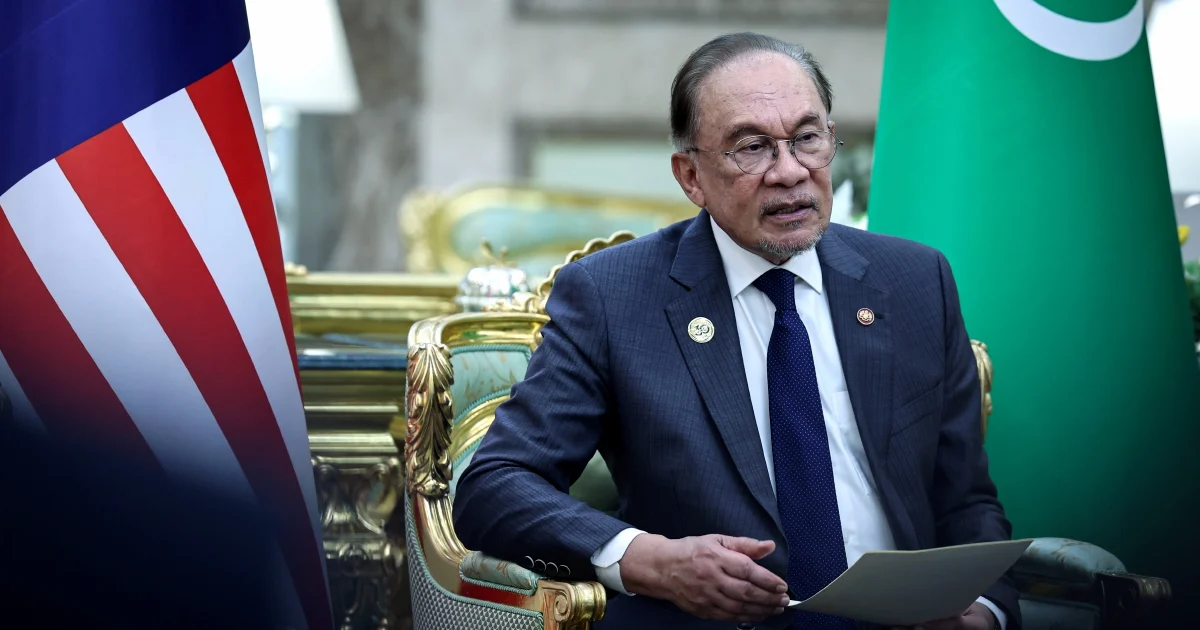
Prime Minister Datuk Seri Anwar Ibrahim has responded positively to reports indicating movement towards an initial accord between the United States and Iran, framing the development as encouraging progress for international peace and harmony. Speaking in his Batu Kawan constituency, the Prime Minister characterised the emerging agreement as a welcome signal that dialogue and negotiation remain viable paths forward in resolving longstanding bilateral tensions that have had profound ripple effects across the Middle East and beyond.
The tentative breakthrough between Washington and Tehran represents a significant diplomatic moment given the decades-long hostility and mutual suspicion that have defined their relationship. From Malaysia's perspective as a non-aligned nation with substantial interests in regional stability and maritime trade, developments affecting major powers' strategic postures carry tangible implications. The potential de-escalation between the United States and Iran could influence security dynamics across multiple continents, including Southeast Asia where Malaysian commerce and geopolitical positioning intersect with international power competition.
Anwar's public endorsement reflects Malaysia's traditional diplomatic approach of supporting multilateral engagement and peaceful conflict resolution. The Malaysian government has consistently advocated for dialogue-based solutions to international disputes, a position rooted in the nation's founding principles and its experiences navigating competing great-power interests in the region. By articulating support for the US-Iran negotiations, Anwar signals Malaysia's broader commitment to a world order based on dialogue rather than military confrontation or unilateral action.
The timing of Anwar's remarks carries significance given the heightened geopolitical tensions that have characterised the region in recent years. The Middle East, where the US-Iran rivalry has manifested in proxy conflicts, sanctions regimes, and military posturing, has become increasingly volatile. A reduction in direct bilateral hostility between these two powers could theoretically ease pressures in territories spanning Iraq, Syria, Lebanon, and beyond, where competing interests have fuelled instability and humanitarian crises. For Malaysia, stability in these distant regions ultimately affects global energy prices, trade corridors, and international security frameworks.
Anwar's optimism about the agreement's potential for sustained peace underscores a pragmatic recognition that initial breakthroughs require careful nurturing to achieve durable results. Diplomatic negotiations of this magnitude typically involve complex interplay between competing domestic constituencies, regional allies, and strategic considerations that extend far beyond bilateral relations. The Malaysian Prime Minister's emphasis on hoping for lasting peace rather than merely celebrating the initial agreement demonstrates sophisticated understanding of international relations, acknowledging that early momentum can dissipate without continued commitment from both parties.
From Southeast Asia's standpoint, a more stable Middle East alignment translates into several concrete benefits. Energy security becomes less volatile when geopolitical tensions ease, potentially moderating oil price fluctuations that affect Malaysian refineries and energy-dependent sectors. Maritime security in critical shipping lanes experiences fewer disruptions when regional antagonists reduce provocative activities. Additionally, international institutional frameworks function more effectively when major powers achieve mutual accommodation rather than confrontation, benefiting smaller nations like Malaysia that depend on rules-based international systems.
Anwar's positioning on the US-Iran development also reflects Malaysia's careful balancing act between maintaining strong relationships with both Western powers and Islamic-majority nations. The United States remains a crucial economic and security partner for Malaysia, while Iran represents an important voice within the Islamic world and possesses growing regional influence. Supporting peaceful resolution between these parties allows Malaysia to reinforce its non-aligned credentials while avoiding the necessity of choosing sides in a binary contest between competing blocs.
The broader context surrounding these negotiations involves complex historical grievances, nuclear programme concerns, sanctions architecture, and regional proxy conflicts that have accumulated over four decades. The pathway from initial agreement to comprehensive, lasting normalisation requires addressing issues of deep mistrust and competing strategic objectives. Malaysia's experience mediating and supporting dialogue initiatives across diverse international parties positions the nation to potentially contribute to mechanisms that could help sustain momentum in US-Iran relations, should opportunities arise for Malaysian diplomatic engagement.
Anwar's comments arrive as Malaysia itself seeks to enhance its standing as a responsible voice in international affairs, particularly concerning conflict resolution and sustainable peace-building. The Malaysian government has demonstrated commitment to supporting United Nations peacekeeping operations, hosting interfaith dialogue forums, and advocating for inclusive approaches to resolving transnational challenges. By publicly supporting the US-Iran negotiations, Anwar reinforces Malaysia's positioning as a nation that believes in the power of sustained dialogue to overcome seemingly intractable differences.
Looking forward, the durability of any US-Iran accord will depend upon whether both nations can translate initial agreement into institutional frameworks that survive domestic political shifts, regional provocations, and the inevitable disagreements that complicate bilateral relations. Malaysia's stake in this process remains indirect but meaningful, linked to broader patterns of international stability that determine conditions for trade, investment, and regional security. Anwar's measured optimism reflects both Malaysia's hope for a more peaceful world order and the nation's pragmatic understanding that celebrating too early risks disappointment when complex negotiations encounter inevitable obstacles.

