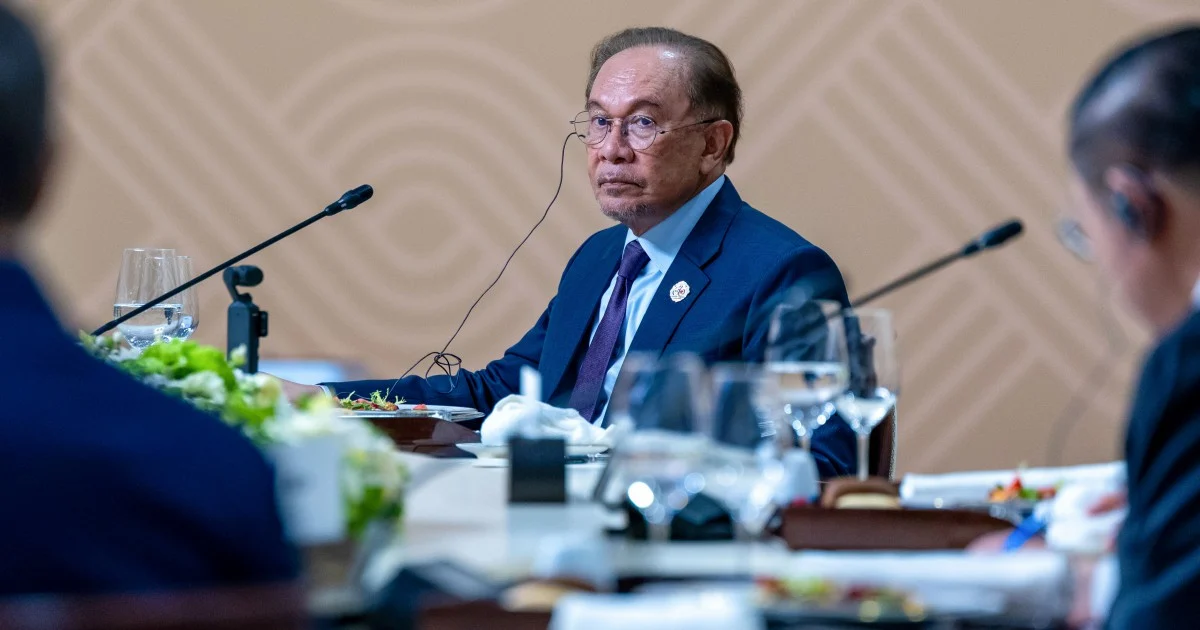
Prime Minister Datuk Seri Anwar Ibrahim has issued a pointed warning to developed European nations, signalling that persistent unfair treatment of developing countries will inevitably drive them to forge partnerships elsewhere. The Malaysian leader's remarks underscore growing frustration in the Global South over what he characterises as an imbalanced relationship with wealthy nations, particularly in the context of a defence-related dispute involving Norway that has highlighted the stark disparities in how international negotiations are conducted between economically disparate countries.
Anwar's comments reflect a broader geopolitical shift occurring across Southeast Asia and other regions of the developing world, where nations increasingly feel compelled to diversify their international partnerships in response to what they perceive as condescending or inequitable treatment from Western powers. The warning comes at a time when multiple developing economies are actively strengthening ties with China, Russia, and other non-Western powers, partly driven by frustrations accumulated through decades of what many view as exploitative trade relationships and political pressures from established economic powers.
The Prime Minister's invocation of a defence-related matter with Norway suggests that disputes over military procurement, technology transfer, or strategic agreements have become flashpoints in broader conversations about equity in international relations. Such disagreements often pit the resources and negotiating leverage of wealthy nations against the constrained options available to developing countries, creating situations where the latter feel backed into unfavourable corners despite their legitimate national interests.
Malaysia's position as a significant player in Southeast Asia lends particular weight to these comments. As the current chair or recent participant in major regional forums, Malaysian positions often carry influence among fellow developing nations seeking to articulate common grievances about their treatment in the international system. Anwar's willingness to publicly articulate these frustrations signals that such sentiment now commands mainstream legitimacy rather than remaining confined to academic circles or activist networks.
The underlying tension Anwar identifies reflects how developing nations increasingly view their relationship with wealthy countries through a lens of reciprocity. Where once these nations might have accepted unfavourable terms as the inevitable cost of engaging with major powers, there is now a palpable expectation that relationships should operate on more equitable foundations. This shift is partly enabled by the emergence of credible alternatives—whether through the Belt and Road Initiative, regional multilateral arrangements, or bilateral partnerships with rising powers.
Norway's position in this particular dispute merits examination, given its status as a wealthy non-European Union nation with significant geopolitical influence. The Nordic country has long balanced a commitment to international law and human rights advocacy with commercial and strategic interests, sometimes creating friction with nations that feel these principles are selectively applied. If Norwegian actions in this defence matter are perceived in Kuala Lumpur as exemplifying the kind of leverage-based diplomacy that marginalises developing nations, it would explain why the Prime Minister chose to reference Oslo specifically.
For Southeast Asian policymakers and observers, Anwar's warning carries immediate relevance. The region has historically navigated between major powers through a strategy of strategic ambiguity and diversified partnerships. However, if the economic and political costs of maintaining such balance with Western partners continue to rise—whether through unfavourable defence contracts, trade conditions, or technology restrictions—the calculus favouring engagement with alternative powers becomes increasingly compelling. This dynamic has already manifested in shifting voting patterns in international organisations and growing ASEAN coordination on issues where Western nations propose positions contrary to regional interests.
The Malaysian Prime Minister's message also contains an implicit call for reform in how developed nations conduct diplomacy with the Global South. His remarks suggest that if European countries wish to maintain meaningful partnerships with developing economies, they must fundamentally reconsider the transactional and asymmetrical nature of current relationships. This does not necessarily mean abandoning principles or interests, but rather finding mechanisms for advancing them that afford genuine agency and respect to developing nation counterparts.
In practical terms, Anwar's warning is likely to resonate within ASEAN corridors, where nations continue debating optimal strategies for engaging with multiple global powers. His articulation of the option to seek alternatives—presented not as defiance but as a rational response to unfair treatment—validates arguments made by those advocating for deeper partnerships with China and other non-Western actors. It simultaneously places responsibility squarely on Western nations to demonstrate that engagement with them remains advantageous compared to other available options.
The geopolitical implications extend beyond bilateral relationships. If developing countries collectively respond to perceived European unfairness by reorienting their international partnerships, this could accelerate the formation of alternative power blocs and institutional arrangements that bypass traditional Western-dominated forums. Such fragmentation of the international system would have profound consequences for global governance, particularly in areas like trade, security, and environmental stewardship where consensus remains theoretically essential.
Moving forward, Anwar's comments likely serve a dual purpose: they provide political cover for Malaysian policymakers to expand engagements with alternative partners, while simultaneously creating an explicit benchmark against which European nations' future conduct will be measured. Whether European governments respond by genuinely revising their approach to developing nations or whether they dismiss such warnings as rhetoric will substantially determine the trajectory of international relations in coming years. For Malaysia and the broader region, the Prime Minister's statement effectively signals that the era of accepting unequal treatment as inevitable has definitively ended.

