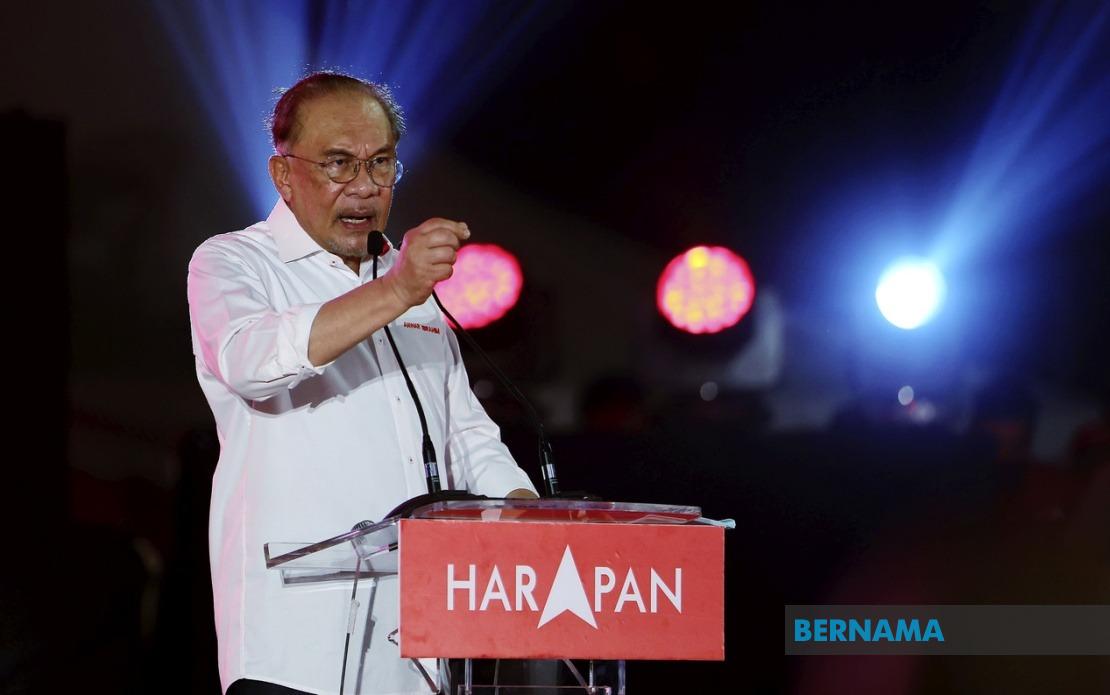
Prime Minister Datuk Seri Anwar Ibrahim has drawn a clear line for political competitors in the upcoming Negeri Sembilan state election, calling on all contenders to maintain respect for the country's foundational institutions even as they battle for votes. Speaking at a candidate announcement ceremony in Kuala Pilah on July 14, the Pakatan Harapan chairman emphasised that democratic competition, while legitimate and necessary, must not descend into attacks that undermine the royal institutions and Federal Constitution that form the bedrock of Malaysia's governance framework.
The warning arrives at a critical juncture as Negeri Sembilan prepares for the 16th state election, with Anwar signalling that his coalition expects political rivals to observe boundaries around sensitive constitutional and institutional matters. His intervention reflects growing concerns within ruling circles that electoral campaigns, if left unchecked, can escalate inflammatory rhetoric that damages national cohesion. The Prime Minister articulated a distinction between vigorous political debate and irresponsible conduct, asserting that parties can legitimately present competing visions without resorting to slander or actions that fracture community bonds.
The candidate lineup announced at the ceremony represents Pakatan Harapan's attempt to balance continuity with renewal ahead of the election. Anwar unveiled 36 candidates drawn from the coalition's three component parties—PKR, DAP, and Amanah—that includes established figures alongside fresh political faces. Among the incumbents seeking re-election is Menteri Besar Datuk Seri Aminuddin Harun, who will defend his Linggi state seat, while DAP secretary-general Anthony Loke is positioned to contest the Chennah seat, signalling the coalition's confidence in senior leadership across the state.
Anwar's endorsement of Aminuddin's stewardship reflects the broader coalition strategy of projecting stability and effective governance in Negeri Sembilan. The Prime Minister described the Menteri Besar as a cooperative and pragmatic leader capable of working constructively with federal authorities, a framing intended to demonstrate that Pakatan Harapan governance delivers tangible benefits through coordinated action between state and central administrations. This messaging assumes particular weight given concerns that state governments led by rival coalitions sometimes experience resource allocation pressures or bureaucratic friction from federal agencies.
The development carries significance for Malaysia's broader political trajectory, as Negeri Sembilan represents a critical battleground for testing Pakatan Harapan's electoral appeal beyond its traditional urban strongholds. The state has historically demonstrated voting patterns responsive to national political currents, making its outcome a potential barometer for federal coalition strength ahead of the next general election. Anwar's pre-emptive appeal for institutional respect suggests strategic concern that opposition parties might adopt confrontational tactics that could resonate with voters dissatisfied with the pace of policy delivery.
The presence of senior coalition figures—including DAP's Loke, Amanah president Datuk Seri Mohamad Sabu, and PH communications chief Datuk Seri Fahmi Fadzil—at the announcement ceremony underscores the event's importance to coalition coordination. Such high-level participation typically signals expectations of a competitive contest requiring unified mobilisation across party structures. Negeri Sembilan's geographic position as a relatively developed state with mixed urban-rural demographics makes it contested terrain where coalition unity and campaign discipline become crucial variables determining electoral outcomes.
Anwar's invocation of clean leadership and integrity as campaign themes reflects efforts to position Pakatan Harapan as differentiated from predecessors marred by corruption allegations. The appeal to developmental progress and generational responsibility aims to shift voter attention toward prospective governance performance rather than historical grievances or institutional disputes. This framing assumes voters prioritise economic opportunity and service delivery over other political narratives that might emphasise identity or constitutional concerns.
The electoral context in Negeri Sembilan also intersects with evolving patterns of state-level politics across Malaysia, where opposition coalitions have strengthened considerably since 2018. Perak's recent shift toward opposition control and competitive contests across multiple states have elevated stakes for Pakatan Harapan's ability to retain or expand influence. Negeri Sembilan's trajectory could either consolidate the coalition's regional position or signal warning signs about electoral sustainability in middle-income states where voter expectations for tangible improvements remain high.
Anwar's emphasis on avoiding constitutional controversy may also reflect sensitivities around how electoral campaigns could inadvertently mobilise grievances concerning federal-state power distributions, royal institution involvement in governance, or interpretations of constitutional provisions. State elections sometimes become venues through which broader constitutional questions emerge indirectly, as parties articulate positions on state authority, resource allocation, or institutional relationships. By establishing advance parameters around acceptable campaign discourse, the Prime Minister appears intent on channelling political competition into substantive policy domains rather than structural or constitutional disputes.
The announcement of candidates featuring both experienced administrators and emerging political figures suggests Pakatan Harapan's attempt to project continuity alongside generational succession. Retaining experienced performers like Aminuddin while introducing new candidates signals confidence in coalition capacity to govern while responding to voter preferences for alternative voices. This balance becomes increasingly consequential as political competition intensifies and voter bases demonstrate sophistication in assessing candidate credentials across dimensions including local accountability, administrative capability, and alignment with community priorities.
Looking ahead, Anwar's prescriptive approach to campaign conduct may establish expectations that extend beyond Negeri Sembilan, potentially influencing how subsequent state elections proceed across Malaysia. Should opposition parties observe the Prime Minister's parameters, the outcome could demonstrate that Malaysian electoral politics accommodates robust competition within institutionally respectful bounds. Conversely, if candidates test these boundaries or escalate institutional criticism, the result could further polarise Malaysian political discourse and complicates governance coordination between differently aligned state and federal administrations.

