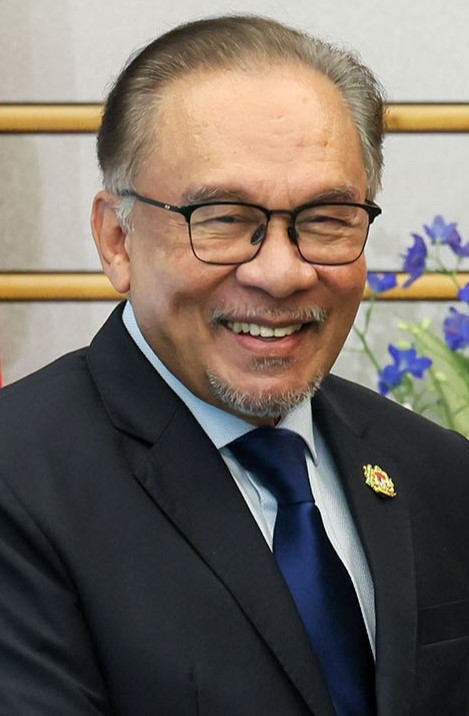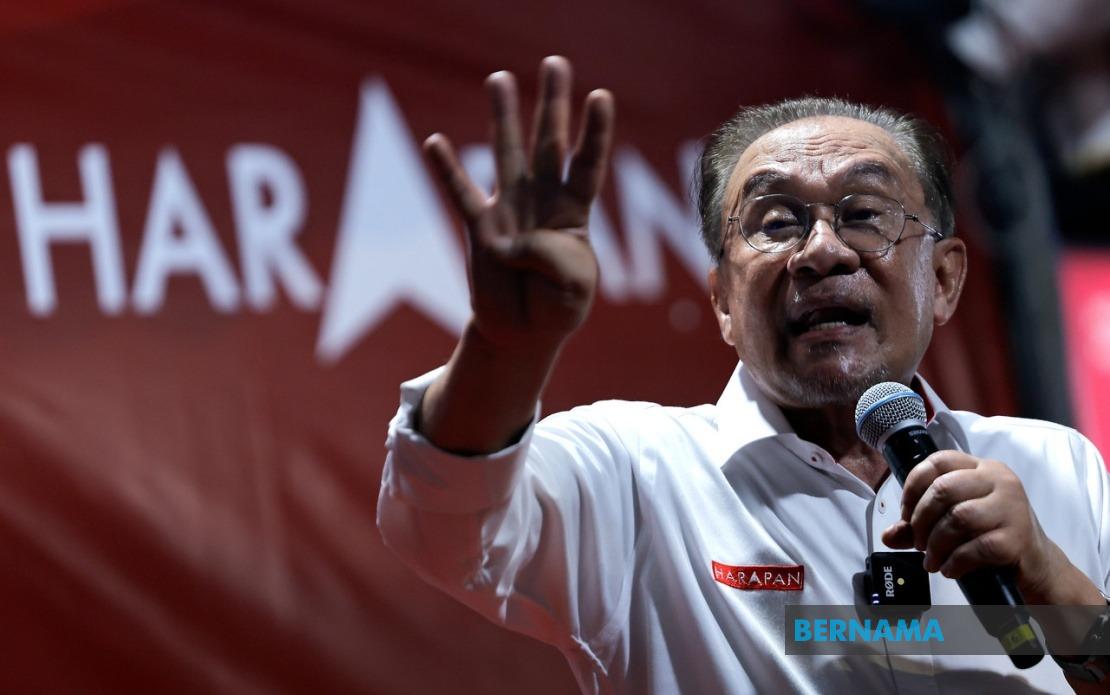
Prime Minister Datuk Seri Anwar Ibrahim delivered a pointed message to Johor voters at a Pakatan Harapan rally in Muar on June 15, urging them to select leaders defined by integrity, wisdom and humility rather than arrogance once they assume office. Speaking as the Pakatan Harapan chairman, Anwar emphasised that the electoral process represents a critical juncture for determining Johor's trajectory, and that voters must remain vigilant against those who weaponise communal divisions to secure political advantage.
Anwar's remarks reflected growing concern within the ruling coalition about political factions that mobilise sentiment-based campaigns whilst failing to deliver tangible benefits after winning elections. He cautioned against allowing hatred and divisive rhetoric to shape voting patterns, instead urging Johor residents to consider the broader implications of their choices for schools, hospitals, and healthcare systems that serve their communities. This framing positioned the upcoming Johor state election not merely as a routine political contest but as a referendum on the quality and character of governance itself.
The Prime Minister articulated a vision of leadership that prioritises accountability and responsiveness over triumphalism. He insisted that elected representatives must shed any sense of entitlement upon victory and redirect their energies toward addressing the specific grievances of ordinary Johoreans, particularly those experiencing economic hardship. This emphasis on post-election behaviour and obligation appeared designed to differentiate Pakatan Harapan's governing philosophy from competitors who, Anwar suggested, had neglected their constituents after taking power.
Anwar made a strategic case for Pakatan Harapan's victory in the state election by highlighting the necessity of coordinated policy-making between state and federal authorities. He argued that governmental misalignment creates friction in the implementation of development initiatives, distribution of resources, and realisation of economic benefits cascading from major infrastructure projects. Without a state government aligned with the federal administration, he suggested, local communities would be unable to fully capture returns from national economic strategies and capital investments.
The Prime Minister leveraged several major economic projects to illustrate this coordination argument. He specifically referenced the Johor-Singapore Special Economic Zone, a significant bilateral initiative that his federal administration had negotiated with Singapore. He also pointed to the ongoing expansion of the Port of Tanjung Pelepas, a strategic maritime facility positioned to drive regional trade. Whilst acknowledging that the state government had contributed to these initiatives, Anwar stressed that federal implementation had been the decisive factor in their advancement, and that continued federal stewardship depended partly on having a receptive state administration.
Crucially, Anwar sought to reframe the state election as an opportunity to shift Johor's governance priorities downward toward ordinary citizens rather than remaining focused on megaprojects. He signalled that whilst he would personally ensure large-scale economic initiatives received the necessary federal attention and resources, state representatives should concentrate on improving day-to-day conditions for residents—healthcare access, educational quality, infrastructure maintenance, and poverty alleviation. This delegation of responsibility appeared designed to clarify the respective roles of state and federal tiers whilst also suggesting that state-level governance had become disconnected from grassroots concerns.
The call for voter turnout extended beyond Johor's geographical boundaries. Anwar urged Johor-born citizens residing elsewhere in Malaysia to return home to participate in the July 11 election, framing this as a civic duty toward their state's future. This mobilisation strategy suggests that Pakatan Harapan views non-resident voters as a potentially decisive constituency, and that internal migration patterns may provide strategic advantages to whichever coalition can most effectively mobilise diaspora participation.
Anwar's emphasis on voting power as a vehicle for systemic change reflects a subtle acknowledgment of voter disillusionment. By stressing that each vote carries genuine weight in reshaping policy direction and broadening economic benefit distribution, he sought to counter narratives suggesting that individual ballots matter little in predetermined contests. This framing was particularly significant given that Johor represents a state where political competition has historically been competitive, and where swing voters may indeed prove decisive.
The broader context for Anwar's remarks involves Malaysia's ongoing experiment with a multi-coalition political landscape following the 2022 federal election. The alignment or misalignment of state and federal governments has become a substantive governance issue affecting infrastructure delivery, budget allocation, and policy coordination. Johor's political complexion thus carries implications beyond the state itself, potentially influencing the feasibility of federal policy implementation across the peninsula and the sustainability of Pakatan Harapan's national governing coalition.
For Southeast Asian observers, Anwar's emphasis on integrity and anti-exploitation messaging reflects evolving democratic discourse in the region, where voter maturity and resistance to populism have become more pronounced. His framing suggested that Malaysian electorates increasingly evaluate politicians on competence and character rather than solely on identity-based appeals, a development with implications for how political competitors across Southeast Asia calibrate their messaging strategies.
The Johor state election thus emerged from Anwar's remarks not as a routine administrative exercise but as a test of whether Malaysian voters would prioritise principled leadership and pragmatic governance over divisive politics. His central argument—that state-federal alignment matters for ordinary citizens' material welfare—attempts to shift electoral calculus away from abstract ideological or communal considerations toward concrete calculations about whose governance would deliver tangible improvements in daily life.