Prime Minister Datuk Seri Anwar Ibrahim has positioned the Islamic concept of Hijrah as a framework for driving institutional and societal reforms in Malaysia, arguing that transformative change cannot be accomplished through individual ambition or political rhetoric alone but demands broad-based consensus and cooperation. Speaking during the Maal Hijrah 1448H observance, Anwar drew a direct connection between the historical migration of Prophet Muhammad to Madinah and contemporary governance challenges, suggesting that the same collaborative principles that enabled the establishment of the first Islamic state remain relevant to modern nation-building.
The Prime Minister's invocation of Hijrah carries particular significance in the Malaysian political context, where his administration has consistently framed its policy agenda around the concept of MADANI—a term referring to civilisational development rooted in Islamic principles. By anchoring reform efforts in the historical precedent of Hijrah, Anwar seeks to legitimise his government's structural changes while simultaneously appealing to religious sentiment among Malaysia's Muslim majority. This rhetorical strategy underscores a broader effort to build consensus for potentially contentious policy adjustments by grounding them in shared spiritual and cultural reference points.
Central to Anwar's message is the assertion that successful transformation emerges from coordinated action rather than top-down directives or isolated initiatives. He specifically highlighted how the original Hijrah succeeded through inclusive participation spanning different demographics—youth such as Saidina Ali Abi Talib, women including Asma Abu Bakar, and numerous companions who collectively organised and executed the migration. This historical framing implicitly critiques approaches to governance that concentrate authority in a single institution or political faction, suggesting instead that durable reform requires legitimacy derived from cross-sector participation and social acceptance.
Anwar acknowledged the practical difficulty of translating ideological principles into concrete policy. He noted that embodying the spirit of Hijrah in contemporary reality presents significant challenges, requiring patient navigation of Malaysia's religious, ethnic, and cultural diversity. This candid recognition reflects awareness that despite the unifying potential of Islamic frameworks, Malaysia's plural society encompasses competing interests and worldviews that cannot be easily reconciled through symbolic appeals alone. The Prime Minister's emphasis on patience suggests an understanding that meaningful institutional change operates on extended timelines rather than through rapid or imposed transformation.
The distinction Anwar drew between superficial and substantive reform addresses a persistent concern in Malaysian political discourse regarding the gap between governmental proclamations and actual implementation. He explicitly rejected reliance on "rhetoric, slogans and individual effort" as sufficient for achieving reform objectives, instead emphasising the necessity of collective labour and genuine cooperation. This formulation implicitly critiques both opposition political actors who offer alternative visions without demonstrating implementation capacity, and governmental elements that announce ambitious programmes without building sufficient institutional consensus for their execution.
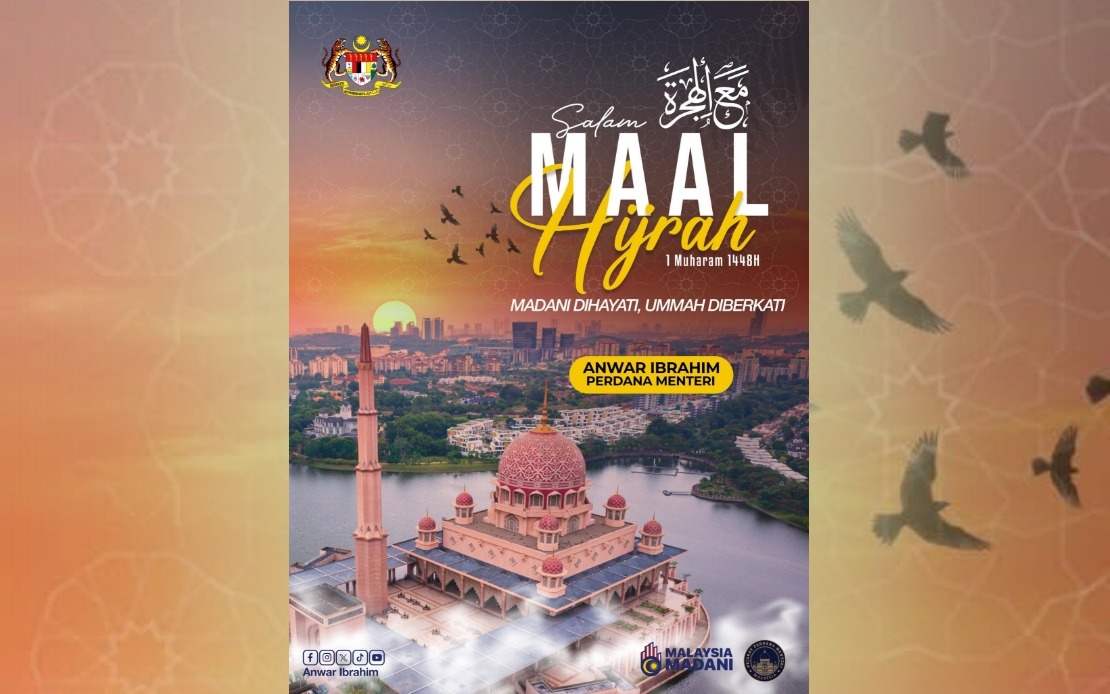
The Department of Islamic Development Malaysia designated "MADANI Dihayati, Ummah Diberkati" (MADANI Embraced, The Ummah Blessed) as the official theme for the 1448H/2026M National Maal Hijrah Celebration, aligning the religious observance with the government's broader development narrative. This thematic integration demonstrates how the administration strategically weaves religious occasions into its political messaging, using ceremonial moments to reinforce core policy concepts. The emphasis on the Ummah—the global Muslim community—alongside national objectives suggests an attempt to position Malaysia's internal reforms within a broader Islamic civilisational context, potentially enhancing their moral authority among religiously-oriented constituencies.
Anwar's specific reference to verse 100 of Surah An-Nisa, which addresses the spiritual reward for those who migrate in pursuit of divine purpose, serves a dual interpretive function. On one level, it provides authentic Islamic grounding for his reform agenda. On another, it reframes governmental objectives—justice, truth, prosperity and security—as aligned with transcendent spiritual purposes rather than mere administrative goals. This theological dimension distinguishes Anwar's framing from conventional technocratic approaches to governance, potentially resonating more powerfully with constituencies for whom religious identity and civic participation remain intertwined.
The invocation of Hijrah also carries implications for Malaysia's position within broader Southeast Asian and Islamic geopolitical contexts. By repeatedly emphasising that the Hijrah demonstrated how civilisational success emerges from unity and organised effort rather than isolated endeavour, Anwar appears to be signalling openness to regional cooperation and multilateral engagement. This resonates with Malaysia's traditional emphasis on consensus-based decision-making and its role within regional forums where coalition-building determines substantive outcomes.
For observers monitoring Malaysia's institutional trajectory, Anwar's repeated stress on unity and consensus suggests recognition that his government's reform agenda requires legitimacy extending beyond electoral mandates or executive authority. The political calculus appears to involve building broader societal buy-in for structural changes that might otherwise encounter resistance from entrenched interests or ideological opponents. By framing reforms within universally respected Islamic historical narratives, the Prime Minister attempts to shift political debate from zero-sum competition toward what he positions as collective advancement.
The practical challenge facing the Anwar administration lies in translating these unifying principles into specific governance mechanisms that accommodate legitimate disagreement while maintaining forward momentum on reform priorities. The emphasis on consensus does not automatically resolve substantive policy disputes—between religious conservatives and secular liberals, centralisers and federalists, or competing visions of economic justice. Rather, it establishes a rhetorical framework within which such disputes might be negotiated with reference to shared values, potentially reducing polarisation even when concrete outcomes remain contested.
Looking forward, the sustained emphasis on Hijrah-inspired unity and consensus likely reflects Anwar's assessment that his government's legitimacy depends less on delivering immediate transformative results than on demonstrating commitment to inclusive deliberative processes. This approach acknowledges Malaysia's complex political ecology, where no single faction commands sufficient power to impose reforms unilaterally. Instead, the Prime Minister appears to be building a coalition-based governance model that seeks periodic renewal through reference to shared religious and historical memory, even as specific policy disagreements persist. The degree to which this approach generates authentic consensus or functions primarily as rhetorical scaffolding for predetermined decisions will significantly shape Malaysia's institutional development trajectory over coming years.