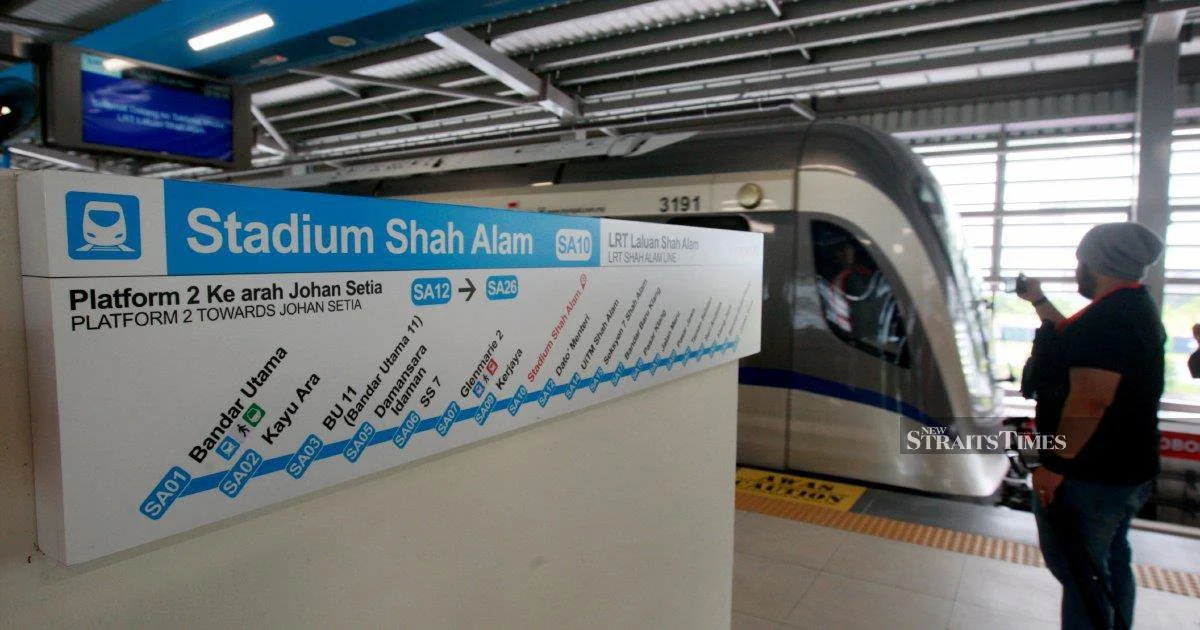
Prime Minister Datuk Seri Anwar Ibrahim will preside over the official launch of the Light Rail Transit Line 3 (LRT3) Shah Alam extension this Sunday, marking a significant milestone in the Klang Valley's public transportation infrastructure. The newly completed line will commence regular passenger operations the following day, finally connecting Shah Alam to the existing LRT network after years of planning and construction.
The LRT3 Shah Alam line represents a major expansion of rapid transit connectivity in the western corridor of Selangor, addressing longstanding demand from commuters and businesses in one of Malaysia's most developed manufacturing and commercial hubs. The route was conceived as part of broader efforts to reduce traffic congestion on major arteries serving the Klang Valley, a region that consistently ranks among the nation's most congested areas despite numerous transport infrastructure projects completed over the past two decades.
The extension connects Shah Alam, the state capital of Selangor, directly to the existing LRT3 network that currently serves central Kuala Lumpur and surrounding areas. This integration allows seamless travel between Shah Alam and other major destinations on the LRT3 system, potentially reducing journey times and offering commuters a viable alternative to private vehicles on heavily trafficked routes during peak hours.
The project has undergone extensive construction phases and testing protocols to ensure operational safety and reliability before passenger services begin. Modern rail systems of this scale require comprehensive commissioning procedures, including track testing, signalling system verification, and staff training, all of which must meet stringent international safety standards before authorities permit revenue service.
From a policy perspective, the launch reflects the government's continued commitment to expanding the Klang Valley's public transportation network, a priority that crosses multiple political administrations. Reliable, efficient public transit systems are widely recognised by urban planners and economists as essential infrastructure for sustaining economic growth and improving quality of life in major metropolitan areas across Southeast Asia.
The Shah Alam extension is particularly significant for industrial areas and commercial zones in the western Selangor corridor, where thousands of workers commute daily. Enhanced rail connectivity can facilitate better movement of labour, reduce business operating costs related to congestion delays, and make the region more attractive for multinational corporations considering Malaysia as a regional hub for manufacturing and operations.
For ordinary commuters, the new line offers practical benefits including reduced fuel expenses, shorter total journey times when factoring in parking searches and traffic delays, and greater flexibility in daily scheduling. Public transport accessibility also has knock-on effects for property values, retail activity, and economic vitality in areas served by transit lines, as demonstrated by similar projects in other Asian cities.
The timing of the launch also carries symbolic weight for the current administration, demonstrating visible progress on infrastructure delivery amid broader economic challenges. Completed transit projects serve as tangible evidence of government capacity to execute major capital works, a messaging priority for any ruling administration seeking to maintain public confidence in its stewardship of national resources.
The LRT3 expansion forms part of a broader portfolio of transit projects across the Klang Valley, including extensions to other lines and the planned mass rapid transit system. Collectively, these initiatives aim to establish a more comprehensive rapid transit network capable of serving growing suburban populations and reducing automobile dependency in the region.
Operational management of the new extension will fall under the purview of existing LRT operators, ensuring continuity with established procedures and allowing passengers to transfer seamlessly between the Shah Alam line and other LRT services using integrated ticketing systems already in place. Integration of new transit lines with existing networks requires careful coordination of scheduling, maintenance protocols, and customer service standards across multiple service providers.
The successful launch of the LRT3 Shah Alam extension also carries lessons for other transport projects across Malaysia and Southeast Asia. Public-private partnerships and government-led infrastructure initiatives must balance cost efficiency with service quality, technical reliability with accessibility, and long-term operational sustainability with initial investment capital requirements.
Looking ahead, the extension's performance metrics during initial operations will be closely monitored by transport authorities and policymakers as they evaluate whether projected ridership numbers materialise and whether the line successfully achieves its congestion reduction objectives. Data gathered during the first months of service will inform future transport planning decisions across the region.

