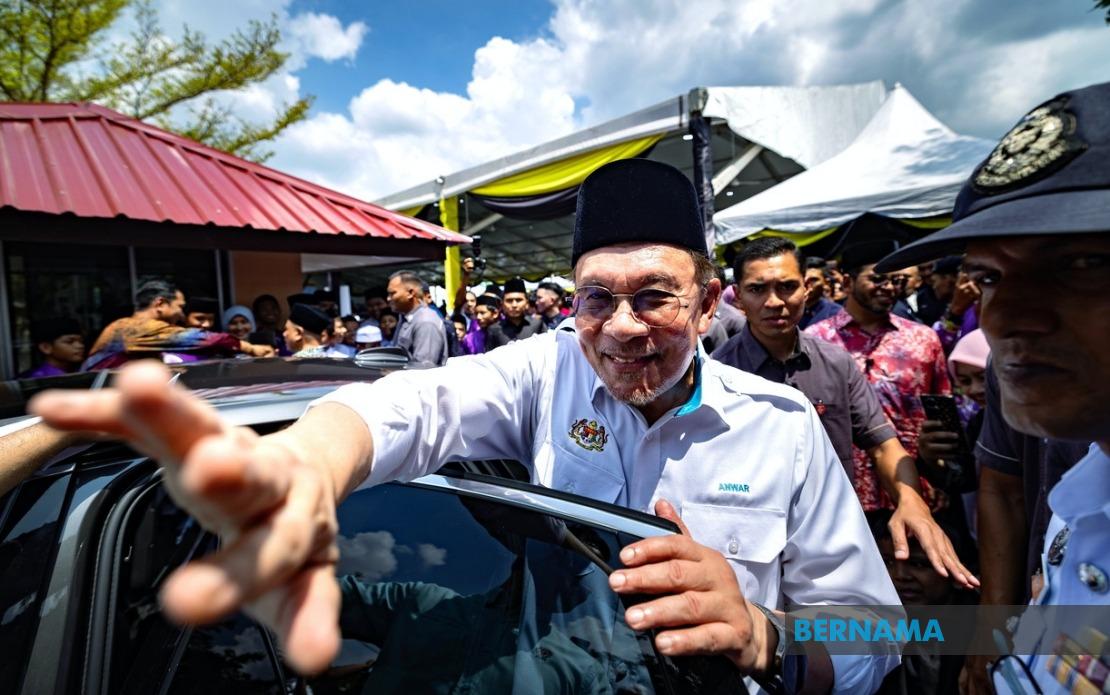
Prime Minister Datuk Seri Anwar Ibrahim has committed to providing a comprehensive explanation of the Retirement Fund (Incorporated) (KWAP)'s significant investment losses in Indonesian aquaculture technology company eFishery when parliament convenes for its sitting tomorrow in Dewan Negara. The announcement came as the embattled fund faces mounting scrutiny over how it deployed what amounted to substantial retirement savings into an investment that ultimately proved fraudulent.
The controversy centres on KWAP's exposure to eFishery, which the fund invested substantially in during July 2023. While official reports indicate the Malaysian fund lost approximately RM200 million through this venture, KWAP itself subsequently clarified that its total cumulative investment in the Indonesian company reached RM163.4 million, representing roughly 2.51 per cent of the company's shareholding. The discrepancy in figures has raised questions about the scale and timeline of KWAP's exposure to the troubled firm.
In his remarks made in Ipoh, Anwar acknowledged that while KWAP operates as an independent financial institution managing pension funds with its own investment panel and board structure, he felt compelled to take political ownership of the issue despite its technically autonomous status. His decision to personally address the matter in parliament signals the political sensitivity surrounding the loss and the government's recognition that ordinary Malaysians depend on these retirement savings for their financial security in later years.
The Finance Ministry previously disclosed through written parliamentary replies that KWAP had fallen victim to systematic fraud orchestrated by eFishery's management. The scheme involved deliberate manipulation of the Indonesian company's financial statements, indicating that the fraud was sophisticated and designed to deceive even experienced institutional investors conducting due diligence. This revelation has prompted difficult questions about investment governance and risk management protocols at KWAP.
The situation became increasingly damaging when eFishery co-founder Gibran Huzaifah was convicted in Bandung, Indonesia and sentenced to nine years imprisonment on charges related to criminal breach of trust and money laundering. His conviction provided judicial confirmation of the criminal misconduct underlying the company's operations, validating the suspicions that had emerged when eFishery's true financial condition unravelled.
Meanwhile, Malaysia's Anti-Corruption Commission has established a dedicated task force to undertake a thorough and comprehensive examination of the circumstances surrounding KWAP's investment decision. MACC chief commissioner Datuk Seri Abdul Halim Aman indicated that the special team would investigate not only what happened but also whether proper procedures were followed by fund managers during the investment appraisal and approval process. The involvement of Malaysia's premier anti-corruption body underscores the severity with which authorities are treating potential governance failures.
KWAP has sought to contextualise its losses by emphasising its minority shareholder position in eFishery, noting that other major global institutional investors also suffered comparable financial damage from the scheme. The fund highlighted that numerous sophisticated international investment firms were similarly deceived, implying that the fraud was of a calibre potentially beyond what even experienced portfolio managers might reasonably detect. This defence, while technically accurate, offers limited comfort to Malaysian pensioners whose retirement savings were affected.
According to KWAP's own statement, the fund has already initiated appropriate remedial actions consistent with its internal governance and accountability frameworks. However, the specific nature and effectiveness of these corrective measures remain unclear to the public, leaving pensioners uncertain about what steps are being taken to recover losses or prevent similar incidents. The fund's existing accountability mechanisms evidently failed to prevent the initial investment, raising questions about their adequacy going forward.
The case highlights broader structural challenges facing Malaysian pension fund management in an increasingly complex global investment landscape. Institutional investors routinely face sophisticated fraud schemes conducted across borders, where regulatory jurisdictions and information asymmetries can obscure red flags. That KWAP was victimised alongside international peers may reflect the hazards inherent to modern portfolio diversification strategies, though it does little to mitigate the tangible harm to Malaysian retirees who depend on fund performance for their livelihoods.
For Malaysian citizens and regional observers, tomorrow's parliamentary session will provide the first official opportunity to assess government and fund leadership accountability for the investment decision. Anwar's commitment to present facts rather than deflect responsibility by citing KWAP's independent status suggests an attempt to restore public confidence in pension fund stewardship. How thoroughly he addresses the governance failures that permitted the investment, and what structural reforms may follow, will largely determine whether this episode becomes a cautionary lesson or a catalyst for systemic change in how Malaysia's retirement savings are safeguarded.

