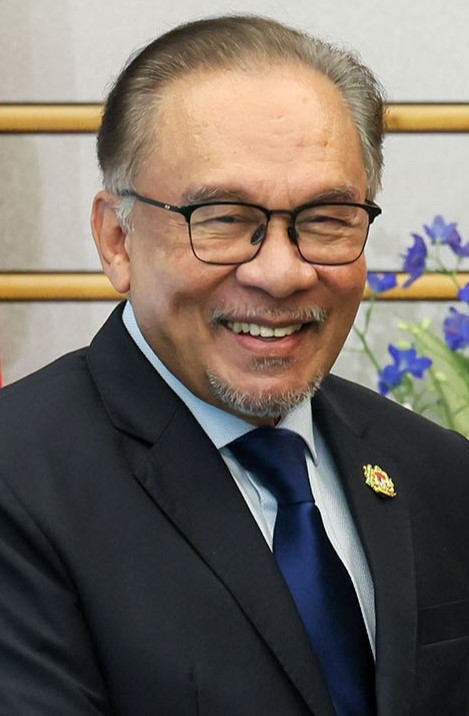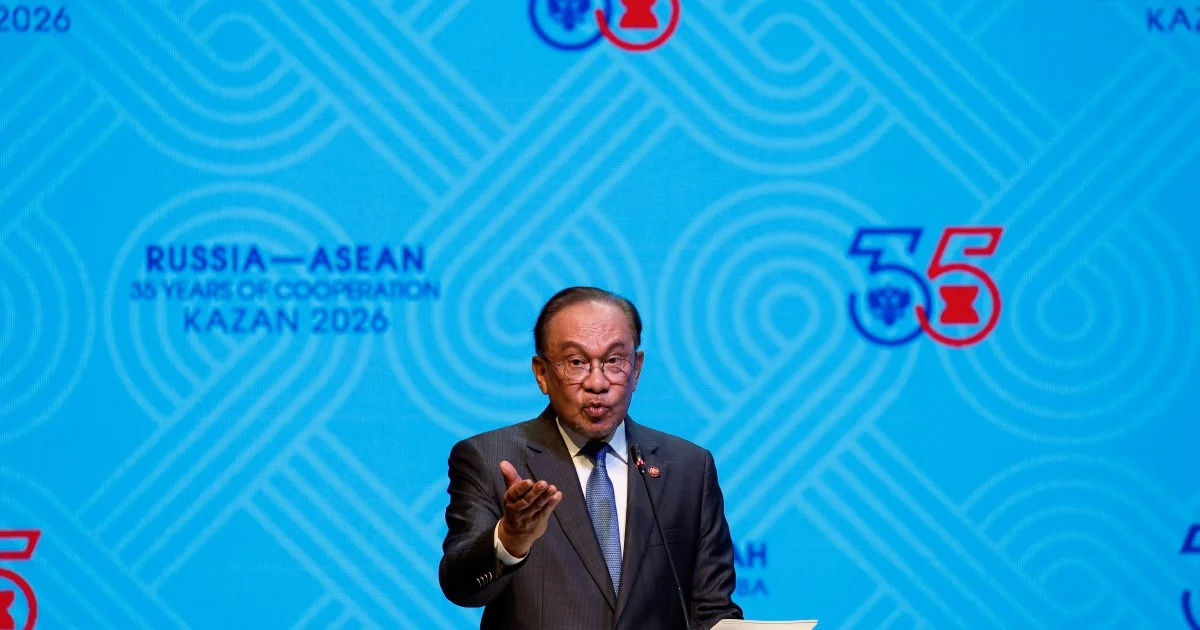
Prime Minister Datuk Seri Anwar Ibrahim has signalled cautious optimism about the newly finalised Asean-Russia Strategic Programme on Trade and Investment Cooperation 2026-2035, describing the framework as a meaningful catalyst for expanded economic collaboration between Southeast Asia and Moscow. Speaking in Kazan, Anwar characterised the agreement as an important milestone that could help unlock new commercial opportunities and investment flows across the region, though he stressed that formalising agreements represents only the initial phase of a longer journey.
The completion of this decade-long strategic programme reflects both blocs' acknowledgement that economic partnerships remain viable despite geopolitical headwinds and international tensions. For Malaysia and other Asean members, the roadmap potentially opens channels for trade diversification, particularly in energy, agriculture, and manufacturing sectors where Russian expertise and resources could complement regional capabilities. The framework establishes the architectural foundation for systematic engagement rather than ad-hoc bilateral dealings, suggesting a more institutionalised approach to Asean-Russia relations going forward.
However, Anwar's emphasis on the necessity of an "enabling environment" carries particular weight given current global circumstances. His remarks implicitly acknowledge that strategic trade agreements do not automatically materialise into tangible commercial gains without supportive conditions—both domestic policy frameworks and international stability. The qualifier suggests awareness that implementation faces real constraints, from logistics and infrastructure challenges to regulatory harmonisation requirements that member states must individually undertake.
For Malaysia specifically, this programme aligns with the nation's broader diversification strategy. Rather than remaining overly dependent on traditional trading partners, Asean's formalised engagement with Russia through this roadmap could facilitate Malaysian businesses seeking new markets and supply chain alternatives. Energy security, a persistent concern for the region, stands to benefit from strengthened ties with a major global energy producer, particularly as regional demand continues rising.
The 2026-2035 timeframe provides a realistic implementation window, allowing governments to phase in necessary regulatory changes and businesses to adjust operations incrementally. This decade-long horizon also reflects recognition that building substantial economic relationships requires patience and sustained commitment rather than expecting immediate results. The programme's successful execution will likely depend on how seriously member states prioritise its provisions amid competing domestic priorities.
Anwar's message carries implicit caution about unrealistic expectations. While trade frameworks create opportunities, they do not guarantee success without concurrent efforts to remove tariff barriers, standardise regulations, simplify customs procedures, and build logistical infrastructure. Southeast Asian nations and Russia must demonstrate political will to implement provisions comprehensively rather than treating the agreement as symbolic gesture.
Geopolitically, Asean's formalisation of deeper economic ties with Russia also signals the bloc's commitment to maintaining relationships across the broader international spectrum. This positions Asean as genuinely non-aligned, capable of engaging multiple powers without subordinating regional interests to any single power's strategic agenda. For Malaysia, participating in this framework demonstrates alignment with Asean's independent foreign policy stance.
The programme's sectoral focus likely encompasses areas where mutual interests genuinely converge. Russian technological expertise in certain manufacturing domains, combined with Asean's manufacturing capabilities and demographic advantages, could generate beneficial partnerships. Similarly, Russian agricultural products and technology could address food security considerations across Southeast Asia, while the region's agricultural outputs could find markets in Russia.
Implementation challenges should not be understated, however. Sanctions regimes and international banking restrictions complicate transaction processing and investment flows. Businesses operating under existing international constraints may find participation difficult without explicit governmental facilitation. These obstacles require careful navigation by government agencies and private sector participants alike.
Anwar's framing of the agreement as a "good start" rather than a comprehensive solution reflects pragmatic leadership. He avoided hyperbolic claims about transformative economic growth, instead positioning the roadmap as establishing platforms from which genuine cooperation can develop. This measured approach better manages expectations and positions participating governments to demonstrate tangible results over time.
The Prime Minister's statement also reflects Malaysia's interest in expanding economic partnerships beyond traditional Western markets and intra-Asean trade. As global supply chains continue restructuring and geopolitical alignments shift, establishing diversified trading relationships provides resilience and optionality for Malaysian businesses and the national economy.
Moving forward, monitoring the programme's practical implementation will prove more revealing than the signing itself. Government agencies across Asean nations must establish working groups, harmonise standards, and create pathways for business participation. Russia similarly requires clear commitment to administrative implementation rather than treating the agreement as rhetorical gesture.
For Malaysia and Southeast Asia broadly, the Asean-Russia Strategic Programme represents one element within a more comprehensive strategy of maintaining balanced international engagement. Success will depend on translating formal agreements into operational mechanisms that facilitate genuine trade expansion, investment flows, and technological exchange benefiting all parties involved.