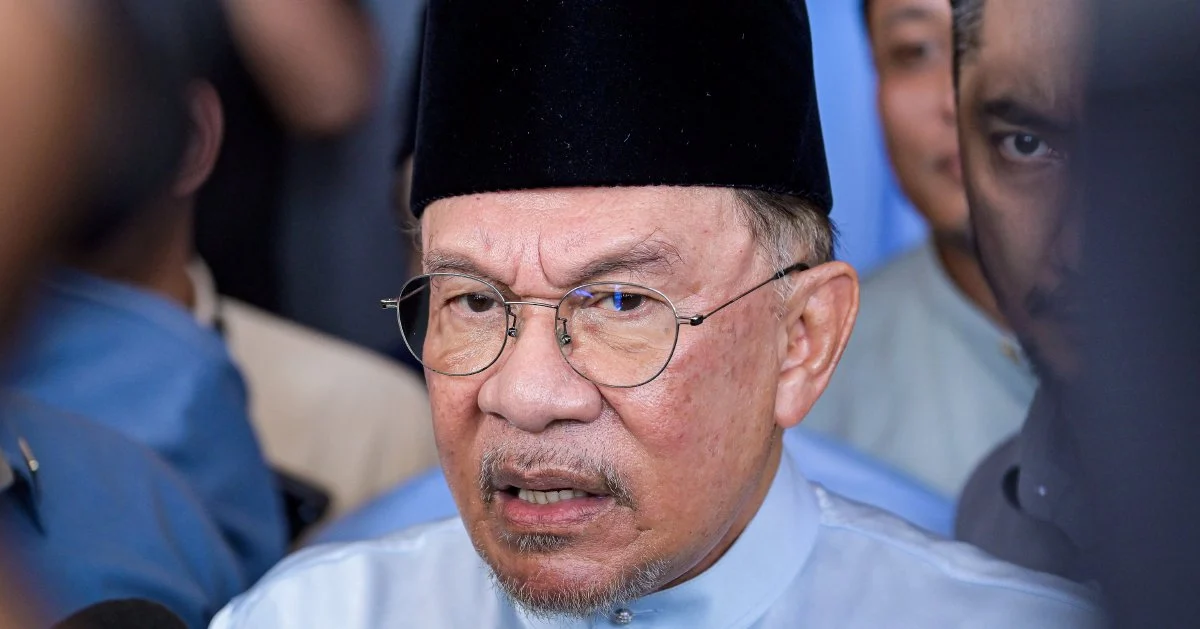
Prime Minister Datuk Seri Anwar Ibrahim has firmly rejected claims that instructions were issued to prevent caretaker Johor Menteri Besar Datuk Onn Hafiz Ghazi from attending an event in Felda settlements. Speaking in Dengkil, the PM's remarks came amid swirling speculation about tensions between federal and state-level political leadership over who was permitted to participate in community gatherings.
The Prime Minister's categorical denial underscores broader sensitivities within Malaysia's political landscape around access and participation in government-sponsored or associated programmes. Such incidents, when they occur, often become flashpoints for deeper disagreements between coalition partners or rival factions, particularly during periods when political boundaries remain fluid or when electoral considerations loom large. The swift response from Anwar's office suggests the administration takes seriously any perception of exclusionary tactics that could be weaponised in the court of public opinion.
Felda, the Federal Land Development Authority, operates an extensive network of settlements across the country representing a crucial voter constituency. These communities have historically served as political battlegrounds, with both government and opposition parties investing substantial effort in cultivating support among settler families. Any controversy involving restricted access to Felda communities carries potential ramifications for government standing in these areas, making the Prime Minister's intervention necessary to contain any narrative suggesting partisan gatekeeping.
Onn Hafiz, who currently holds the position of Johor's caretaker Menteri Besar, represents a significant political figure within Johor's governance structure. His relationship with the federal administration and how he is treated in terms of access and recognition carry implications for state-federal relations and the cohesion of Malaysia's governing coalition. The caretaker designation itself reflects the fluid nature of Johor's political situation, with potential electoral contests on the horizon that could reshape the state's leadership configuration.
The denial from the Prime Minister's office reflects a broader pattern in Malaysian politics where rumours and allegations regarding official access or participation can escalate quickly through social media and grassroots networks. Political opponents and critics often seize upon such incidents to question the neutrality of government institutions and to suggest that power is being wielded selectively. By moving swiftly to contradict the claims, Anwar's administration appears intent on preventing such narratives from gaining traction.
The timing of these allegations coincides with Malaysia's broader political calendar, where various state and local concerns intersect with national priorities. Johor's political dynamics remain particularly significant given the state's size, population, and economic importance. Any perception of the federal government playing favourites or deliberately excluding state leaders from constituency engagement opportunities could undermine the government's credibility and provoke criticism from state-level politicians across the coalition.
Felda communities themselves maintain particular significance within Malaysian electoral mathematics. These settlements have traditionally demonstrated strong support for government parties, though recent years have witnessed more competitive political contests for settler loyalties. Transparency and equitable access for all political leaders recognised by the government become important considerations in maintaining this support base and preventing the opposition from exploiting any narrative about federal bias or discriminatory treatment.
The incident highlights how modern Malaysian politics navigates questions of institutional neutrality while managing relationships between federal and state authorities. Even in contexts where one coalition governs both national and state levels, tensions can emerge over resource allocation, decision-making authority, and ceremonial recognition. These tensions require careful management to prevent them from escalating into larger factional disputes that could destabilise the broader coalition framework.
Anwar's intervention in this matter also reflects the Prime Minister's role as arbiter of coalition harmony. Johor, regardless of which party leads its state government, remains crucial to the federal administration's electoral prospects and policy implementation capacity. Maintaining constructive relationships with state leadership, even when holding caretaker positions, serves the broader interests of political stability and administrative functionality. The Prime Minister's words serve partly as reassurance to state-level actors that federal institutions and processes will operate fairly and without partisan manipulation.

